


How to Use Hot Peel DTF Transfers for T-Shirts Step by Step
If you’re ready to speed up your print production without sacrificing quality, mastering Hot Peel DTF transfers for T-shirts is essential. This method delivers instant release, vibrant colors, and a soft hand feel—perfect for busy print shops and custom apparel pros. Using the right tools and settings, especially high-quality materials like Jinlong DTF film, guarantees flawless application every time. In this guide, you’ll learn the exact step-by-step process to apply hot peel DTF transfers confidently and efficiently, avoiding common mistakes that slow you down. Let’s get straight to the point and unlock the full potential of your prints!
Essential Equipment and Materials
To start using hot peel DTF transfers for t-shirts, you’ll need a few must-have tools and materials. First, a commercial heat press machine is essential for consistent temperature and pressure control—this is the backbone of a strong transfer. Choose suitable fabrics like cotton or polyester blends, as these work best with DTF film and ensure excellent color vibrancy and durability.
Next, source quality Jinlong Hot Peel DTF transfers designed for instant peel transfer without waiting for cooling. These come on specially coated DTF film rolls that release smoothly under the right heat press settings. Lastly, always use protective sheets such as a Teflon sheet to prevent any sticking or scorching during the heat transfer process. Together, these materials form the foundation for flawless, professional-quality DTF transfer application.
Critical Settings: The \”Golden Rule\” of Hot Peel – Temperature, Time, Pressure
When using hot peel DTF transfers for t-shirts, nailing the right heat press temperature settings, time, and pressure is crucial. These three factors are the \”golden rule\” for a smooth, vibrant transfer application.
- Temperature: Set your commercial heat press machine to about 320°F (160°C). This ensures the Jinlong Hot Peel DTF transfer and DTF powder curing process activate perfectly without damaging the fabric.
- Time: Keep the press time between 12–15 seconds. Too little time can mean poor adhesion, while too long risks burning the garment or fading colors.
- Pressure: Apply medium to firm pressure. Too little pressure may cause the design to lift, while too much can compress the fabric and distort the print.
Adjusting these settings slightly may be necessary depending on fabric type—polyester vs cotton DTF transfers react a bit differently. For consistent results, always perform a test press before full production.
Mastering these critical heat press factors guarantees vibrant, durable DTF transfer application, minimizing common issues like peeling or dull colors. For more detailed insight on choosing the right materials and equipment, see our guide on DTF transfer film basics.
Step-by-Step Application Process for Hot Peel DTF Transfers
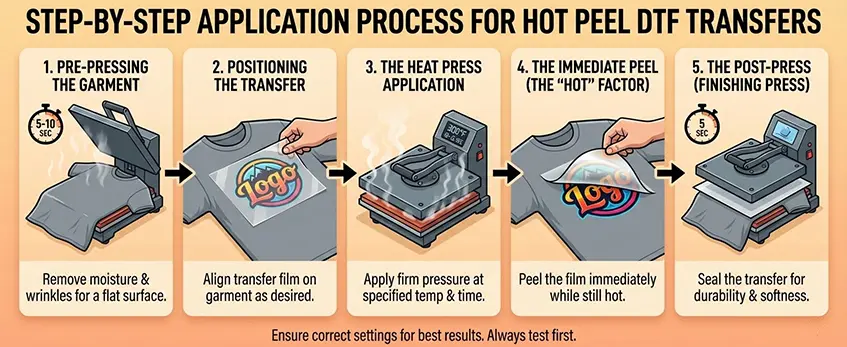
Getting the perfect print with hot peel DTF transfers for t-shirts is all about following the right steps carefully. Here’s the process broken down:
Pre-Pressing the Garment
Before applying the transfer, pre-press the t-shirt for 3-5 seconds at the recommended heat press temperature. This removes moisture and wrinkles, giving you a smooth surface for the DTF transfer application. Pre-pressing is key to better adhesion and a sharper print.
Positioning the Transfer
Place the Jinlong Hot Peel DTF transfer on the garment exactly where you want the design. Use heat-resistant tape if needed to keep it steady during pressing. Accurate positioning makes all the difference, especially with custom garment decoration.
The Heat Press Application
Set your commercial heat press to the \”golden rule\” temperature and time—usually around 320°F for 15-20 seconds with medium pressure. Use a Teflon sheet or protective sheet over the transfer to prevent sticking and protect your heat press platen. Press firmly and evenly.
The Immediate Peel (The \”Hot\” Factor)
The signature step of hot peel DTF is peeling the film right away while it’s still hot. This instant peel transfer method ensures the release coating on Jinlong DTF film works perfectly, leaving the design attached to the fabric without lifting.
The Post-Press (Finishing Press)
Finally, do a short finishing press for 5-8 seconds to secure the ink and powder completely. This step boosts the durability of your DTF wash especially on polyester or cotton fabrics. Skip this, and you might see issues with fading and cracking down the line.
Following these steps carefully will help you get vibrant, durable prints every time with Jinlong DTF film rolls and hot peel transfers. For more details on the materials used, check out our guide on what is DTF shirt printing and is it right for your brand?.
Hot Peel vs. Cold Peel: Why It Matters
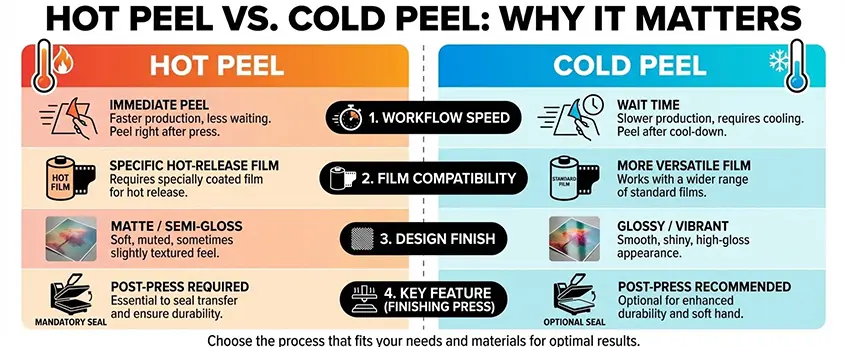
Choosing between hot peel and cold peel affects your workflow, film compatibility, and ultimately the quality of your custom shirt decoration. Here’s a quick breakdown:
| Aspect | Hot Peel | Cold Peel |
|---|---|---|
| Workflow Speed | Instant peel right after pressing – faster production | Requires wait time for transfer to cool, slowing down workflow |
| Film Compatibility | Best with Jinlong DTF film rolls designed for hot peel use | Works with most regular DTF films but slows production |
| Design Finish | Smooth, vibrant finish thanks to immediate peel and finishing press | Sometimes tackier or duller colors if peeled too early |
| Key Feature | Heat activates the DTF film release coating for quick peel | Film sticks until fully cooled for safe peel |
Jinlong’s hot peel DTF transfers include advanced DTF film release coating optimized for instant peel transfer. This means less downtime waiting for designs to cool and more consistent vibrant colors. Choosing hot peel saves time and keeps your production line moving, especially when using a commercial heat press machine with the right heat press temperature settings. For a closer look at best practices, check out the best DTF powder for wash resistance and stretchability — powder curing is a big part of making hot peel transfers work well.
In : If speed and sharp results are your top priorities, hot peel with Jinlong DTF film is your go-to. Cold peel is still reliable but better suited for different film types or more delicate fabrics.
Troubleshooting Common Hot Peel Issues
When working with hot peel DTF transfers for t-shirts, a few issues can pop up. Here’s how to fix the most common ones:
Film Sticking or Design Lifting
This usually means the heat press temperature wasn’t high enough or the pressure was too light. Double-check your heat press temperature settings and pressure guide to ensure you’re hitting the \”golden rule\” of hot peel. Also, make sure you\’re peeling immediately while the transfer is still hot. Using Jinlong Hot Peel DTF Transfers with their precise DTF film release coating helps reduce these issues.
Rough Texture (Orange Peel Effect)
This texture often appears if the DTF powder curing wasn’t even or the heat press time was off. To fix this, ensure the powder is properly melted during printing and use a consistent, stable heat press cycle. Pre-press the garment to remove moisture and wrinkles—they can also cause this roughness.
Dull Colors
Dull colors usually come from insufficient heat or time during pressing. Adjust your settings to match the recommended temperature and press duration for your chosen fabric, whether it’s polyester or cotton. Using a commercial heat press machine helps maintain consistent heat and pressure, ensuring vibrant and durable prints.
If you want to dive deeper into optimal hot peel conditions and troubleshoot other specifics, check out our detailed Hot Peel DTF Film Roll Buying Guide for expert tips on film and temperature settings.
Care and Washing Instructions for Customers
Proper care is key to keeping your hot peel DTF transfers for t-shirts looking sharp and vibrant. Here’s what to tell your customers to ensure the best DTF wash durability:
Wait Before Washing: Advise waiting at least 24 hours after applying the transfer before the first wash. This gives the DTF film release coating time to fully cure and bond to the fabric.
Wash Inside Out: Always wash shirts inside out. This protects the design from friction and direct exposure to detergent, extending the life of the print.
Avoid Bleach and Softener: Harsh chemicals like bleach and fabric softeners can break down the DTF powder curing and cause colors to fade or peel. Stick to mild detergents.
Drying Techniques: Recommend air drying or tumble drying on low heat. High heat can weaken the bond between the transfer and fabric. Avoid ironing directly on the print; if needed, use a protective sheet.
Following these simple tips will keep your custom garment decoration crisp, colorful, and long-lasting. For more details on the best practices, check out insights on best DTF powder for high-quality and durable transfers to complement your care routine.



 English
  Español
  Deutsch
  Français