


How DTF Printer Ink Impacts Adhesion Powder Melting and Wash Resistance
Understanding the DTF Process: How Ink, Powder, and Heat Interact
Ever wondered why your DTF prints sometimes don’t stick well or fade quickly? It all starts with how the ink, powder, and heat work together in the DTF process. Here’s a simple breakdown:
Step 1: Printing Ink on PET Film
The process begins by printing DTF ink directly onto a clear PET film. This ink isn’t just color—it contains pigments, binders, and special additives designed to create a sticky, flexible layer.
Step 2: Powder Application
While the ink is still wet, a hot melt powder is applied. This powder sticks only to the printed ink areas, thanks to the ink’s adhesive properties.
Step 3: Curing the Powder
The powder-covered film then passes through a curing stage where heat partially melts the powder, making it ready to bond during transfer.
Step 4: Heat Press Transfer to Fabric
Finally, the film is heat-pressed onto fabric. The combination of heat and pressure causes the powder to fully melt and fuse the ink into the fibers.
The ink components—pigments, binders, and additives—play a crucial role here. Pigments deliver vibrant color, binders act as the “glue” holding the powder and fabric together, and additives control drying and flexibility. High-quality DTF ink ensures strong powder adhesion, smooth melting during curing, and a perfect bond with fabric. Without that solid ink base, you risk weak adhesion, cracking prints, and early wash failure.
In short, the foundation of any successful DTF print lies in using quality ink that supports every part of the process: powder adhesion, melting, and ultimate fabric bonding. This is why choosing the right DTF printer ink quality is the first step to long-lasting, wash-resistant prints you can trust.
How DTF Ink Directly Affects Adhesion to Fabric
DTF ink plays a crucial role in how well your print sticks to fabric. Its chemical makeup creates the base that holds the hot melt powder tightly before heat pressing. When the ink has the right blend of binders, pigments, and additives, the powder bonds firmly, leading to strong adhesion on the fabric.
Low-quality DTF ink often results in a weak ink-powder interface. This causes poor grip on the fabric, making prints prone to peeling, cracking, or delaminating after washing. These adhesion failures are clear signals that the ink can’t support the powder or resist fabric movement.
Key ink factors that enhance adhesion include:
- High pigment load: ensures vibrant, dense coverage that supports powder bonding.
- Flexible resins: allow prints to stretch instead of crack, maintaining integrity.
- Powder compatibility: the ink must work well with hot melt powders for stable, uniform bonding.
Choosing premium DTF ink helps avoid common adhesion issues and guarantees prints that hold up wash after wash, keeping your designs sharp and durable. For more on optimizing your print and heat press settings, check out our guide on DTF temperature chart for different fabrics and transfer films.
The Impact of Ink on Hot Melt Powder Melting and Activation
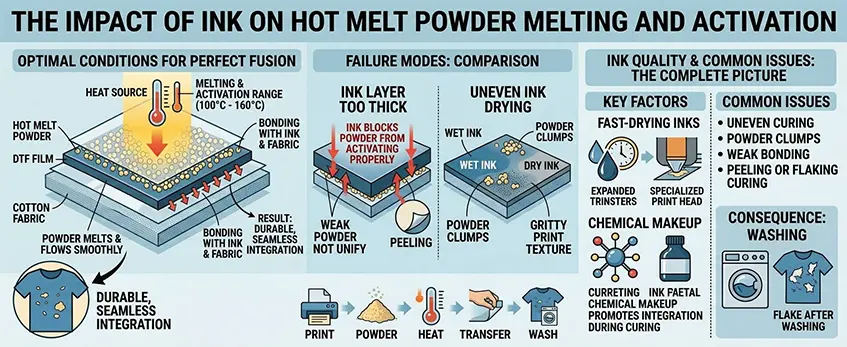
In DTF printing, the hot melt powder needs to melt and fuse perfectly with the ink to create a durable transfer. This process depends heavily on the ink’s characteristics. The powder melts within a specific temperature range, flowing smoothly to bond with the ink and fabric. If the ink layer is too thick or dries unevenly, it can block the powder from activating properly, leading to weak adhesion or a gritty print texture.
The ink’s drying speed and chemical makeup also play big roles. Fast-drying inks help powder stick evenly without clumping, while the right formulation promotes seamless integration during heat curing. Common problems tied to poor ink quality include uneven curing, powder clumps, and weak bonding, which cause peeling or flaking after washing.
For consistent powder activation and melting, look for DTF ink with balanced viscosity, quick yet controlled drying, and formulas designed to work in sync with your powder. These traits ensure the hot melt powder melts evenly, creating a smooth, lasting print. For a deeper dive into powder quality and its relationship with ink, check out the essentials on TPU powder cost and quality that printers should know.
Why Ink Quality Determines Wash Resistance and Long-Term Durability
Wash resistance in DTF printing is measured by wash fastness ratings, which indicate how well the print holds up after multiple laundry cycles. High-quality DTF ink plays a critical role in achieving long-lasting print durability, commonly lasting 40–50+ washes with minimal fading or damage.
The main ink factors that drive durability include:
- Pigment Stability: Strong pigments resist fading and color migration during repeated washing.
- Binder Elasticity: Flexible binders keep the print intact without cracking or peeling as the fabric stretches and moves.
- Curing Cross-Linking: Proper curing creates tight chemical bonds that lock the ink and powder to the fabric for long-term adhesion.
By contrast, low-quality ink often suffers from pigment migration, where colors bleed or fade, as well as cracking and peeling after just a few washes. These issues stem from poor pigment quality or binders that lack elasticity and fail to cure properly.
Using premium DTF printer ink ensures your designs remain vibrant and intact wash after wash, supporting durable, wash-resistant DTF prints. For consistent results, always match your ink choice with compatible powders and follow recommended curing guidelines. For more on reliable print materials, check out the DTF transfer films designed to work seamlessly with high-quality inks.
Key Factors in Choosing DTF Ink for Superior Adhesion, Melting, and Wash Performance
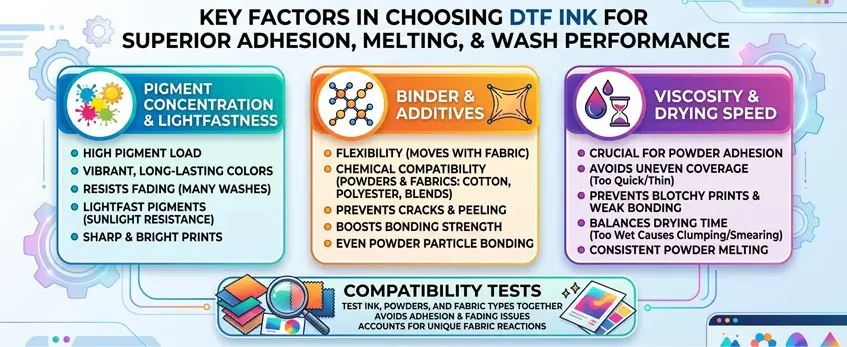
When selecting DTF printer ink, a few critical factors can make all the difference in adhesion, powder melting, and wash resistance. First, pigment concentration and lightfastness are essential. High pigment load means vibrant, long-lasting colors that resist fading, even after many wash cycles. Lightfast pigments ensure your prints stay sharp and bright under sunlight and repeated use.
Next, pay close attention to the binder and additives in the ink. These components must offer flexibility and strong chemical compatibility with both the hot melt powder and various fabric types like cotton, polyester, and blends. Flexible binders help prevent cracks and peeling by allowing the print to move with the fabric. Additives improve the ink’s ability to bond evenly with powder particles, boosting overall transfer strength.
Viscosity and drying speed also play a big role in powder adhesion. Ink that dries too quickly or is too thin can lead to uneven powder coverage, causing blotchy prints or weak bonding spots. Conversely, ink that stays wet too long can cause powder clumping or smearing. The ideal ink balances these traits for smooth application and consistent powder melting.
Compatibility tests between your chosen ink, powders, and fabric types are a smart move to avoid common issues like poor adhesion or fading after washing. Different fabric blends react uniquely to ink and powder combinations.
This is where Jinlong DTF ink stands out. Known for its reliable bonding strength, Jinlong’s formula ensures uniform powder melting and excellent wash durability, supporting prints that can last through 40–50+ wash cycles with minimal degradation. Whether you’re printing on cotton, polyester, or mixed fabrics, Jinlong ink’s balanced pigment load, flexible binders, and optimized drying speed make it a top choice for professional-quality DTF printing. For more details on Jinlong’s superior ink options, check out their DTF Ink White 100ml Pro Series 2 and explore how to maximize your print quality with a JL DTF604S printer setup.
Troubleshooting Common Ink-Related Problems in DTF Printing
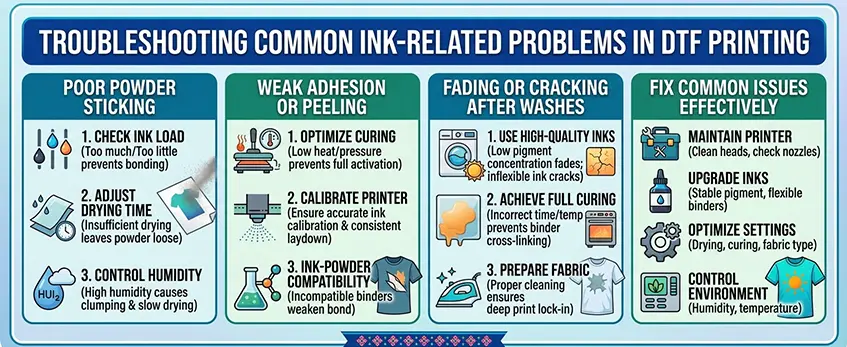
When you face poor powder sticking in DTF printing, the usual suspects are ink load, drying time, and environmental factors like humidity. Too much or too little ink can prevent the hot melt powder from bonding properly, while insufficient drying leaves the powder loose or uneven. High humidity slows drying and leads to clumping, so controlling your workspace climate is key.
If you notice weak adhesion or peeling after transfer, check your curing temperature and pressure. Too low heat or pressure won’t fully activate the powder, causing delamination. On the other hand, inaccurate ink calibration—like low pigment concentration or incompatible binders—can weaken the ink-powder interface. Calibrating your printer regularly ensures the ink is laid down consistently for solid bonding.
Fading or cracking after washes often points back to ink quality, curing accuracy, or how well the fabric was prepped. Low-quality inks tend to lose pigment or crack with repeated laundering, while incorrect curing times or temperatures prevent full cross-linking of binders. Proper fabric prep, including cleaning and using compatible materials, helps lock the print deeper into the fibers.
To fix these common issues effectively:
- Maintain your printer—clean printheads and check nozzle health frequently.
- Upgrade to high-quality DTF inks known for stable pigment load and flexible binders.
- Optimize drying and curing settings based on fabric type and powder used.
- Control environmental factors, like humidity, in your print area.
By troubleshooting with a focus on ink load, curing processes, and material compatibility, you can significantly reduce DTF adhesion issues and boost your prints’ wash fastness and durability.
For more on optimizing ink and powder interaction, check out our insights on DTF transfer film compatibility and get tips on software calibration that controls ink output effectively at DTF RIP software overview.
Best Practices to Maximize Results with Your DTF Ink
To get the best from your DTF printer ink, focus on these key steps:
Printer Calibration and Ink Circulation
Regularly calibrate your printer to maintain consistent print quality. Ensure ink circulation is steady to avoid clogging and color variation, which can affect adhesion and overall print durability.
Proper Powder Application
Apply the hot melt powder evenly over the printed ink layer. Uneven powder can lead to poor powder adhesion or weak bonding during heat curing. Using a reliable powder source compatible with your ink is essential for smooth melting and strong fabric grip.
Heat Press Settings
Set your heat press to the right temperature, time, and pressure for full powder activation. Typical conditions involve around 320–350°F, 15–20 seconds, and firm pressure. These parameters ensure complete melting and bonding of the powder with the ink, crucial for wash-resistant DTF prints.
Post-Press Handling
Allow prints to cool properly before peeling the transfer film or handling the garment. Follow recommended washing instructions, like washing inside-out on gentle cycles, to preserve print longevity and minimize pigment fading or cracking.
Testing Protocols
Conduct thorough wash and stretch tests to confirm print durability and adhesion. Testing helps catch potential issues early, such as delamination or fading, letting you adjust your ink usage or curing process for optimal results.
For a deeper understanding of powder issues and troubleshooting, check out this detailed guide on common DTF film problems and how to fix them. Using high-quality ink and following these best practices will dramatically improve your DTF print quality and longevity.


 English
  Español
  Deutsch
  Français