


How a DTF Powder Shaker Ensures Strong Adhesion Even Coating and Quality
If you’re serious about upgrading your DTF adhesive powder application, you know that uneven coating and weak adhesion can tank your print quality—and your reputation. That’s where an automatic DTF powder shaker steps in, transforming your workflow by delivering precise, even powder distribution every single time. This isn’t just about convenience; it’s about locking in stronger bonds, preventing peeling, and boosting the sharpness and vibrancy of your prints like never before. Ready to ditch the guesswork and see consistent, professional results? Let’s break down exactly how a DTF powder shaker improves adhesion, even coating, and print quality—so you can take your prints from patchy to perfect.
What Is a DTF Powder Shaker and How Does It Work?
A DTF powder shaker is an essential automatic tool designed to improve the application of adhesive powder on Direct to Film (DTF) prints. Unlike manual shaking, this machine automates the entire process to ensure a consistent, even powder coating every time.
Here’s how it works:
- Film Feed: The printed film moves smoothly through the shaker on a conveyor system.
- Powder Dispensing: Adhesive powder is evenly spread over the wet ink areas using calibrated dispensers.
- Vibration for Even Spread: Built-in vibration mechanisms gently shake the powder layer, preventing clumps and ensuring a uniform coat.
- Suction/Removal of Surplus: Excess powder is immediately vacuumed off to avoid buildup, keeping the film clean and crisp.
- Optional Drying: Some models include a drying module to partially cure the powder before transfer, enhancing adhesion.
Compared to manual powder application, which is often uneven and messy, an automatic DTF powder shaker delivers repeatable, precise adhesive powder application that saves time and reduces waste. This automation not only boosts print quality but also streamlines the workflow, making it ideal for professional DTF operations aiming for consistent results.
Why Even Coating Matters in DTF Printing
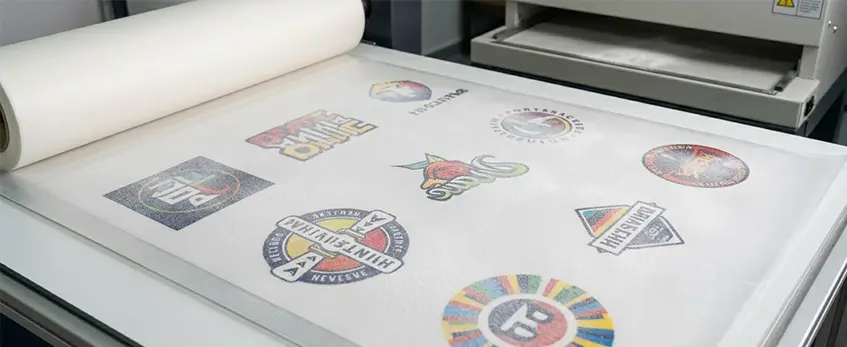
In DTF printing, getting an even powder coating on the wet ink is essential. Precise DTF adhesive powder application ensures that the powder sticks only where it’s needed—on the ink layer—creating a solid bond during curing. If the powder is uneven, you risk clumping, which leads to rough textures and dull colors that drag down the final print quality.
Uneven powder distribution also causes weak spots where adhesion fails, making prints peel or crack after washing. This inconsistency not only affects the look but also the durability of the transfer. Using an automatic DTF powder shaker helps solve these issues by allowing you to adjust powder flow and vibration settings. This controls the powder spread, guaranteeing uniform layers every time, while preventing excess powder buildup that messes with color sharpness and detail.
For reliable, consistent prints with vibrant colors and smooth finishes, an even coating is a must-have in your workflow. To master this aspect, pairing your shaker with top-tier films and inks is key—more on that setup can be found in the DTF transfer printer setup guide from printing to heat press.
How a Powder Shaker Strengthens Adhesion
A DTF powder shaker plays a crucial role in making sure the adhesive powder bonds perfectly with the printed film. Adhesion happens in two key ways: mechanical anchoring, where the powder creates a physical grip on the ink and fabric, and chemical melt, where heat causes the powder to fuse tightly with the ink layer. When the powder layer is consistent in thickness, it prevents common problems like peeling and cracking after transfer.
Having a uniform powder-to-ink ratio is essential for strong adhesion. Too little powder risks weak bonding, while too much can cause clumping or uneven melting. The precision of an automatic DTF powder shaker ensures this balance is maintained by evenly spreading the adhesive powder across the entire wet ink area. This consistent coating directly translates into longer-lasting prints with improved durability and resistance to wear.
By keeping powder layers uniform, your prints stick better and last longer, solving typical DTF transfer adhesion issues and improving overall print strength.
Direct Impact on Print Quality and Detail
Using a DTF powder shaker directly boosts print sharpness, color vibrancy, and fine detail retention. The key is the uniform adhesive powder application, which ensures the ink’s edges stay crisp and colors pop as intended. When the powder layer is even, the hot melt powder creates a smooth, consistent bond that brings out the full depth of the print’s colors and details.
Plus, built-in excess powder removal systems prevent leftover powder from settling on the film’s background, stopping unwanted graininess and hazy spots. This clean finish means your prints look professional with no distracting residue, giving you that polished, high-quality result every time. By eliminating uneven, patchy powder, the powder shaker solves common DTF transfer adhesion issues that can dull or blur prints, making it an essential tool for achieving professional DTF transfer quality.
Additional Benefits Beyond the Core Three
A DTF powder shaker offers more than just better adhesion, even coating, and print quality. Here’s why upgrading makes sense for your workflow:
| Benefit | Why It Matters |
|---|---|
| Time Savings | Automated shaking is faster than manual powder application, speeding up production. |
| Reduced Labor | Less hands-on work means your team can focus on other tasks, improving overall efficiency. |
| Minimized Powder Waste | Precise powder dispensing and excess powder removal cut down on wasted material. |
| Lower Error Rates | Consistent powder layers reduce mistakes like clumps and incomplete adhesion. |
| Scalability for Production | Easily handles higher volumes without losing quality or efficiency. |
| Cleaner Workspace | Built-in powder circulation keeps your work area tidy, reducing cleanup time. |
| Seamless jinlong DTF Integration | Designed to work smoothly with jinlong DTF systems, ensuring optimal performance and compatibility. |
By reducing powder waste and labor hours while increasing throughput, the automatic DTF powder shaker is a smart investment for any printing setup looking to boost efficiency. Plus, its cleaner operation means a safer, less messy workspace, which can improve employee satisfaction and product quality.
This upgrade fits perfectly into professional DTF workflows aiming for consistency and reliability on every print run. For printers using jinlong’s solutions, the integration ensures the shaker complements your existing setup for smooth, dependable results every time.
If you want to learn more about powder types that work best with your equipment, check out our guide on the best DTF powder for cotton, polyester, and blended fabrics.
Common Problems Solved by Upgrading to a Powder Shaker
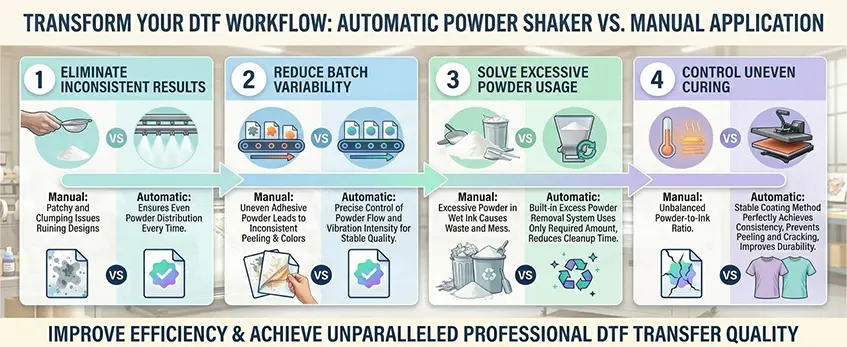
Switching from manual powder application to an automatic DTF powder shaker instantly tackles several common headaches in DTF printing. First off, inconsistent manual results vanish because the shaker guarantees even powder distribution in DTF transfers every single time. No more worrying about patchy spots or clumping that ruin your designs.
Batch variations also drop significantly. Manual shaking can cause uneven adhesive powder application between prints, leading to different peeling and color issues across a run. The shaker’s precise control over powder flow and vibration intensity locks in consistent adhesion and curing, keeping quality steady from start to finish.
Excessive powder use is another problem solved. With manual methods, it’s easy to overload wet ink areas, wasting powder and creating a mess. The powder shaker’s built-in excess powder removal system ensures only the needed amount sticks, reducing material waste and cleanup time.
Finally, curing inconsistencies become easier to control. A uniform adhesive coating DTF relies on a balanced powder-to-ink ratio, which the shaker’s stable application supports perfectly. This consistency helps prevent peeling and cracking, boosting print durability.
Upgrading to a powder shaker is a practical step to improve your DTF workflow efficiency shaker and deliver professional DTF transfer quality that’s hard to beat.
For printing setups looking to streamline production while improving quality, integrating an automatic powder shaker expands efficiency and helps avoid common pitfalls seen with manual powder application. If you’re interested in optimizing your printer lineup, check out our guide on how to choose a desktop DTF printer for home or studio use to pair your shaker with the right printer.
Key Features to Look for in a DTF Powder Shaker
When choosing a DTF powder shaker, focus on these essential features to ensure even powder distribution in DTF printing, optimal adhesion, and improved print quality:
| Feature | Why It Matters | What Jinlong DTF Offers |
|---|---|---|
| Adjustable Powder Flow | Controls the amount of adhesive powder for uniform coating and prevents waste. | Fine-tuned powder dispensing for consistent application. |
| Vibration Intensity | Ensures the powder spreads evenly across the ink areas for smooth, clump-free layers. | Customizable vibration settings for perfect spread. |
| Mesh/Conveyor Quality | High-quality mesh or conveyor ensures smooth film feed and accurate powder placement. | Durable, wear-resistant conveyors built for steady feed. |
| Curing Controls | Proper curing settings improve powder melt and bonding, reducing peeling issues. | Integrated with Jinlong’s precise curing parameters for better adhesion. |
| Width Compatibility | Supports various film widths to match different project sizes and printer setups. | Versatile width options compatible with popular DTF films like those on Jinlong’s film series. |
| Ease of Cleaning | Quick and easy cleaning prevents powder buildup and maintains machine efficiency. | Designed with removable parts and smooth surfaces for hassle-free maintenance. |
| Durability | Robust construction ensures long-term, stable performance even under heavy use. | Built with strong materials suited for professional DTF workflow efficiency shaker needs. |
Choosing a powder shaker with these features not only solves common DTF transfer adhesion issues but also supports consistent, professional DTF transfer quality. Jinlong DTF powder shakers excel in combining these specs to deliver reliable, high-performance results tailored for U.S. print shops focused on quality and efficiency.
Tips for Maximizing Results with Your Powder Shaker
To get the best out of your DTF powder shaker, start by selecting the right powder type. Look for powders that match your ink and film specifications for optimal melting and bonding. Regular maintenance is crucial—clean the shaker’s mesh and conveyor frequently to prevent buildup that can cause uneven powder distribution.
Adjust your shaker settings based on fabric type. Lighter, thinner fabrics need less powder for adhesion, while heavier fabrics may require a thicker, uniform layer. Pairing your powder shaker use with high-quality DTF ink and film, like those from Jinlong\’s range of DTF transfer film options, will also boost print durability and vibrancy.
If you notice uneven powder flow or clumping, double-check the vibration intensity and powder feed settings. Also, ensure the powder is dry and free-flowing to avoid blockages. Fine-tune these settings during setup to suit production needs. Following these tips ensures consistent, professional DTF transfer quality and keeps your workflow running efficiently.


 English
  Español
  Deutsch
  Français