



Hot Peel DTF Transfers for T-Shirts Film Types and Fabric Compatibility
What Are Hot Peel DTF Transfers?
Hot peel DTF transfers refer to Direct-to-Film prints that require peeling the transfer film immediately while it’s still hot after heat pressing onto t-shirts. Unlike cold peel DTF, where you wait for the print to cool before removing the film, hot peel offers quicker production times and smoother transfer results.
Key Advantages of Hot Peel DTF Transfers:
- Faster workflow: Peel the film right after pressing, speeding up production.
- Better adhesion: Hot peel films usually bond stronger to fabrics, improving durability.
- Vibrant colors: Maintains sharp, bright prints with less chance of smudging.
- Less residue: Typically leaves a clean finish without sticky leftover film.
Hot Peel vs. Cold Peel DTF
| Feature | Hot Peel DTF | Cold Peel DTF |
|---|---|---|
| Peel Timing | Immediately while hot | After cooling |
| Production Speed | Faster | Slower |
| Adhesion Quality | High, strong bond | Good, but can vary |
| Print Finish | Crisp and vibrant | Sometimes softer look |
| Ease of Use | Slightly more technique-sensitive | Easier for beginners |
Understanding these differences helps when choosing the best DTF film for t-shirts and matching your workflow needs. Whether you want speed or more forgiving handling, hot peel DTF transfers deliver excellent quality for various apparel types.
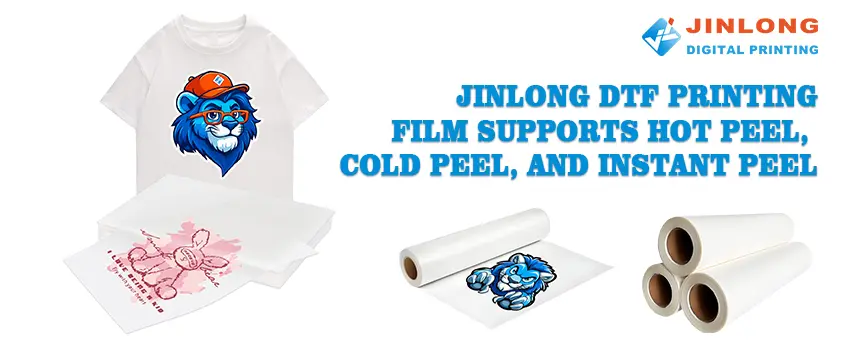
Main Types of DTF Films for Hot Peel Applications
When it comes to hot peel DTF transfers for t-shirts, choosing the right film is crucial. There are several main types of DTF films designed specifically for hot peel use:
Standard Hot Peel DTF Film: This film requires the transfer to cool slightly before peeling. It offers solid durability and works well on a variety of fabrics, making it a reliable choice for most t-shirt applications.
Instant or True Hot Peel DTF Transfers: Designed for immediate peeling while the transfer is still hot, these films speed up production. They often use specialized adhesive powders to ensure the print sticks instantly without compromising durability.
Hybrid Hot Cold Peel DTF Film: A versatile option combining features from both hot and cold peel films. It lets you peel transfers either hot or cold, offering flexibility depending on your workflow and garment type.
Matte vs. Glossy Finishes: Matte hot peel DTF film creates a smooth, non-reflective look perfect for casual wear, while glossy finishes add a shiny, vibrant effect ideal for eye-catching designs.
Choosing the right type depends on your specific needs, including fabric compatibility and production speed. For consistent results, also consider matching your film choice with the right DTF powder adhesive and printer settings.
For more insights into matching films with printer and ink setups, check out this guide on best DTF powder for wash resistance and stretchability.
Compatibility Essentials for Hot Peel DTF on T-Shirts
Getting the best results with hot peel DTF transfers for t-shirts means matching the right materials and settings. First off, fabric types matter—a hot peel DTF film works exceptionally well on cotton and polyester blends, but pure polyester needs special attention to avoid cracking.
Next, ink and printer compatibility are crucial. Your DTF printer film compatibility should align with the ink type to ensure vibrant colors and durability. Using quality DTF white ink for inkjet printing on dark fabrics also boosts transfer opacity and brightness.
Adhesive powders are the glue holding it all together. Hot peel DTF applications require powders that melt and bond instantly under heat press, so make sure you’re using the correct DTF hot peel powder adhesive. This ensures the transfer sticks fast without peeling off too soon.
Finally, nail the heat press settings—temperature, pressure, and time. Most hot peel DTF transfers need 320-330°F for about 15-20 seconds with medium pressure. Peel immediately while hot for a smooth finish. Incorrect settings can lead to poor adhesion or damage to the print and fabric.
For detailed tips on printing, powdering, curing, and pressing your hot peel DTF transfers, check out this digital DTF workflow guide to optimize every step of your process.
Step-by-Step Application Guide for Hot Peel DTF Transfers on T-Shirts
Getting great results with hot peel DTF transfers for t-shirts starts with following the right process. Here’s a simple step-by-step guide to make sure your prints come out perfect every time.
Printing and Powder Application
- Print your design on compatible DTF printer film using the right ink for hot peel transfers. Make sure the image is sharp and colors are vibrant.
- Apply the DTF hot peel powder adhesive evenly on the printed film. Use a powder shaker or manual powdering method to cover the entire design lightly but fully. Shake off any excess powder before moving on.
Pressing Process
- Set your heat press to the recommended temperature for hot peel DTF, usually around 320°F to 340°F (160°C to 170°C).
- Place the powder-coated film on the t-shirt fabric, cover with a Teflon sheet, and press for 10 to 15 seconds with firm pressure.
- Timing and temperature can vary depending on your fabric type and powder, so always check the specific hot peel DTF application instructions for your materials.
Peeling Technique
- Once pressing is complete, peel the film immediately while still hot—this is the key to hot peel DTF. The adhesive is designed to release the transfer right away, giving clean edges and vivid prints.
- If the peel isn’t clean, you might need to adjust your press time or temperature slightly.
Troubleshooting Tips
- If prints feel sticky or don’t adhere well, check if you applied enough powder or if the press temperature was too low.
- For bubbling or cracking, try lowering the heat or shortening the press time.
- Ensure you’re using a hot peel DTF film and powder designed specifically to work together to avoid compatibility issues.
Washing and Care
- Turn printed t-shirts inside out before washing to protect the transfer.
- Use cold or warm water and avoid harsh detergents.
- Air dry or tumble dry on low heat for longer-lasting transfers.
- Proper curing during pressing will help maintain durability, even on polyester or cotton fabrics.
Following this straightforward workflow helps ensure durable, vibrant hot peel DTF transfers every time you print on t-shirts. For printer and powder equipment options that streamline your process, check out the detailed comparison between DTF printer with powder shaker vs manual powdering to find what suits your needs best.
Why Choose Jinlong DTF for Hot Peel Transfers?
When it comes to hot peel DTF transfers for t-shirts, Jinlong DTF stands out for its consistent quality and ease of use. Here’s why printers in the U.S. prefer Jinlong’s products over standard films:
| Feature | Jinlong DTF Film | Standard DTF Films |
|---|---|---|
| Peel Type | Instant hot peel, smooth and fast | Often cold peel or slow hot peel |
| Film Finish Options | Matte and glossy available | Limited finish choices |
| Adhesive Powder Quality | Uniform, high-quality DTF hot peel powder adhesive | Varies, sometimes uneven adhesion |
| Compatibility | Works well on cotton, polyester, blends | May require specific fabrics or inks |
| Durability | Durable transfers, withstand multiple washes | Less durable, prone to cracking |
| **Printing |




 English
  Español
  Deutsch
  Français