


DTF White Ink vs DTG White Ink Differences Explained for Inkjet Printing
The Fundamental Difference: Carrier, Canvas, and Anchor Mechanism
Lorsque l'on compare les Encre blanche DTF pour jet d'encre et DTG white ink, the core difference lies in how the ink interacts with the substrate and the anchoring method used.
| Aspect | DTG White Ink | DTF White Ink for Inkjet |
|---|---|---|
| Carrier Medium | Water-based pigment ink designed for fabric | Pigment ink formulated for PET film application |
| Canvas (Substrate) | Directly printed on cotton or polyester fabric | Printed on PET film, then transferred to fabric |
| Anchor Mechanism | Relies on pretreatment binders on fabric | Uses hot melt powder adhesion to bond ink film |
Substrate Interaction
- DTG white ink soaks and binds directly into the fabric fibers, requiring precise pretreatment. This binder acts as the anchor, ensuring the pigment locks into fibers. Optimal for direct printing on coton ou des mélanges de polyester.
- Encre DTF is printed onto a special PET film then transferred onto fabric. Its ink formulation resists penetration. Adhesion depends on poudre thermofusible sprinkled on wet ink and melted during curing.
Pourquoi c'est important
- DTG\’s ink and fabric bond gives a soft hand feel and durable print. It\’s ideal for cotton-heavy garments.
- DTF relies on the powder adhesive for durability and works well with polyester or mixed fabrics, providing a vinyl-like finish with strong wash fastness.
Understanding this fundamental difference is key to choosing the right white ink. Using the wrong ink disrupts adhesion, print quality, and durability—especially in the U.S. market where diverse fabric blends dominate.
Jinlong's DTF white ink formulation is engineered to optimize this carrier and anchor mechanism, ensuring smooth printing on PET films and robust transfers on fabric with excellent opacity and adhesion.
Technical Breakdown: Viscosity and Chemical Composition

Understanding the technical side of DTF white ink for inkjet versus DTG white ink comes down mainly to ink viscosity, pigment load, and how each handles sédimentation.
| Fonctionnalité | Encre blanche DTF | DTG White Ink |
|---|---|---|
| Viscosité | Lower viscosity for smooth flow through PET film transfer; prevents clogging but requires stable flow | Higher viscosity to avoid bleed on fabric; needs thicker consistency for fabric bonding |
| Pigment Load | High titanium dioxide content for strong opacity as the base layer on transfer film | Moderate pigment load designed for direct fabric printing |
| Sedimentation | Strong tendency for titanium dioxide sedimentation; demands constant circulation with an ink circulation system (WIMS) to keep particles evenly suspended | Less prone to sedimentation due to different binder chemistry but still needs regular shaking |
| Chemical Composition | Contains hot melt powder reactive components to bond with adhesive powders in DTF process | Uses pretreatment fluids that chemically bond pigments directly into fibers |
Le viscosité difference is key: DTF inks must flow smoothly through piezo printheads like the Epson I3200 but can’t be so thin that they bleed under hot melt powder. DTG inks, by contrast, need thickness to sit on fabric without sinking, needing wet-on-wet printing.
With DTF white ink’s high opacité and pigment load, it’s designed to create a vibrant, solid white base on PET film for transfers—something DTG inks generally don’t emphasize due to direct fabric printing needs.
Because titanium dioxide pigments in DTF inks settle quickly, an ink circulation system (WIMS) is crucial for consistent prints and preventing clogging—a maintenance factor to consider if switching between DTF and DTG inks.
For those looking to learn more about complete DTF setups and powder integration, check out our detailed guide to DTF printing systems.
Printing Workflow: Wet-on-Wet vs Wet-on-Dry Techniques
When it comes to using DTF white ink for inkjet versus DTG white ink, the printing workflow differs significantly, mainly because of how the inks interact with the substrate.
Impression DTG follows a wet-on-wet approach. Here, the white ink is printed directly on pretreated fabric, and the ink bonds with the fibers while still wet. This process allows the ink to soak into the fabric for a soft, durable finish that feels natural on cotton and similar textiles.
In contrast, Impression du DTF uses a wet-on-dry technique. The white ink is printed onto a PET film first, then a hot melt powder is applied to the still-wet ink. This powder acts as an adhesive, which is then melted during curing to stick the design onto the fabric. This powder adhesion step is critical because it creates a vinyl-like layer that sits on top of the fabric, making the print more durable on various materials, including polyester.
Using the wrong ink in the wrong process can lead to several issues:
- Ink pooling and smudging: DTG white ink on film won\’t adhere correctly and may pool or run.
- Faible adhérence: DTF ink applied directly to fabric will lack proper bonding, resulting in flaking or cracking.
- Print defects: The powder adhesion in DTF won’t work with DTG ink’s chemistry, causing uneven finishes.
- Equipment strain: Using incompatible inks can also cause hardware problems due to viscosity and composition mismatches.
Understanding these differences helps avoid costly mistakes and ensures peak print quality whether you work with DTG or DTF white inks. For more insight into the DTF printing process and how it impacts garment durability and washability, check out this detailed guide on Impression DTF sur les chemises, coût, durabilité et lavabilité.
Can I Use DTG Ink in a DTF Printer? Risks and Consequences

Using DTG white ink in a DTF printer might seem like a quick fix, but it often leads to more problems than benefits. DTG ink is formulated for direct fabric printing and doesn\’t match the needs of printing on PET film with a hot melt powder adhesion process.
Common issues you\’ll face:
Ink pooling and print defects on film: DTG inks tend to be thinner and lack the right viscosity for film use. This causes pooling, smudging, and uneven white layers on DTF transfer films, ruining the print quality from the start.
Hardware damage risks: The viscosity and chemical makeup of DTG inks aren\’t compatible with the DTF inkjet system, especially printers using Epson I3200 or XP600 printheads. Thinner or off-spec ink can clog nozzles more easily or cause mechanical wear, leading to costly repairs.
Durability and wash fastness problems: Even if you get a print to stick initially, prints made with DTG ink on DTF transfers won’t bond properly with the hot melt powder. This results in poor wash fastness and fading after just a few washes, making garments look old and worn quickly.
For best results, always use white ink specifically formulated for DTF processes. If you want to learn about films designed for those inks, check out options like the DTF Film de transfert 40cm Double Pro Series. This ensures your prints stay sharp, vibrant, and durable.
Avoid mixing ink types to protect your printer and guarantee top-quality final products.
Wash Fastness and Elasticity Comparison
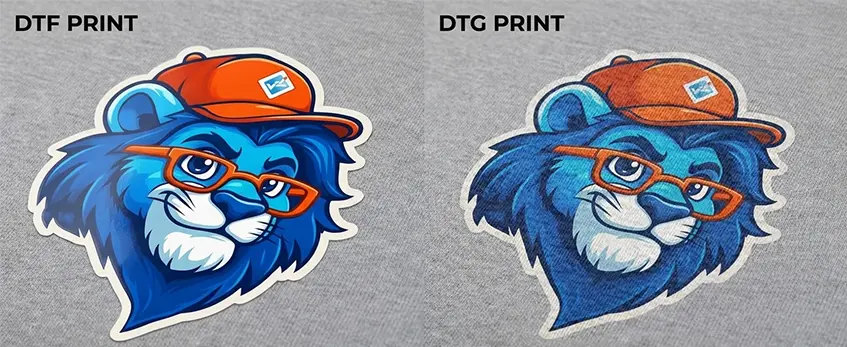
Lorsqu'il s'agit de résistance au lavage et élasticité, DTF and DTG white inks behave quite differently once cured.
| Fonctionnalité | Encre blanche DTF | DTG White Ink |
|---|---|---|
| Durabilité | High wash fastness thanks to hot melt powder adhesion on PET film transfers | Good durability but depends on pretreatment quality |
| Stretch Behavior | Moderate stretch with some vinyl-like stiffness | Excellent elasticity, soft hand feel |
| Texture | Vinyl-like finish, slightly plastic feel | Soft, fabric-like finish after curing |
Encre blanche DTF cures into a durable, vinyl-like texture, which offers excellent resistance to repeated washing. This is due to the hot melt adhesive powder that forms a strong bond on polyester or cotton garments after heat pressing. However, this firmness can reduce fabric stretch and softness, making it feel a bit stiffer.
In contrast, DTG white ink uses a textile pigment ink combined with pretreatment binders to soak into the fabric. The result is a much softer feel with great elasticity, ideal for garments that require comfort and natural stretch. The wash fastness rating is good but generally not as high as DTF prints, especially on polyester blends.
Choosing the right option depends on your needs: if you want soft, stretchy prints, DTG is preferable. For durability and a sharp, opaque white base that withstands frequent washing, DTF white ink is a strong choice. For a deep dive into how DTF powder adhesion improves durability, check out the detailed DTF powder safety and best practices guide.
Choosing the Right Ink for Your Inkjet Setup
When picking DTF white ink for inkjet printers, compatibility is key—especially with popular Epson printheads like the I3200, XP600, and DX5. These printheads demand inks with perfectly tuned viscosity and particle size to prevent clogging and ensure smooth printing. Jinlong’s DTF white ink formulations stand out because they’re designed specifically for these piezo printheads, offering excellent flow and high opacity without risking sedimentation or printhead blockages.
Jinlong inks also feature a balanced titanium dioxide pigment load, giving you that bright, opaque white base crucial for vibrant PET film transfers and cotton or polyester prints. Plus, their ink circulation system keeps pigments evenly suspended to avoid the common problem of sedimentation during long print runs.
To maintain optimal print quality, proper storage and maintenance are a must. Store your Jinlong DTF white ink in a cool, dry place away from direct sunlight. Always keep your printer\’s ink circulation system running when idle for extended periods to reduce clogging risks. For detailed troubleshooting and maintenance tips, the Jinlong guide on handling DTF printer issues est une ressource précieuse.
By choosing the right DTF white ink tailored for your Epson printheads and following these best practices, you ensure flawless prints, longer hardware life, and consistent wash fastness in your garments.


 English
  Español
  Deutsch
  Français