


DTF vs HTV Printing Guide for Starting a Successful Print Business
Understanding the Basics: How DTF and HTV Work
Starting a custom t-shirt business means choosing the right printing method. Two popular options are DTF printing vs heat transfer vinyl (HTV). Both have unique steps and gear that affect your workflow, costs, and final product.
How HTV Works: Step-by-Step
HTV involves cutting shapes or designs from colored vinyl sheets, then transferring them to fabric.
- Design: Create your pattern on software like Cricut Design Space or Silhouette Studio.
- Cut: Use a vinyl cutter (Cricut or Silhouette) to cut your design on heat transfer vinyl.
- Weed: Remove the excess vinyl, leaving only the parts to be pressed.
- Apply: Heat press the vinyl onto the shirt, bonding it with heat and pressure.
Key HTV equipment:
- Vinyl cutter (Cricut Maker, Silhouette Cameo)
- Heat press machine
- Weeding tools
- Vinyl rolls or sheets in various finishes (glitter, flock, holographic)
How DTF Works: Step-by-Step
Direct to film (DTF) printing takes a different approach, printing full-color designs onto special film and then transferring them.
- Print: Use a DTF printer to print your full-color design directly on a clear film.
- Apply Powder: Sprinkle hot-melt adhesive powder onto the printed wet ink.
- Cure: Cure the powder either by heating with a conveyor dryer or oven to set it.
- Transfer: Use a heat press to transfer the design from the film to the garment.
Key DTF equipment:
- DTF printer (specialized inkjet compatible)
- Powder shaker for even adhesive application
- Curing conveyor dryer or oven
- Heat press machine
Why the Equipment Matters
For beginners, HTV setups are simpler and more affordable, leveraging familiar tools like Cricut cutters. DTF demands a larger initial investment in printing technology but opens doors to unlimited color prints and faster batch production.
Understanding these workflows and gear sets the foundation for making the best choice between heat transfer vinyl vs DTF printing based on your business goals and creative needs.
Startup Costs and Investment Breakdown
When choosing between DTF vs HTV for your custom apparel business, understanding startup costs is key.
HTV is great if you want a low entry point. You’ll need a heat press and a cutter like a Cricut or Silhouette, which together cost around $500 to $3,000. Materials like vinyl sheets are inexpensive for simple designs, making HTV ideal for small batches or personalized projects without breaking the bank.
DTF, on the other hand, demands a higher upfront investment. Setting up with a quality DTF printer, such as those recommended in this DTF printer setup guide, plus buying transfer films, powders, and curing equipment usually runs between $5,000 to $20,000 or more. However, once you get past the startup phase, your per-unit cost drops significantly, making DTF a smart choice for scaling and higher volumes.
Don’t forget about hidden costs for both methods: time and labor for weeding (especially with HTV), powder application and curing (DTF), waste materials, regular maintenance, and consumables all add up and impact your margins.
Typically, DTF’s return on investment (ROI) kicks in around 50 to 200 shirts per month. At this scale, DTF printing becomes more profitable due to faster production and lower material costs compared to HTV runs.
Balancing startup costs with your expected order volume will help you pick the printing method that fits your business goals.
Design Capabilities and Creativity: DTF vs HTV
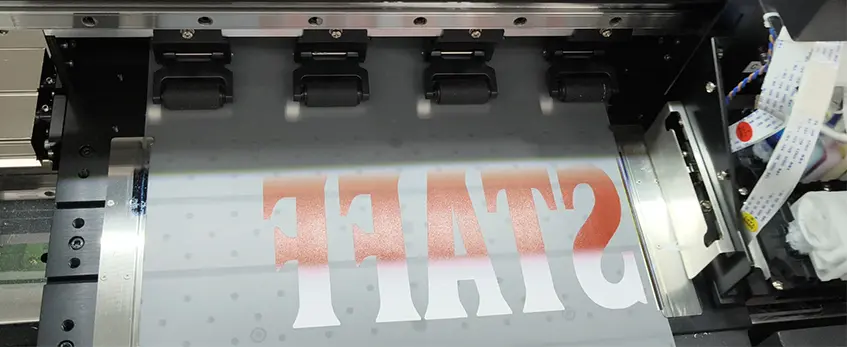
When it comes to design options, HTV vinyl and DTF printing each have distinct strengths that suit different creative needs.
HTV strengths
- Excellent for specialty finishes like glitter, puff, holographic, and flock vinyl
- Best for simple, layered designs with 1 to 3 colors
- Perfect if you want textured, eye-catching effects and personalization, such as names or numbers
However, HTV struggles with complex or multi-color designs due to its weeding process and layering limits.
DTF strengths
- Supports full-color prints, including gradients, photos, and intricate details without color limits
- No weeding required, making it easier to produce complex, multicolor designs quickly
- Prints have a soft hand feel that customers love
The trade-off is that DTF prints tend to have less texture variety than HTV finishes.
Choosing between them depends on your design needs: for vibrant, detailed artwork with unlimited colors, DTF is a strong choice. For specialty vinyl textures and simpler designs, HTV remains popular. If you want to explore top-quality DTF printing supplies and the latest tech, check out the JL DTF604S digital printer known for its outstanding print quality.
Durability, Washability, and Customer Satisfaction
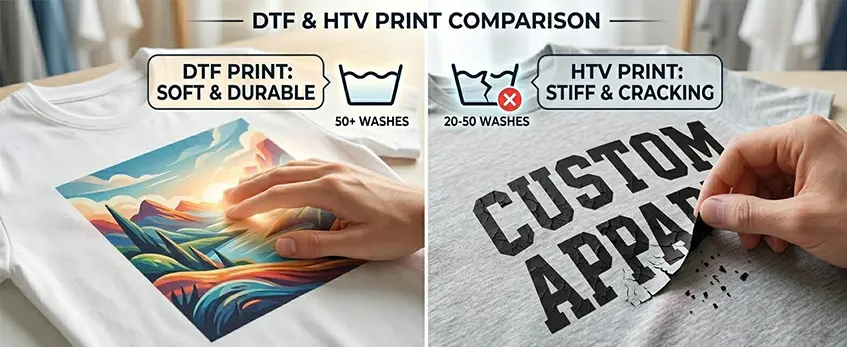
When it comes to DTF printing vs heat transfer vinyl (HTV), durability and washability are big factors that impact customer satisfaction. Real-world wash tests show that DTF transfers can last anywhere from 50 to 100+ washes without cracking or peeling. In contrast, HTV prints typically start showing wear after about 20 to 50 washes.
Fabric compatibility is another major point. DTF works great on a wide range of fabrics — cotton, polyester, blends, and even dark or light colors. This versatility makes it a go-to choice for many print businesses. HTV is also versatile but often leaves a rubbery feel, which some customers find less comfortable after multiple uses.
From customer feedback, the softer hand feel of DTF prints leads to higher repeat business and better reviews overall. The more natural feel combined with excellent durability often makes DTF the preferred method for apparel decorators focused on long-term customer satisfaction.
For those investing in equipment or supplies, consider checking out quality DTF white ink for printing on dark fabrics that enhances durability and vibrancy in your designs.
Production Speed and Scalability
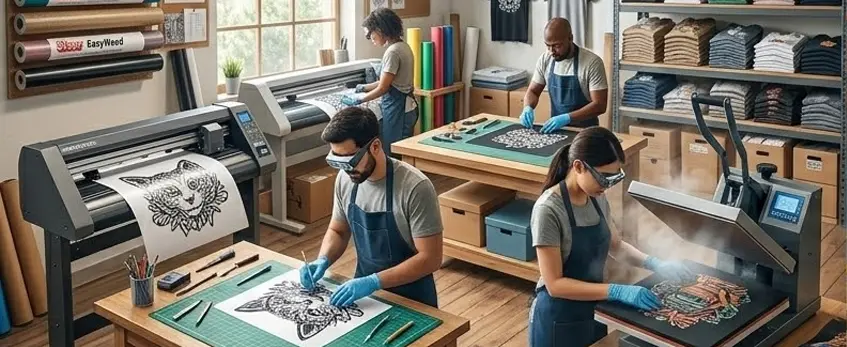
When it comes to production speed, HTV (heat transfer vinyl) is slower, especially for higher volumes. Each design requires cutting, weeding, and careful layering, which makes HTV ideal for one-off projects or small batch orders. If you’re doing custom names, numbers, or simple designs in low quantities, HTV works well but can become a bottleneck as order volume grows.
DTF (direct to film transfers for t-shirts), on the other hand, speeds up the process considerably. It removes the weeding step entirely and lets you print in batches. This makes DTF perfect for medium to high-volume runs, like Etsy shops, Shopify stores, or local bulk orders. When your order count reaches around 50–200 shirts per month, switching to DTF can save you significant time and increase scalability.
Signs Your Business Outgrows HTV
- Orders start piling up, causing delays or longer turnaround times.
- Designs need to be more complex or full-color.
- You want to improve profit margins by producing faster.
- You’re ready to scale up for e-commerce or wholesale markets.
For those ready to move into DTF printing, investing in proper equipment like a DTF printer, powder shaker, and curing oven can streamline production and boost output. For detailed insight on costs, learn about DTF printer prices in 2026.
Ease of Use and Learning Curve
When it comes to ease of use, HTV (heat transfer vinyl) is the clear winner for beginners. You don’t need much technical know-how—just design, cut with a machine like a Cricut or Silhouette, weed, and press. This straightforward process makes HTV perfect if you’re just starting a custom t-shirt business or want quick, small projects without a steep learning curve.
On the other hand, DTF printing vs heat transfer vinyl involves a more complex setup. You’ll need to learn how to operate a DTF printer, manage powder application, cure prints properly, and maintain your equipment. This may sound daunting at first. However, once you get the hang of the workflow—from printing to curing and transferring—the process becomes smooth and efficient, especially for medium to high volume orders. For a hands-on guide, check out the detailed DTF printer with powder shaker workflow to understand the ins and outs of DTF production.
Tips for newcomers:
- Practice your HTV weeding skills to save time and avoid frustration.
- For DTF, invest time in learning maintenance routines for your printer and powder shaker.
- Start with simple designs before moving to complex, full-color prints.
- Stay consistent with curing times to get durable, high-quality transfers.
While HTV offers minimal technical barriers, mastering DTF printing opens doors to full-color, vibrant designs and scalable business growth. Choose your path based on your comfort level and business goals.
Best Use Cases: When to Choose HTV vs DTF
Choosing between DTF vs HTV depends on your business goals, budget, and order type. Here\’s a simple breakdown:
| Choose HTV if… | Choose DTF if… | Hybrid Approach |
|---|---|---|
| • You have a low budget | • You need full-color, detailed designs | Use HTV for specialty textures |
| • You’re just starting small | • Your orders are growing or going online | Use DTF for bulk, multi-color prints |
| • You want specialty finishes like glitter, puff, or flock | • You prioritize durability and soft prints | Switch between both based on order size |
| • You personalize names/numbers | • You want versatility across fabric types | Maximize profits and creativity |
| • You print very low volume | • E-commerce focused and need scalability |
- HTV shines at low volume and simple designs with a unique texture feel.
- DTF fits best for vibrant, durable prints especially when handling photos or gradients—plus, it\’s great for multiple fabric types.
For a business stepping up to DTF, checking out resources like the 2026 desktop DTF printer setup guide is a smart move to get started right.
Going hybrid can boost your product range and efficiency, letting you pick the right method for each order—making the best of both vinyl vs DTF for beginners.
Profitability and Business Growth Considerations
When it comes to profitability, HTV vinyl pros and cons show that HTV usually offers higher per-shirt margins on tiny runs because the startup costs are low and materials are inexpensive for simple designs. However, as your order volume grows, DTF printing vs heat transfer vinyl decisively favors DTF—the lower per-unit cost and faster production at scale make DTF the more profitable option beyond about 50–200 shirts a month.
Looking at market trends in 2026, there\’s a clear shift toward vibrant, durable custom prints. Customers want full-color, long-lasting designs, which puts DTF transfers at the forefront. This makes DTF a smart choice for businesses focused on growth and repeat customers.
If you’re currently using HTV but thinking about transitioning, here are a few tips:
- Start by testing Jinlong DTF films and powders with small batches to get familiar with color vibrancy and durability.
- Consider mixing workflows: keep HTV for specialty textures and personalization while expanding DTF for bulk full-color orders.
- Invest in reliable beginner-friendly DTF printers and maintain them well to avoid downtime and keep margins healthy.
- Factor in maintenance and consumables like powders and films to manage your expenses effectively.
This hybrid strategy can maximize profitability as you grow, while leveraging the scalability and customer satisfaction advantages of direct to film transfers for t-shirts.
Final Recommendation: Making the Right Choice for Your Business
Choosing between DTF vs HTV depends largely on your business volume, design needs, and budget. Here’s a quick checklist to help you decide:
- Volume: If you’re printing less than 50 shirts a month or focusing on personalized names and specialty finishes, HTV is cost-effective and beginner-friendly. For 50+ shirts monthly, especially with full-color or photo-quality designs, DTF is more scalable and profitable.
- Design Needs: Pick HTV for simple, layered designs with specialty textures like glitter or puff vinyl. Go with DTF for intricate, full-color artwork that doesn’t require weeding and offers a softer feel.
- Budget: HTV has lower startup costs (around $500–$3,000), while DTF requires a bigger upfront investment ($5,000+) but lowers cost per unit as you grow.
Whatever path you choose, start small and test samples to see which print method fits your workflow and quality expectations best. Experimenting helps avoid costly mistakes and fine-tunes your offer for your local market.
For those leaning toward DTF, exploring trusted supplies like jinlong DTF films and powders will ensure top-quality, consistent prints that impress your customers and boost repeat business. These products are crafted with U.S. market needs in mind, helping your print business stand out with vibrant, durable results.
Remember, the right equipment paired with smart choices in volume and design will pave the way for your custom apparel success.


 English
  Español
  Deutsch
  Français