



DTF Temperature Settings Guide for Film Powder and Fabric Transfers
Understanding the DTF Process: Where Temperature Plays a Role
Direct-to-Film (DTF) printing involves multiple critical stages where temperature settings are key to achieving a vibrant, durable transfer. First, the design is printed onto a special film using DTF inks, which requires precise control to ensure sharp, detailed images. After printing, a layer of DTF powder adhesive is applied to the wet ink. This powder needs to be cured at an optimal DTF powder curing temperature to activate the adhesive properly, ensuring it bonds well to the fabric.
The final and most temperature-sensitive step is heat pressing the film onto the fabric. The heat press settings—temperature, time, and pressure—must be carefully calibrated to fuse the powder adhesive, embed the design, and avoid damage to both the print and garment. Incorrect temperature during powder curing or heat pressing can lead to issues like poor adhesion, fading, or fabric scorching.
Understanding and managing the ideal DTF transfer temperature at each stage—from printing on film to powder application and curing, then heat pressing to fabric—ensures consistent, high-quality results. This is particularly important when working with different fabric types, as each responds uniquely to heat settings.
Optimal Temperature for DTF Powder Curing (Adhesive Activation)
When it comes to DTF powder curing temperature, getting the right heat is crucial to properly activate the adhesive powder. Most hot-melt powders melt between 250–320°F (120–160°C). Staying within this range ensures the powder melts evenly, forming a strong bond without scorching the film or fabric.
You can cure the powder using an oven or a heat press—both work well but have their perks. Ovens offer consistent, all-around heat, making them great for batch curing. Heat presses, on the other hand, give you precise control over time, temperature, and pressure, which can improve consistency for transfers done one by one.
Recommended cure times generally fall between 10 to 20 seconds at the right temperature. Signs of a good cure include a smooth, slightly tacky feel of the powder once melted and no leftover graininess. Avoid under-curing, which causes poor adhesion, and over-curing, which can lead to clumping or rough textures.
For best results with Jinlong powders, follow these tips:
- Preheat your powder slightly if clumping occurs.
- Maintain consistent heat and pressure to avoid uneven curing.
- Refer to specific guidance for the Jinlong DTF powder to match your setup and fabric type.
Proper curing of DTF powder strengthens transfers and improves wash durability, making temperature control a vital step in the DTF process.
Recommended Heat Press Settings for DTF Film Transfers
Getting your DTF heat press settings right is key for a smooth, durable transfer. The baseline temperature for most DTF film transfers hovers around 320°F (160°C), with a pressing time of about 15 seconds. Pressure should be firm and consistent—usually medium to high—to ensure proper adhesion without damaging the film or fabric.
Hot Peel vs. Cold Peel Techniques
- Hot Peel: Removing the film immediately after pressing keeps the transfer tacky, ideal for quick jobs and vibrant colors. This method often produces a glossier finish.
- Cold Peel: Letting the transfer cool before peeling gives a smoother, often matte finish and helps prevent any lifting, especially on light fabrics.
Impact on Finish: Matte vs. Glossy
- Matte finishes are best achieved with cold peel and slightly lower pressure, giving a softer look.
- Glossy results lean on hot peel settings with higher pressure and speed, enhancing the vibrancy of the print.
Adjusting your DTF heat press pressure and timing based on these factors balances durability and aesthetics. For more detailed powder and film info, Jinlong’s guide on TPU powder explained and how it’s used in DTF printing is a solid resource to check out.
Fabric-Specific DTF Temperature Settings
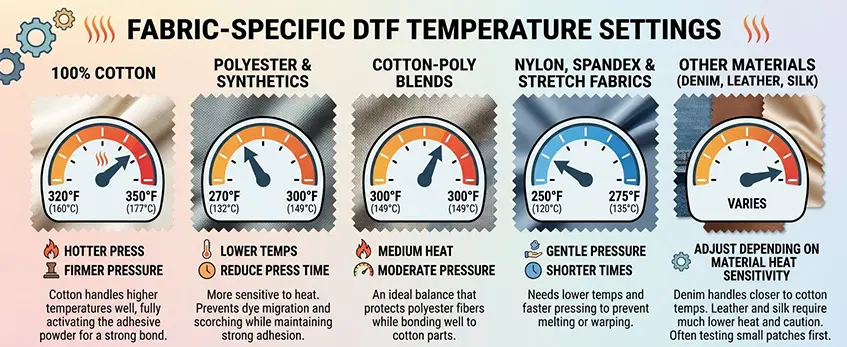
Getting your DTF temperature settings right depends a lot on the fabric. Here’s a quick guide to help you dial in the best heat press settings for different materials:
100% Cotton: Cotton handles higher temperatures well, so you can use a hotter press and firmer pressure. This helps the adhesive powder fully activate and bond. Ideal DTF temperature for cotton usually ranges between 320°F to 350°F (160°C to 177°C).
Polyester and Synthetics: These fabrics are more sensitive to heat. Too much can cause dye migration or scorching. Keep temperatures lower, around 270°F to 300°F (132°C to 149°C), and reduce press time. This helps avoid damage while maintaining strong adhesion.
Cotton-Poly Blends: For blends, it’s all about balance. Use medium heat—around 300°F (149°C)—and moderate pressure. This protects polyester fibers while still bonding well to cotton parts.
Nylon, Spandex, and Stretch Fabrics: These need the lowest temps and shorter pressing times to prevent melting or warping. Set your heat press between 250°F and 275°F (120°C to 135°C) with gentle pressure.
Other Materials (Denim, Leather, Silk): Adjust depending on the specific fabric’s heat sensitivity. Denim can handle closer to cotton temps, but leather and silk require much lower heat and more caution, often testing small patches first.
Fine-tuning your DTF heat press settings by fabric type is key to achieving durable, vibrant transfers without damaging your garments. If you want detailed tips on heat press pressure and timing, the Jinlong DTF ink resources provide great insights on optimizing settings for your material.
Factors That Influence DTF Temperature Adjustments
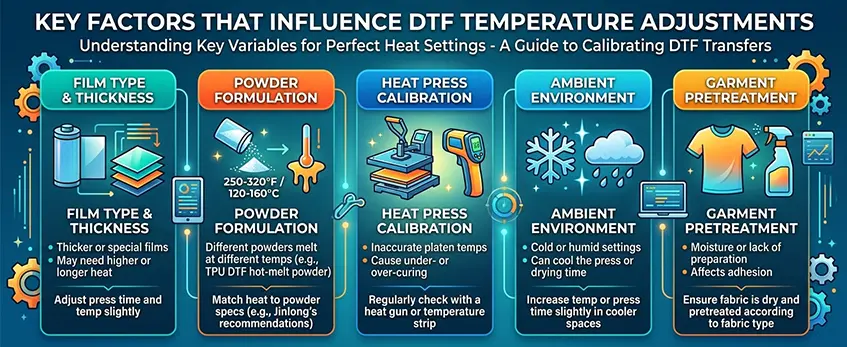
Getting the DTF temperature just right means understanding several key factors that affect heat settings. Adjusting temps isn’t one-size-fits-all. Here’s what to keep in mind:
| Factor | Impact on Temperature Settings | What to Do |
|---|---|---|
| Film Type & Thickness | Thicker or special films may need higher or longer heat | Adjust press time and temp slightly |
| Powder Formulation | Different powders melt at different temps (250–320°F / 120–160°C) | Match heat to powder specs like Jinlong\’s recommendations (TPU DTF hot-melt powder) |
| Heat Press Calibration | Inaccurate platen temps cause under- or over-curing | Regularly check with a heat gun or temperature strip |
| Ambient Environment | Cold or humid settings can cool the press or drying time | Increase temp or press time slightly in cooler spaces |
| Garment Pretreatment | Moisture or lack of preparation affects adhesion | Ensure fabric is dry and pretreated according to fabric type |
These variables make it vital to calibrate your DTF heat press settings often. Even the best baseline temps for powder curing and heat pressing may need tweaks depending on your workflow, materials, and workspace.
For more on avoiding common heating issues and how to fine-tune your setup, check out our top mistakes to avoid when using the best DTF heat press.
Troubleshooting Common Temperature-Related Problems in DTF Printing
Temperature issues can really throw off your DTF heat press settings, causing problems that ruin your prints. Here’s how to spot and fix some of the most common temperature-related troubles:
Under-Curing and Poor Adhesion: If your DTF powder curing temperature is too low or the pressing time is too short, the adhesive won’t activate properly. This leads to prints that peel off easily. Make sure you hit the recommended melt temp range for hot-melt powder (250–320°F / 120–160°C) and follow the right pressing times for your fabrics.
Overheating and Scorching: Too much heat or pressure can scorch your fabric or burn the film, leaving ugly marks. Scorching often happens with sensitive materials like polyester or blends if you use cotton-level temps. Lower the temperature and/or reduce pressing time to prevent damaging your garments.
Cracking or Peeling After Washes: This usually means the DTF transfer didn’t fully cure or the heat press pressure was uneven. Double-check your heat press calibration to keep platen temperature accurate and apply firm, even pressure during pressing. Re-pressing shortly after the first transfer can help seal the adhesive better.
Dye Bleed in Polyester: Using too high heat on polyester can cause dye migration, which means the fabric dye bleeds into your print colors, ruining the design. Lower the heat press temperature and shorten the pressing time for polyester and other synthetics to avoid this.
Uneven Transfers: If parts of your print aren’t sticking well or the finish varies, it might be due to inconsistent heat distribution or incorrect powder application. Check your heat press for hot spots and make sure your powder is evenly spread. Using high-quality materials like Jinlong DTF powder can reduce these issues.
For more detailed help on setting the correct heat press temperature, see how correct DTF temperature settings reduce waste and improve your results at Jinlong Prints.
Addressing these temperature-related issues early will save you time and money while giving you consistent, high-quality DTF transfers every time.
Best Practices and Pro Tips from jinlong DTF
Achieving top results with DTF heat press settings isn\’t just about hitting the right temperature—it’s also about fine-tuning your entire workflow. Here are some expert tips from jinlong DTF to get the best quality and durability from your transfers:
Calibration and Maintenance
- Regularly calibrate your heat press to ensure consistent temperature and pressure. An inaccurate platen can affect curing and adhesion.
- Clean the heat press platen frequently to avoid powder build-up or residue that reduces transfer quality.
- Use a reliable thermometer to verify your actual heat, since built-in displays can sometimes be off by 10-15°F.
Garment Preparation
- Pre-press your fabric for 3-5 seconds to remove moisture and wrinkles—this stabilizes the surface for better powder bonding and transfer.
- Choose the right DTF powder curing temperature and adhesive powder designed for your garment type to avoid peeling or cracking.
Post-Press Re-Pressing Techniques
- If your transfer feels under-cured, a quick re-press at the factory-recommended temperature usually fixes adhesion without damaging the print.
- For cold peel transfers, wait until fully cooled before peeling to maintain sharp edges and minimize film residue.
Wash and Test Instructions
- Wash test samples before mass production to fine-tune your optimal DTF pressing time and temperature for durability.
- Follow garment-specific wash guidelines, typically cold water and inside-out washing to preserve prints.
jinlong DTF Materials Temperature Tolerance Benefits
jinlong DTF powders and films are designed



 English
  Español
  Deutsch
  Français