


DTF Starter Kit Review Cost Features ROI for Small Apparel Businesses
The Small Business Dilemma: Scaling Up Custom Apparel
If you’re running a small custom apparel business, you’ve probably hit a familiar wall: how to scale production without sacrificing quality or eating into your profit margins. Many startups rely heavily on heat transfer vinyl (HTV) or sublimation printing, both of which have limitations when it comes to volume and fabric versatility. HTV can be time-consuming with its tedious weeding process, and sublimation struggles on cotton fabrics, which make up a large part of wardrobe staples.
This is exactly where Direct-to-Film (DTF) printing comes in—a powerful middle ground bridging the gap between basic home setups and expensive industrial machines. DTF combines the vibrant textile pigment ink durability and flexibility of screen printing with the simplicity and speed needed by small business owners.
The real question is: does investing upfront in a DTF starter kit make sense for your operation? If you’re printing 20 or more garments weekly, a DTF setup often hits the sweet spot—offering cost-effective production, less manual labor, and more fabric options, all while delivering professional-grade results. This upfront capital expense can lead to big savings down the line, especially compared to outsourcing or relying solely on HTV and sublimation methods.
Deconstructing the \”Starter Kit\”: What Are You Actually Paying For?
When you invest in a DTF starter kit, it\’s not just about the printer—it\’s the full system that makes or breaks your print quality and workflow. Let’s break down the main components.
The Hardware: DTF Printer and White Ink Circulation System
The heart of the kit is the DTF printer itself. A key feature to look for is the white ink circulation system. White ink tends to settle or clog the nozzles without circulation, which can cause poor prints and downtime. Printers with a reliable circulation system keep your white ink ready to print sharp, vibrant designs consistently.
The Consumables Ecosystem
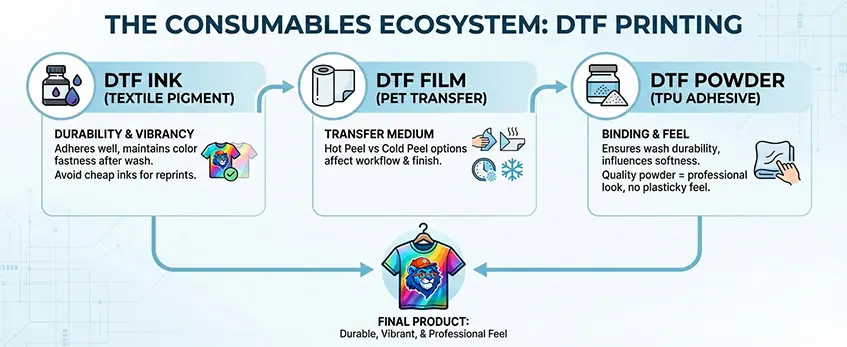
- DTF Ink: Durability and vibrancy depend largely on the quality of your inks. Textile pigment ink used in DTF is designed to adhere well and maintain color fastness after washing. Cheaper inks might save money upfront but cost you in reprints and unhappy customers.
- DTF Film (PET Film): This is your transfer medium. You’ll encounter options like hot peel vs cold peel PET film. Hot peel means you remove the film right after heat pressing, while cold peel requires waiting for the transfer to cool, which affects workflow speed and finish. You can find quality options in various sizes, including A3 and 30cm wide films, tailored to your business scale. Check out high-grade DTF transfer films available here for durable and vibrant prints.
- DTF Powder (Adhesive): This is usually TPU powder, critical for binding the ink to the fabric. It not only ensures wash durability but also influences the hand feel of the print—softness or stiffness. A quality powder means your prints look professional without feeling heavy or plasticky.
The Software: RIP Software for Effective Printing
Good RIP software is a must-have in your starter kit. It manages color profiles, white layering, and the detailed aspects of the direct to film printing workflow. Without it, your colors may look off, and white ink placement—which is crucial on dark garments—can become inconsistent.
Understanding what goes into a DTF starter kit helps you see the value beyond just the printer. It\’s about a balanced combo of hardware, consumables, and software working together for the best results.
The Financial Breakdown: Cost vs. ROI
When it comes to upfront investment, understanding the real cost per print is crucial. Compared to outsourcing custom transfers or using traditional vinyl heat transfer, Direct to Film printing slashes expenses over time. While your initial cost for a DTF starter kit might seem high, the DTF transfer cost calculator shows that the cost per garment can drop significantly once you produce 20+ shirts per week.
One major time saver is eliminating the tedious weeding process required with HTV vinyl. This means fewer labor hours and quicker turnaround—hours literally saved that translate directly into money savings. With DTF printing, you print, powder, cure, and press, streamlining the workflow without extra steps.
A simple break-even analysis helps you gauge how many shirts you need to sell before the starter kit investment pays off. For example, if your investment totals around $3,000 and the per-print savings compared to outsourcing is about $2 per shirt, selling around 1,500 shirts recoups your cost. From there, your ROI kicks in as cost-effectiveness continues to improve with volume.
For consistent print quality and durability, remember to factor in consumables like quality DTF ink and DTF film. Tools like the white ink circulation system also ensure less waste and consistent color vibrancy over every print, amplifying your long-term savings. You can find detailed cost and workflow tips in guides that cover everything from print on demand equipment to commercial heat press settings—making your investment smarter and more efficient.
The Reality Check: Is a Kit Right for You?

All-in-One Advantage: Why Pick jinlong DTF?
Buying a complete DTF starter kit from one trusted supplier like jinlong DTF guarantees compatibility across your printer, ink, powder, and film. This reduces hassle and troubleshooting, letting you focus on the direct to film printing workflow instead of mixing and matching parts that may not work well together. The synergy between their components—including the white ink circulation system—means fewer jams and consistent print quality from day one. You can check out how jinlong’s automatic powder shaker compares to manual powdering to see why their kits stand out.
Learning Curve: More Than Just Pressing Print
Running a DTF printer isn’t just plug-and-play. Beyond printing, you’ll need to understand:
- RIP software for DTF to manage color accuracy and white ink layering
- Heat press settings tailored for DTF film, including hot peel vs cold peel methods
- Proper use of TPU powder for a soft hand feel and durability
Getting up to speed takes time but mastering these steps means better prints and fewer wasted materials.
Maintenance Requirements: Daily Care Is Key
DTF printers need daily upkeep—especially the white ink circulation system—to avoid clogging and keep the colors vibrant. Skipping maintenance or infrequent use can cause printhead issues and impact the textile pigment ink durability over time.
| Maintenance Task | Frequency | Why It Matters |
|---|---|---|
| White ink circulation run | Daily | Prevents ink settling, clogs |
| Printhead cleaning | Weekly (minimum) | Ensures color vibrancy and flow |
| Powder shaker cleaning | After each use | Avoids powder build-up issues |
If you plan to print only occasionally, consider how these upkeep demands fit your schedule and business needs. For a small apparel business, investing the time means smoother operation and better garment decoration ROI.
For a detailed guide on daily care and maintenance, jinlong DTF offers helpful tips in their DTF printer maintenance guide.
Comparing the Alternatives
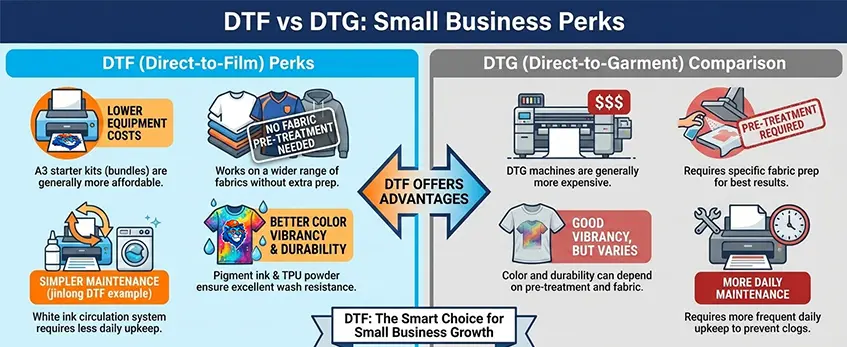
When deciding whether a DTF kit is right for your small apparel business, it\’s smart to compare it to other options like outsourcing transfers or using direct-to-garment (DTG) printing.
DTF Kit vs Outsourcing Transfers
If your weekly volume is below 20-30 garments, outsourcing your DTF transfers might save upfront costs and avoid hardware maintenance headaches. But once you consistently print above that, investing in a DTF printer and supplies (ink, film, powder) becomes more cost-effective. You gain control over your workflow, reduce turnaround times, and boost profit margins.
DTF vs DTG
Compared to DTG, DTF offers several perks for small businesses:
- Lower equipment costs: DTF starter kits, especially bundles like an A3 printer, are generally more affordable than DTG machines.
- No fabric pre-treatment needed: DTF works on a wider range of fabrics, including cotton, polyester, and blends, without extra prep.
- Better color vibrancy and durability: Thanks to pigment ink and TPU-based powders, DTF prints have excellent wash resistance and vibrant colors.
- Simpler maintenance: DTF printers with a white ink circulation system, like those from jinlong DTF, require less daily upkeep compared to DTG machines.
Ultimately, your choice depends on print volume, fabric types you want to work with, and how hands-on you want the process to be. This is a key part of the DTF printing workflow decision-making that can impact your business efficiency and costs.
For a deeper dive into how DTF compares to other printing methods and the benefits of using professional-grade supplies, check out this detailed guide on DTF printing trends in 2026.
What to Look for in a Professional Starter Kit
When investing in a DTF starter kit, support and training can make all the difference. Having a responsive supplier support team helps you quickly solve printing issues and get the most out of your equipment. Especially with jinlong DTF kits, customers often praise their helpful, knowledgeable support that guides you through setup and troubleshooting.
Consistent supply quality is just as important. Using reliable batches of DTF ink and PET film ensures your prints stay vibrant and durable without surprises. Jinlong DTF emphasizes steady supply consistency, so you don’t have to worry about color shifts or transfer failures caused by inconsistent consumables.
Finally, check the warranty and availability of replacement parts like printheads and dampers. A good starter kit should come with clear warranty terms and easy access to spare parts to keep your printer running smoothly. This reduces downtime and helps protect your investment over time.
For those looking for a dependable setup, jinlong DTF offers kits that cover all these essentials, along with strong support and consistent consumables to keep your apparel business moving forward. For more details on what to prioritize when ordering shirt transfers and equipment, check out their guide on what to look for in DTF transfers.


 English
  Español
  Deutsch
  Français