



DTF Rolls for Bulk Orders Maximize Speed Reduce Waste Boost ROI
The Speed Factor: Continuous Printing vs. Sheet Feeding
The Mechanics of Speed: Sheet vs. Roll Loading
When it comes to high-volume garment decoration, DTF rolls for bulk orders dramatically outperform traditional sheet-fed methods. Sheet feeding requires manual loading of pre-cut PET film sheets, interrupting the workflow every few prints. In contrast, continuous roll-to-roll (R2R) printing eliminates these delays. With rolls, the film feeds seamlessly through the printer, allowing uninterrupted production runs. This streamlined loading process significantly reduces downtime, optimizing your DTF production workflow.
Throughput Metrics: Output Per Hour and Automation Impact
Roll-fed systems boost output per hour by minimizing stop-start pauses inherent in sheet-fed printing. Integrated automated powder shakers and curing ovens enhance speed further by synchronizing powder application and curing with continuous printing, cutting manual intervention. This automation shrinks cycle times and raises line capacity, pushing throughput well beyond sheet-fed setups.
Meeting Tight Deadlines: Overnight Printing for Bulk Orders
The real advantage of roll printing lies in meeting tight deadlines. Continuous feed allows for overnight printing, essential for rush bulk orders in industrial heat transfer printing. With rolls, you can stack ganged prints with high density and run extended shifts without operator fatigue or frequent reloads. This means faster turnaround and reliable delivery, a critical edge for print shops competing on speed and volume.
In , continuous feed transfer printing with DTF rolls offers a lean, faster workflow by:
- Eliminating sheet change pauses
- Synchronizing automated shaker and curing stages
- Enabling long print runs that meet aggressive deadlines
This speed factor translates into tangible benefits for any high-volume textile ink absorption operation focused on efficiency and throughput.
Waste Reduction: The Economics of the \”Gang Sheet\”
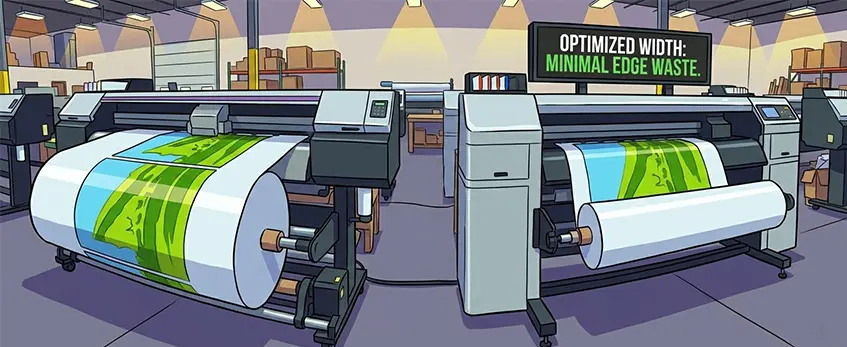
Mastering the gang sheet technique is a game-changer when using DTF rolls for bulk orders. Unlike conventional sheet-fed printing, where fixed margins lead to significant unused “dead zones,” continuous roll printing lets you nest images tightly together. This nesting process can push film utilization efficiency above 95%, dramatically reducing waste.
With sheet-fed systems, you often see wasted film along the edges and between prints because of fixed sheet sizes and spacing requirements. In contrast, roll-to-roll DTF printers allow flexible positioning on the continuous transfer film, optimizing layout to fit as many prints as possible on every inch.
Material efficiency goes beyond just layout. Matching the width of Jinlong DTF rolls to your specific print job sizes helps minimize edge waste further. By selecting roll sizes that closely fit your typical order dimensions, you avoid trimming excess film and keep costs down. This tailored approach to film use is a major reason why commercial DTF transfer film on rolls offers a better return on investment compared to pre-cut sheets.
For a deeper understanding of how to optimize your print orders and reduce waste, check out our guide on how to order shirt transfers for DTF printing and what to look for. This resource highlights practical ways to maximize material use while maintaining quality and output.
ROI Analysis: The Financial Case for Rolls
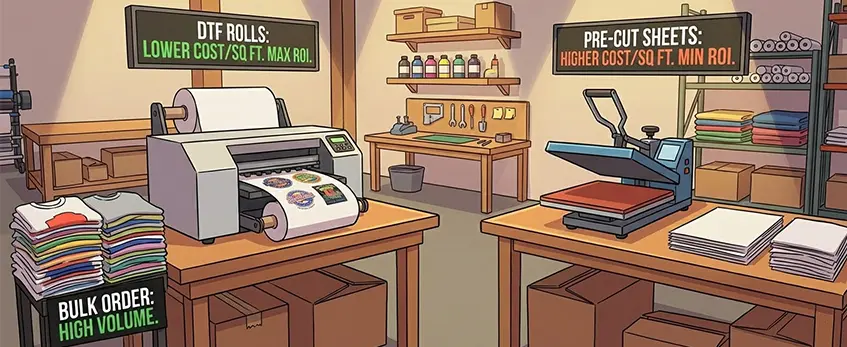
When it comes to DTF rolls for bulk orders, the return on investment (ROI) truly stands out. First off, the cost per square foot of roll film is significantly lower than buying pre-cut sheets. Rolls offer more film per dollar, meaning your material costs drop while you keep output high.
Labor savings also add up. With rolls, one operator can manage multiple printers at once, unlike sheet feeding that requires constant attention and manual loading. This streamlines your DTF production workflow and cuts down overhead.
The break-even point for investing in a reliable roll feeder and automated powder shaker often comes faster than expected. Increased throughput and less waste accelerate your payoff, letting you reinvest sooner into growing your print shop automation capabilities.
Lastly, consistency is currency in high-volume garment decoration. Jinlong rolls help avoid costly reprints by delivering uniform film thickness and coating quality every time, preserving profit margins and protecting your reputation. This reliability is a key factor in the financial advantage of switching to bulk rolls.
For more on optimizing your setup with advanced printers, check out our guide on why 4-head DTF printers are the best choice for growing print businesses.
Technical Requirements for Bulk Roll Printing
When handling bulk orders with DTF rolls, having the right equipment and controls is crucial for smooth, high-volume garment decoration.
Equipment Synergy for Roll-to-Roll DTF Printing
- Reliable R2R printer: Essential for continuous feed transfer printing without hiccups.
- Automated powder shaker: Keeps powder application consistent and reduces manual labor.
- Curing oven: Ensures proper fusion of ink and powder for durability.
Together, these tools streamline the DTF production workflow, cutting downtime and boosting output. You can find practical advice on optimizing your process in our guide to why every high-volume print shop needs a DTF printer with shaker and oven.
RIP Software and Nesting Support
Efficient roll printing depends heavily on software that supports:
- Nesting/ganging: Arrange multiple images tightly for maximum film use.
- Layout optimization: Reduce waste and speed up job setups.
This software feature plays a big role in delivering gang sheet optimization specifically designed for continuous rolls.
Environmental Controls for Long Continuous Runs
Long runs require consistent conditions to prevent issues like ink bleeding or film deformation:
- Maintain stable humidity to keep PET film coating performance consistent.
- Control temperature to avoid film stretch or shrinkage, which can impact print registration.
In sum, combining quality Roll-to-Roll DTF printers, automated powder application, supportive RIP software, and controlled environments results in faster, cleaner bulk production with minimized waste.
Why Film Quality Matters at High Speeds
When you\’re running high-volume garment decoration with DTF rolls, film quality isn’t just a nice-to-have—it’s critical. The tension factor alone makes a huge difference. Cheap rolls often fail under the stress of continuous feed transfer printing, causing registration errors that lead to wasted prints and costly reworks.
That’s where Jinlong’s DTF rolls stand out. Their anti-static coating helps keep the film stable throughout the printing process, reducing jams and misalignment. Plus, the consistent thickness ensures smooth ink layers, which makes a significant impact in maintaining print quality at high speeds. Whether you prefer hot peel or cold peel rolls, Jinlong’s options deliver consistent performance that protects your margins by avoiding reprints.
Ink absorption capacity also plays a key role. High-quality PET film coating stops ink bleed, which is especially important during fast runs on roll-to-roll DTF printers. You get sharper images and vibrant colors without sacrificing speed. This is why investing in premium commercial DTF transfer film like Jinlong’s can up your game, improve your production workflow, and reduce waste dramatically.
For more on how consistent ink absorption affects your prints, check out our detailed guide on white inkjet ink for printing professionals.



 English
  Español
  Deutsch
  Français