


DTF Printing Cost 2026 Breakdown for Beginners and Print Shops
If you’re diving into DTF printing cost in 2025, you’re in the right place. Whether you’re a beginner figuring out startup budgets or a print shop owner wanting a razor-sharp breakdown of expenses, this guide cuts through the noise. We’ll cover everything—from equipment prices and consumable costs like film, ink, and powder, to hidden fees like labor and maintenance. Expect real numbers, side-by-side comparisons with DTG, screen printing, sublimation, and vinyl, plus strategies to slash your cost per print while maximizing profit. Let’s get straight to the facts so you can make smart, confident decisions for your DTF business today.
One-Time Startup Costs for DTF Printing Equipment & Setup
Starting your DTF printing journey means upfront investments you can’t skip. Let’s break down the one-time startup costs you’ll face in 2025, from printers to workspace essentials.
DTF Printers: Epson L1800 Modified vs Dedicated Machines
Epson L1800 Modified Printers:
Great for beginners and budget setups. You can get a modified Epson L1800 (designed specifically for DTF inks) for around $1,200 to $1,500. These printers handle up to A3-sized prints and work well if you’re testing the waters.Dedicated 13″ / 24″ / 60 cm DTF Printers:
When you want more volume and professional output, dedicated machines come into play.- Entry-level 13″ printers cost roughly $3,000–$5,000.
- Mid-range 24″ machines sit around $6,000–$10,000.
- High-capacity 60 cm roll printers can jump up to $12,000–$20,000+, perfect for larger runs and roll-to-roll printing.
Essential Supporting Equipment
Curing Ovens & Heat Presses:
You’ll need a heat press or a curing oven to properly fix prints. Basic heat presses start at $300–$600, while more advanced curing ovens can cost from $1,500 to $5,000 depending on size and capacity.Powder Shakers:
Automatic powder shakers improve efficiency and consistency in powder application. Prices range from $1,000 to $4,000.RIP Software:
High-quality RIP software (for better print management and white ink control) typically costs $500 to $1,000 one-time or via subscription.
Film Cutters, Ventilation & Workspace
Film Cutters:
Precision film cutters help trim DTF films consistently. Entry-level cutters cost around $200–$600.Ventilation:
Proper ventilation is critical because DTF printing can release fumes and powder dust. Expect to invest $300–$1,000 for fans, ducting, or air purifiers.Workspace Setup:
A clean, temperature- and humidity-controlled space protects your equipment and prints. This might mean some extra gear or remodeling, so budget for additional electricity and environmental controls.
Budget Build vs. Professional Build
| Setup Type | Typical Cost Range | Suitable For |
|---|---|---|
| Budget Build | Under $2,500 | Beginners, testing, low volume |
| Pro Build | $8,000 – $25,000+ | Print shops, high volume, full production |
Bottom line: You can start small with an Epson L1800 mod and basic accessories for under $2,500, but if you want to scale up and compete professionally, be ready to invest $8,000 to $25,000 for dedicated printers and full setup. Knowing your goals upfront will save you headaches later.
Recurring Consumables Cost Breakdown (Per Print)
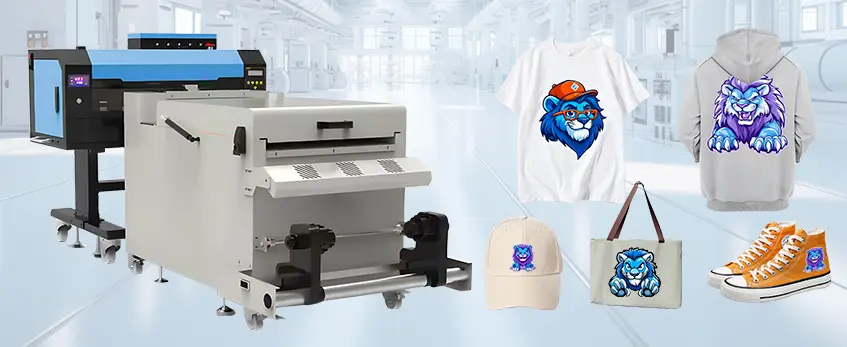
When it comes to DTF printing cost per print in 2025, recurring consumables make up a big chunk of your expenses. Here’s what to expect:
DTF Film: The PET film comes mainly in 60 cm rolls or A3/A4 sheets, with both cold-peel and hot-peel varieties available. As of 2025, prices range roughly from $1.50 to $2.50 per A4 sheet or about $15 to $25 per square meter for 60 cm rolls. Larger rolls tend to be cheaper per print, especially if you print in batches.
DTF Ink Cost per ml: Ink costs are another big factor. Standard CMYK inks generally run between $0.15 to $0.30 per ml, while white ink is pricier—about $0.40 to $0.60 per ml due to its opacity and volume usage. Popular brands like Jinlong DTF film and ink pricing offer reliable quality, while some budget alternatives can cut costs but may risk print durability.
Hot-Melt Powder: This is essential for the adhesive layer. Typically, powder consumption is about 15–25 grams per square meter. Prices hover around $30 to $40 per kilogram. Efficient powder use can lower waste and overall cost.
Electricity & Maintenance: While small per print, electricity for running the printer, curing oven, and heat press adds up—expect about $0.05 to $0.10 per print depending on your local rates. Printer maintenance costs include cleaning supplies and eventual printhead replacements. Regular cleaning extends printhead life, reducing costly downtime.
Understanding these recurring consumables helps you calculate your true DTF transfer cost and plan for budget-friendly operation. For a deep dive into powder and film essentials, check out this complete guide for perfect prints.
Real Cost Per Print Calculations (2025 Prices)
Understanding the real cost per print is key to running a profitable DTF printing business. Costs vary depending on print size and volume, so here\’s a realistic breakdown based on 2025 prices.
Single print (prototype): Expect higher costs here due to setup waste, ink usage, and powder. For an A4-sized print, the cost typically runs about $1.50 to $2.00. This includes film, ink (including white ink), hot-melt powder, and electricity.
50 prints run: Spreading startup and consumable costs reduces per-print price significantly. At this volume, A4 prints often cost around $0.85 to $1.10 each.
500–1,000 prints run: Bulk printing brings the best economy of scale. Per A4 print can drop to $0.50 to $0.70, mainly due to bulk ink and film purchasing, plus optimized powder use.
Cost Comparison Table: A4 vs A3 vs 60 cm Roll Prints
| Print Size | Single Print Cost | 50 Prints Cost | 500 Prints Cost |
|---|---|---|---|
| A4 Sheet | $1.80 | $1.00 | $0.60 |
| A3 Sheet | $3.00 | $1.80 | $1.10 |
| 60 cm Roll | $2.50 | $1.30 | $0.75 |
Using a 60 cm roll is generally more cost-effective for larger runs than sheets because of less wasted material and easier large-format jobs.
For those who want to customize and calculate their own DTF printing costs, there’s a free downloadable Google Sheets cost calculator available. This tool helps you input your specific prices for film, ink, powder, and energy, giving a precise cost per print tailored to your setup.
For a deeper dive into managing ink costs and extending print head life—which directly impacts your per-print expense—check out our detailed guide on professional DTF printing tips.
Hidden & Often Forgotten Costs

When budgeting for DTF printing, don’t overlook the hidden costs that quietly eat into your profits. Failed prints happen—typically around 3–8% waste due to print errors, improper curing, or handling mistakes. This scrap adds up, especially on larger runs, so factor it into your cost-per-print.
Labor is another key expense. Prepping artwork, applying powder, peeling transfers, and pressing all take time. Even if you do it yourself, your time has value. If you hire help, wages add up quickly.
Shipping costs and customs duties on film, ink, and powder can also surprise you. Imported supplies often come with extra fees, so it’s smart to budget a bit more than just the sticker price.
Lastly, print-head replacement cycles are a serious expense to plan for. Depending on your printer and how well you maintain it, a replacement head can cost hundreds or even over a thousand dollars. Regular cleaning and maintenance extend head life but don’t eliminate this inevitable cost.
Accounting for these hidden expenses will help you price your DTF printing more accurately and protect your margins. For reliable, cost-effective supplies like quality DTF film and ink that keep waste low, consider trusted sources such as Jinlong DTF film options designed for efficient printing.
DTF vs Other Printing Methods – Cost Comparison 2025

Choosing the right printing method depends heavily on your budget, order size, and desired quality. Here\’s a quick cost comparison per shirt in 2025 for common print volumes:
| Printing Method | Cost per Shirt (1 piece) | Cost per Shirt (100 pieces) | Cost per Shirt (1,000 pieces) |
|---|---|---|---|
| DTF Printing | $8.50 | $3.20 | $1.80 |
| DTG Printing | $12.00 | $5.00 | $2.50 |
| Screen Printing | $10.00 | $3.50 | $1.20 |
| Sublimation | $9.00 | $4.00 | $2.00 |
| Vinyl Cutting | $15.00 | $7.00 | $4.00 |
Key Points
- DTF offers excellent cost efficiency starting around 50 prints, outperforming DTG and sublimation, especially on varied color designs.
- Screen printing shines with very large runs (1,000+) due to low per-unit costs but requires higher setup fees.
- Vinyl is expensive per print, suited best for small orders or custom names/numbers.
Break-even Analysis
- For runs below 20 pieces, DTF is generally more affordable than screen printing due to little to no setup.
- Compared to DTG, DTF has lower ink and maintenance costs, pushing break-even to smaller batches faster.
- For runs above 500, screen printing or DTF with 60 cm rolls bring your cost down dramatically.
If you want to dive deeper into DTF ink pricing and film costs to optimize your output, check out detailed supplies like the Jinlong DTF ink and film options that keep your DTF printing cost low and predictable.
How to Reduce Your DTF Printing Cost Dramatically
Cutting your DTF printing cost starts with smart purchasing and workflow tweaks. Here’s what really moves the needle:
Buy film and ink in bulk from trusted suppliers to score big discounts. Bulk ordering reduces unit costs and saves on shipping. Jinlong Prints offers competitive pricing and quality gear perfect for print shops scaling up.
Switch to 60 cm rolls instead of sheets like A3 or A4. Rolls give you more continuous printing area, reduce waste, and lower cost per print significantly compared to cutting individual sheets.
Use gang-sheet optimization and double-sided printing to maximize each run. Nest multiple designs or flip prints to get two-sided transfers in one print cycle, cutting your cost per piece.
Recycle hot-melt powder smartly. Collect excess powder falling off prints and reuse it after proper sieving. This can save up to 20% on powder costs without sacrificing quality.
Adjust RIP software settings to save white ink—the most expensive ink in DTF printing. Optimizing your layer thickness and white underbase density reduces ink usage while keeping vibrant colors. For tips on the best RIP settings tailored to your printer, check out detailed guides on DTF ink management.
Combining these steps delivers better margins and lets beginner and pros alike scale their DTF print operations affordably.
Pricing Strategy & Profit Margins for Print Shops
In 2025, typical market rates for DTF transfers in the US and EU generally fall between $3.50 and $5.00 per print for standard A4-sized transfers. Prices can vary depending on order size, design complexity, and turnaround time. Custom orders often come with minimum quantities and rush fees, so it’s important to set clear pricing terms from the start.
Here’s a simple way to price your transfers:
- Calculate your real DTF printing cost per piece (ink, film, powder, labor, and energy)
- Add a markup that covers overhead and desired profit margin (usually 300%+ for beginners)
- Factor in extra fees for custom artwork or quick delivery
For example, if your cost per print is $0.65, selling a transfer at $4.50 gives you a solid $3.85 profit. This margin ensures room for discounts on bulk orders while keeping profits healthy on smaller runs.
Keep in mind: accurate cost tracking helps avoid underpricing, especially when you include labor and hidden costs. For practical pricing tips and detailed cost calculation, using a DTF transfer cost calculator can make your job a lot easier and more precise.
By mastering pricing strategies, print shops can confidently grow their DTF business while maintaining strong profit margins.
Common Mistakes That Silently Kill Your Margin
When it comes to DTF printing cost, small mistakes can quietly eat away at your profit margins. Here are some common pitfalls to watch out for:
Buying Cheap Low-Quality Film or Ink
It’s tempting to cut costs with bargain supplies, but low-quality film and ink often lead to poor print durability and color vibrancy. This can result in unhappy customers, more reprints, and wasted materials. Remember, investing in reliable products like Jinlong DTF film and ink ensures consistent quality and fewer headaches down the road.
No Climate Control (Humidity Issues)
DTF printing is sensitive to moisture. High humidity can mess with your film and powder adhesion, causing prints to peel or crack quickly. Maintaining proper climate control in your workspace helps avoid these failures and maintains consistent print quality.
Wrong Curing Temperature Leading to Wash Failures
Getting your curing temperature wrong is a silent profit killer. Under-curing leads to poor powder melting and ink bonding, causing prints to wash out fast. Over-curing can damage the garment or leave unwanted marks. Both scenarios lead to refunds, returns, and extra labor costs, damaging your reputation and margin.
Avoid these mistakes by investing wisely in quality consumables, setting up your workspace properly, and following precise curing guidelines. It’ll pay off by boosting your DTF printing profit margin and customer satisfaction.
Future Outlook – Will DTF Costs Drop More in 2026?
Looking ahead, the DTF printing cost per print in 2026 is expected to decline, driven by several key trends. New printer models with improved efficiency and larger print formats are hitting the market, especially more affordable 60 cm roll printers designed to boost volume and reduce waste. These innovations will help lower the DTF startup cost for beginners and print shops alike.
Ink prices show signs of stabilizing, with more manufacturers entering the space, offering both premium and budget-friendly DTF ink options. This competition is good news for lowering the average DTF ink cost per ml. Additionally, film producers are developing more durable and cost-effective PET films, including TPU powder films, which reduce powder usage and improve adhesion—cutting down on overall material expenses. For a deep dive into how TPU powder is reshaping costs and print quality, check out our insights on how TPU powder DTF is revolutionizing the printing industry.
However, supply chain challenges and global demand will still impact pricing, so smart ordering and bulk purchasing remain key strategies to keep costs down. Overall, the trend is clear—DTF printing costs are set to become more affordable, making it an increasingly attractive option for U.S.-based print shops aiming for higher margins and faster turnaround times.


 English
  Español
  Deutsch
  Français