


DTF Printer Ink Guide for Beginners and Professionals with Jinlong Features
What Is DTF Printer Ink?
DTF printer ink is a specialized type of water-based pigment ink designed specifically for use in the Direct-to-Film (DTF) printing process. Unlike traditional printing methods, DTF printing involves printing vibrant designs directly onto a special PET transfer film, which is then heat-pressed onto fabric or other materials. The ink\’s unique formulation plays a crucial role in this process, ensuring sharp colors and lasting adhesion.
Key Composition: CMYK + White Ink
DTF ink typically includes the standard CMYK color set (cyan, magenta, yellow, black) plus a high-opacity white ink. This white ink is essential for creating a strong underbase on darker fabrics, making colors pop with clarity and brightness. The water-based pigment nature of DTF inks offers excellent color vibrancy and wash durability while being eco-friendlier compared to solvent-based inks.
How DTF Ink Differs from Other Inks
- DTG (Direct-to-Garment) ink: DTG uses water-based inks applied directly onto fabric, which requires pre-treatment and is best suited for cotton. DTF ink, by contrast, prints on film first, allowing transfer onto a wider range of materials, including polyester and blends.
- Sublimation inks: Sublimation inks gasify when heated and are limited mostly to polyester fabrics. DTF inks don’t sublimate but form a solid transfer layer, offering more fabric versatility.
- Screen printing inks: These are thicker plastisol or water-based inks used manually or in bulk runs. DTF inks allow more detailed, full-color prints with digital efficiency and less setup time.
Why Specialized DTF Ink Matters
Using specialized DTF ink is vital because it must adhere reliably to the PET film without peeling or cracking during heat pressing and washing. The ink’s formulation balances pigment density, flow properties, and particle size to bond perfectly with the adhesive powder and produce transfers that last through 50+ washes. Low-quality or non-DTF inks often result in transfer failures, poor washability, and dull colors.
In , choosing the right DTF printer ink—with water-based pigment CMYK plus white—is key for clean, durable, and vibrant prints on diverse fabrics through the Direct-to-Film process.
Types of DTF Printer Ink
When it comes to DTF printer ink, water-based pigment inks are the most popular choice. They’re eco-friendly, have low odor, and work great for vibrant, durable prints. These inks include the CMYK colors plus a special white pigment, essential for printing on dark fabrics.
Water-Based vs. Solvent-Based Inks
| Ink Type | Pros | Cons | Use in DTF |
|---|---|---|---|
| Water-Based Pigment | Eco-friendly, low odor, vibrant colors | Can clog if not maintained | Most common and recommended |
| Solvent-Based | Bold colors, fast drying | Harsh chemicals, smell, less eco-friendly | Rarely used in DTF |
Solvent-based inks are usually avoided in DTF printing due to environmental and health concerns and often don\’t offer the needed PET film adhesion.
Single-Part vs. Dual-Part Systems
- Single-Part Ink: Ready to use, simpler maintenance, great for beginners.
- Dual-Part Ink: Requires mixing before use, can offer better durability but more complex.
White Ink: The Game Changer for Dark Fabrics
White ink in DTF is different—because it needs to be high opacity to create a strong underbase on dark shirts.
- Key Features:
- Must have consistent circulation to prevent settling and clogging.
- Needs to maintain thickness without drying out fast.
- Critical for a true color pop on blacks or dark garments.
For the best results, pairing your white ink with reliable printing powder is also essential. Check out our guide on the best DTF powder for cotton, polyester, and blended fabrics to match your ink perfectly.
Key Factors to Consider When Choosing DTF Ink
Picking the right DTF printer ink starts with compatibility. Most DTF printers, especially Epson-based models, require inks specifically designed to work with their printheads. Using the wrong ink can cause clogging or poor print quality, so always check your printer’s specs before buying.
Color vibrancy and gamut are next. Look for DTF pigment inks that offer bright, vivid colors and a wide range of shades. High lightfastness ratings mean your prints will resist fading even after multiple washes, which is crucial for lasting results.
Ink viscosity and flow matter a lot for keeping your printer running smoothly. Too thick, and the ink clogs nozzles; too thin, and it won’t lay down properly on the transfer film. Good premium DTF inks maintain consistent flow, reducing maintenance headaches.
Environmental concerns are also worth considering. Eco-friendly DTF inks with low-VOC (volatile organic compounds) content help lower emissions, making them safer for your shop and the environment—great for those mindful of sustainability.
Finally, pay attention to shelf life, storage, and packaging. Water-based DTF ink usually comes in bottles or refill bags. Proper storage away from extreme heat or cold extends the ink’s usability. Bottles are handy for smaller volumes, while bags are better for bulk users needing cost-efficiency.
For those looking for trusted options, the jinlong DTF printer ink range offers great compatibility with Epson-based printers, vibrant colors, and eco-friendly formulations tailored for reliability and long-term use.
Benefits of Premium DTF Ink: Why Choose jinlong DTF Ink?
When it comes to DTF printer ink, going premium pays off, especially with jinlong DTF ink. Here’s why professionals and beginners alike rely on it:
| Benefit | Why It Matters | Real-World Impact |
|---|---|---|
| Superior Adhesion & Washability | Lasts 50+ washes without cracking or peeling | Prints stay vibrant and durable over time, essential for high-quality apparel |
| High-Opacity White Ink | True color pop even on dark fabrics | Makes your designs eye-catching and sharp, no dull or faded spots |
| Consistent Ink Flow | Reduces clogging and printer downtime | Keeps your production line moving smoothly, less maintenance needed |
| Cost-Effectiveness Over Time | Less waste, fewer clogs, longer-lasting cartridges | Saves money in the long run, ideal for small businesses to high-volume shops |
Who Benefits Most?
- Small Businesses & Hobbyists: Reliable quality without complex maintenance.
- High-Volume Shops: Efficiency in durability and uptime means less stress and higher output.
Premium inks like jinlong DTF are engineered for excellent DTF ink compatibility and performance, so you can trust every print to look great and hold up wash after wash. Pair with high-quality DTF rolls for bulk orders to maximize your ROI and speed.
With jinlong, you\’re not just buying ink—you’re investing in consistent, vibrant, and durable prints that keep customers coming back.
How to Select the Best DTF Ink for Your Needs
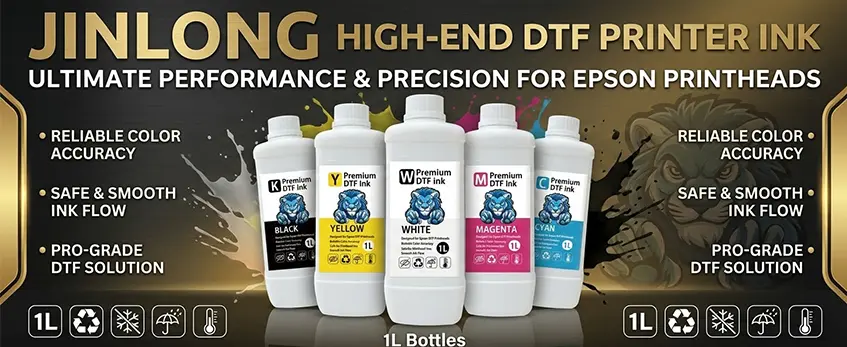
Choosing the right DTF printer ink is crucial whether you\’re just starting out or running a busy print shop. Here’s how to pick the best fit:
For Beginners:
Start with reliable, forgiving formulas like the jinlong DTF starter sets. These inks are designed to be user-friendly, with consistent flow and good adhesion that help newbies avoid common pitfalls like clogging or poor colors.
For Professionals:
Look for bulk options that offer excellent color matching and batch consistency. Pro-grade inks, like jinlong DTF pigment ink, ensure vibrant prints over long runs and reduce downtime with fewer maintenance needs.
Budget vs. Quality:
- Entry-level inks may save upfront costs but risk issues like fading and clogging.
- Premium inks cost more initially but deliver superior durability, washability, and color vibrancy, making them more cost-effective over time.
Fabric-Specific Recommendations:
- Cotton and blends: Use inks with strong white opacity to ensure colors pop on darker fabrics.
- Polyester and nylon: Choose inks with high adhesion and flexibility to handle the stretch and smooth surface well.
Based on your needs, jinlong DTF inks offer options tailored for various fabrics and print volumes. You can also pair their inks with high-quality films like their A3 double pro series DTF transfer film to achieve the best results on multiple fabric types.
Step-by-Step: Using DTF Ink Effectively
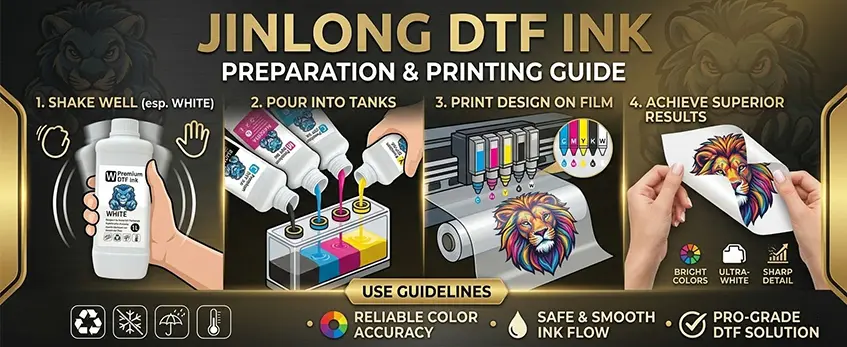
Getting the best results with your DTF printer ink starts with a solid process. Here’s how to use your ink effectively every time:
Printer Setup and Ink Loading
- Shake well: Always shake your DTF pigment ink bottles or bags thoroughly before loading to mix pigments evenly, especially for white ink.
- Fill carefully: Use clean syringes or pipettes to fill cartridges or bags to avoid spills and contamination.
- Prime the system: After loading ink, run a priming cycle to get the ink flowing smoothly through the print head and avoid clogs.
RIP Software Settings
- Adjust your RIP software to match your specific ink and film. This includes:
- Setting the right resolution (usually 1440 dpi works well for sharp details).
- Configuring color management profiles to keep colors vibrant and true.
- Enabling white underbase printing to ensure bright whites and full opacity on dark fabrics.
Printing Best Practices
- Print test swatches before job runs to check colors and opacity.
- Maintain correct print speed and layer thickness for the best ink laydown.
- Clean print heads regularly to avoid banding and ink blockages.
Powder Application and Curing
- Evenly apply hot-melt adhesive powder right after printing; this helps the ink bond to the PET film.
- Cure the powder properly using a drying machine or heat press to melt the adhesive and secure the print.
Heat Press Guidelines
- Press transfers with recommended temperature (around 320°F/160°C), pressure, and time (usually 15-25 seconds).
- Use a Teflon sheet to protect prints while pressing.
- Follow cooling instructions before peeling the film to ensure maximum durability.
For peace of mind and better workflow, pairing your setup with reliable inks like the jinlong DTF ink series helps minimize downtime and simplifies maintenance. You can check jinlong’s DTF ink CMYK options for a smooth start on your projects. Proper technique and quality ink make vibrant, durable prints every time.
Common DTF Ink Problems and Troubleshooting
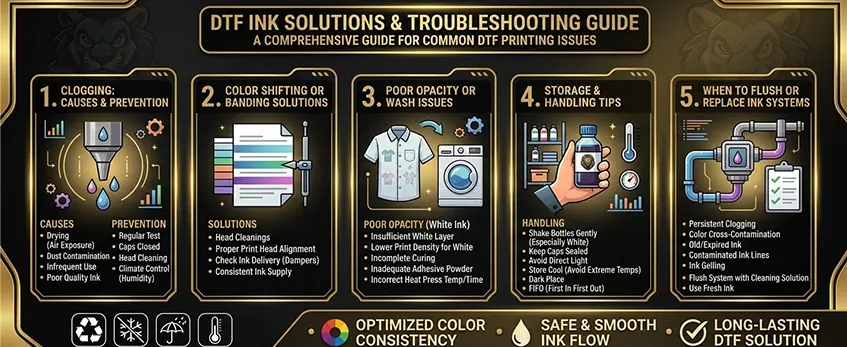
DTF printer ink can present some common issues, but most can be avoided or fixed with the right approach.
1. Clogging Causes and Prevention
Clogging is the top hassle with DTF ink, especially white ink due to its pigment density. To prevent clogs:
- Keep ink circulating by shaking white ink regularly and using built-in agitators if available.
- Perform daily head cleaning cycles and nozzle checks on your Epson-based printers.
- Avoid letting ink sit unused for long periods; print frequently or purge regularly.
2. Color Shifting or Banding Solutions
Color shifts and banding usually come from dirty print heads or incorrect RIP software settings. Fix these by:
- Running a head cleaning and nozzle alignment routine.
- Adjusting the RIP settings for optimized ink laydown to maintain smooth gradients.
- Ensuring you’re using the right CMYKW DTF ink profile matched to your printer model.
3. Poor Opacity or Wash Issues
If prints fade quickly or white ink looks translucent, it’s a mix of ink quality and process factors:
- Use high-opacity DTF ink designed for strong white layers.
- Check powder application — too little or poor-quality powder weakens adhesion and washability.
- Follow heat pressing guidelines closely to lock ink into the PET film.
4. Storage and Handling Tips
Proper storage extends ink life and performance:
- Store ink at stable room temperatures away from direct sunlight.
- Use airtight containers or resealable bags to prevent drying or contamination.
- Avoid freezing or overheating ink containers.
5. When to Flush or Replace Ink Systems
Regular flushing is key when you notice:
- Frequent clogging despite maintenance.
- Color degradation or ink flow issues.
- If white ink circulation isn’t working well, flushing helps avoid pigment buildup.
If problems persist after flushing and maintenance, replacing ink and cleaning the system thoroughly avoids printer damage and wasted prints.
By staying on top of these common ink issues and following proper daily maintenance routines, you’ll enjoy vibrant DTF prints with fewer interruptions and longer-lasting equipment. For ongoing success, choosing reliable brands like jinlong DTF ink also helps minimize troubleshooting hassles.
Maintenance Tips for Long-Term Printer and Ink Performance
Keeping your DTF printer and DTF ink in top shape is key to consistent, vibrant prints and avoiding costly downtime. Here’s how to stay on top of maintenance for the best results, especially when using jinlong DTF ink:
Daily and Weekly Routines
- Perform regular print head cleaning to prevent clogging, especially with white ink that tends to settle.
- Agitate or circulate white ink frequently to keep pigments evenly mixed and avoid sediment buildup.
- Run nozzle checks to catch any early signs of clogging or flow issues.
Control Your Environment
- Maintain stable temperature and humidity in your print area—ideally between 65°F-75°F and 40%-60% humidity—to prevent ink drying inside the printer or condensation issues.
- Avoid dusty or overly dry environments which can affect ink flow and film adhesion.
Proper Ink Storage
- Store your jinlong DTF pigment ink upright in a cool, dark place when not in use.
- Keep bottles or bags sealed tightly to prevent drying or contamination.
- Follow manufacturer guidelines on shelf life for optimal performance.
Extend Cartridge and Bag Life
- Use compatible bags or bottles designed for your printer to reduce leaks and waste.
- Refill ink supplies before they run totally dry to protect your printer pump and prevent air bubbles.
By following these simple care tips, you can maximize print quality, reduce ink clogging problems, and get the most out of your investment in jinlong DTF ink and equipment. For more detailed advice tailored to your setup, check out jinlong’s specific maintenance guides to keep your workflow smooth and efficient.
Cost Analysis: DTF Ink Pricing and ROI
When looking at DTF printer ink costs, prices can vary widely depending on whether you buy in bulk or retail. On average, bulk DTF inks are more cost-effective, often priced per liter significantly lower than smaller bottle purchases. Retail packs are convenient but come at a higher per-milliliter cost.
Several factors influence price:
- Brand reputation: Premium brands like jinlong DTF offer more consistent quality.
- Ink volume: Larger purchases reduce price per milliliter.
- Ink type and quality: High-opacity white ink and eco-friendly formulas usually cost more but deliver better results.
Calculating cost per print is crucial for understanding ROI. While cheaper inks might seem like a bargain upfront, they often cause clogs, color inconsistencies, and lower washability. Premium DTF ink, especially jinlong DTF pigment ink, ensures minimal downtime and vibrant prints, which saves money in the long run.
Investing in premium jinlong DTF ink pays off with:
- Superior durability (50+ washes without cracking)
- Consistent color vibrancy and opacity
- Fewer maintenance headaches and less wasted ink
For U.S. businesses and hobbyists alike, choosing reliable ink means better prints and smoother workflows—key to maximizing your printing investment.
Future Trends in DTF Ink Technology (2026 Outlook)
The future of DTF printer ink is shaping up to be more eco-friendly and efficient, meeting both environmental needs and the demands of high-quality printing. In 2026, expect to see advancements in water-based DTF ink formulas that offer even higher opacity and vibrancy, especially for the crucial white ink used underneath color layers. These upgrades mean sharper, more durable prints that pop on any fabric.
Improved compatibility with the latest Epson-based and other popular DTF printers will make switching inks easier and reduce clogging issues, keeping workflows smooth for small shops and high-volume users alike. Manufacturers are also focusing on sustainability, designing inks with low VOCs and eco-friendly components, which will align with stricter U.S. regulations and growing customer preferences for greener print solutions.
These innovations will help reduce waste and enhance print longevity, making premium inks like jinlong DTF even more cost-effective and reliable in the long run. If you\’re looking for the latest in DTF transfer film ink technology, staying tuned for new product releases and updates will give you a competitive edge.
For a full setup that pairs well with these future-ready inks, check out high-quality DTF transfer film options designed to maximize adhesion and durability.


 English
  Español
  Deutsch
  Français