


DTF Printer for Clothes Guide Dark and Light Fabrics Features
What Is DTF Printing and How Does It Work?
DTF printing, or Direct to Film printing, is a versatile technology that allows you to create high-quality designs on clothes, whether on dark or light fabrics. Unlike traditional methods, DTF prints the design onto a special PET film first, making the process flexible and efficient.
Step-by-Step DTF Printing Process
- Printing on PET Film: The design is printed in full color using CMYK inks, plus a crucial white ink channel. The white ink acts as a base layer, especially important for dark fabrics, to ensure colors remain bright and vibrant.
- Applying Hot-Melt Powder: While the ink on the film is still wet, a hot-melt adhesive powder is applied evenly over it. This powder sticks to the ink and will help transfer the design onto the fabric.
- Curing the Powder: After powder application, the film goes through a curing process. This step gently heats the powder, melting it just enough so it bonds to the ink without hardening prematurely.
- Heat-Pressing onto Fabric: Finally, the film is placed on the garment and heat-pressed. The pressure and heat activate the powder adhesive, transferring the inked design from the film to the fabric with excellent durability.
The Role of CMYK + White Ink Channels
For all fabrics, CMYK inks produce vibrant, full-color prints, but the white ink underbase is a game-changer for dark garments. On black or deep-colored shirts, printing white ink first creates an opaque base layer that prevents the colors from appearing dull or washed out. This white underbase is essential to maintaining strong color vibrancy and sharp detail, making DTF printing ideal for delivering bright and durable designs on any fabric color.
By understanding these basics of the DTF printing process and the critical role of white ink, you’re well on your way to mastering custom apparel printing that works beautifully on both light and dark garments.
Why DTF Excels on Both Light and Dark Fabrics
DTF printing stands out because it works great on both light and dark fabrics, giving you vibrant, durable designs no matter the color of the garment.
Here’s why DTF beats other popular methods like DTG, sublimation, screen printing, and vinyl when it comes to printing on clothes:
| Printing Method | Vibrant Colors | Soft Hand Feel | Durability | Fabric Compatibility | Works on Dark Fabrics |
|---|---|---|---|---|---|
| DTF Printing | Yes, full CMYK + white ink | Very soft | High – long-lasting wash resistance | Cotton, polyester blends, and more | Yes, thanks to white underbase |
| DTG Printing | Yes but less vivid on darks | Soft | Moderate | Best on 100% cotton | Limited without pretreatment |
| Sublimation | Very vibrant on polyester | Soft | Very durable | Only polyester or blends >50% poly | No, not on dark fabrics |
| Screen Printing | Vibrant, spot colors | Varied | Very durable | Most fabrics | Yes, with proper inks |
| Vinyl | Bright colors, slightly raised | Heavier feel | Durable | Most fabrics | Yes, but vinyl layer noticeable |
Benefits of DTF Printer for Clothes
- Vibrant Full-Color Prints: With CMYK + white ink channels, DTF produces sharp, bright images even on black or dark shirts.
- Soft Hand Feel: Unlike vinyl, prints remain flexible and soft, making them comfy to wear.
- Durability: DTF prints last through many washes without cracking or fading.
- Fabric Compatibility: Works on cotton, polyester blends, and more, which is great for mixed fabric custom apparel.
- White Base Layer Advantage: The mandatory white underbase on dark garments ensures colors pop, avoiding dull or washed-out results.
If you want reliable, all-around printing that handles any fabric and color, DTF is tough to beat. For a closer look at setting up and selecting printers that excel in these areas, check out how to choose a desktop DTF printer for home or studio use.
Key Differences: Printing on Light vs. Dark Fabrics
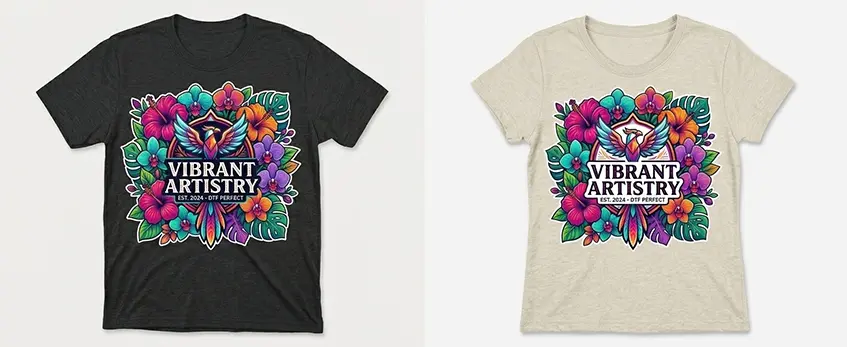
When using a DTF printer for clothes, the approach varies a lot between light and dark fabrics. Here’s what you need to know:
| Fabric Type | White Ink Use | Color Management | Tips & Challenges |
|---|---|---|---|
| Light | Minimal to none | Easier to manage colors | No white underbase needed; simpler prints |
| Dark | Mandatory white underbase | More complex, needs precision | Avoid white ink halos or edges; higher ink & powder accuracy |
Light Fabrics
On light fabrics, you usually print directly with CMYK inks, so white ink is minimal or not used at all. This makes color management easier, and the final prints have a naturally bright look without extra backing layers.
Dark Fabrics
Printing on dark fabrics requires a white ink underbase to make colors pop and keep the image vibrant and opaque. This white layer must be carefully controlled to prevent halos or unwanted edges around designs. Achieving perfect results means precise control of ink and hot-melt powder application.
Best Practices Shared for Both
- Use high-resolution files to maintain sharp details.
- Convert artwork properly to CMYK to avoid color shifts.
- Optimize designs to suit the DTF printing process, keeping solid lines and balanced color density.
For those looking for detailed tips on powder types and film handling to improve those critical steps, check out the best DTF powder for cotton, polyester, and blended fabrics. This can help avoid common issues during curing and heat pressing on both light and dark garments.
Essential Components of a DTF Printer Setup for Clothing
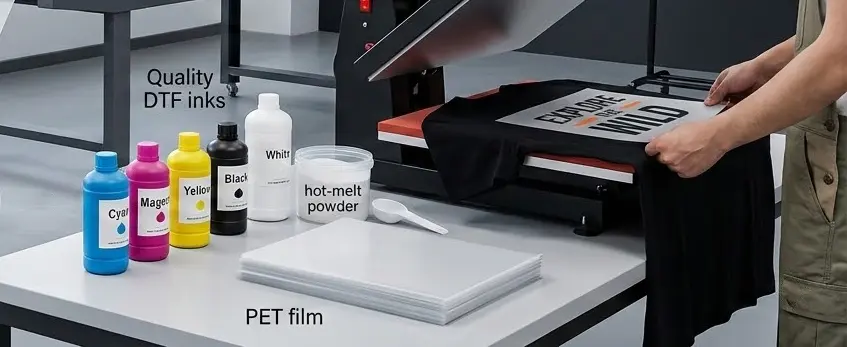
When setting up a DTF printer for clothes, especially if you want vibrant prints on both dark and light garments, choosing the right components is key. Entry-level DTF printers often use Epson-based printheads and are great for beginners or small businesses just getting started. In contrast, professional models, like those from jinlong DTF, come with advanced white ink circulation systems that prevent clogging and ensure consistent opacity, which is critical for printing on dark fabrics.
A reliable ink system and high-resolution printheads are essential for sharp, full-color results. Roll film support is another important feature since it allows you to print on continuous PET film, making the process efficient and scalable. Along with the printer itself, you’ll need quality DTF inks, PET film designed for transfers, hot-melt powder for adhesion, a curing oven to properly set the powder, and a heat press to finish the transfer onto the fabric.
What sets jinlong DTF printers apart is their robust design focused on durability and color vibrancy, especially on dark garments. Their machines offer precise white ink management and support high print speeds without sacrificing quality, making them popular for commercial apparel printing. For more details on their advanced printers and features, exploring the jinlong DTF604S digital printer is a smart start.
Step-by-Step Setup and Printing Tips for Optimal Results
Getting the best from your DTF printer for clothes means starting with solid file prep. Use a high resolution (at least 300 dpi) to keep prints sharp and detailed. Set your color mode to CMYK plus a white ink layer in your RIP software; this white underbase is crucial for vibrant prints, especially on dark fabrics.
Before printing, always perform nozzle checks to avoid streaks or missing ink spots. Keep your printing environment stable—consistent temperature and humidity help maintain ink flow and adhesion.
After printing on PET film, apply hot-melt powder evenly and shake off excess powder to prevent clumps. Then cure it properly—typically with a curing oven or heat press at controlled temperatures—to ensure powder melts and bonds with the ink without over-curing.
Heat press settings deserve close attention: adjust time, temperature, and pressure based on the fabric type and thickness. For cotton and polyester blends, typical settings range between 320–350°F for 15–20 seconds, but always test to avoid scorching or adhesion failures.
If you run into issues like poor adhesion, white ink edges, or ink bleeding, try these fixes:
- Double-check white ink layer thickness to avoid halos on dark garments
- Adjust powder quantity and cure time for better bonding
- Calibrate printhead alignments and perform regular cleaning cycles to reduce bleeding
For additional guidance on film, powder, and heat press settings designed specifically for DTF printing, check out the detailed DTF printer A3 setup guide including ink, film, powder, and heat press tips. Fine-tuning each step ensures vibrant, durable prints whether you print on light or dark fabrics.
Maintenance and Longevity Tips for Your DTF Printer
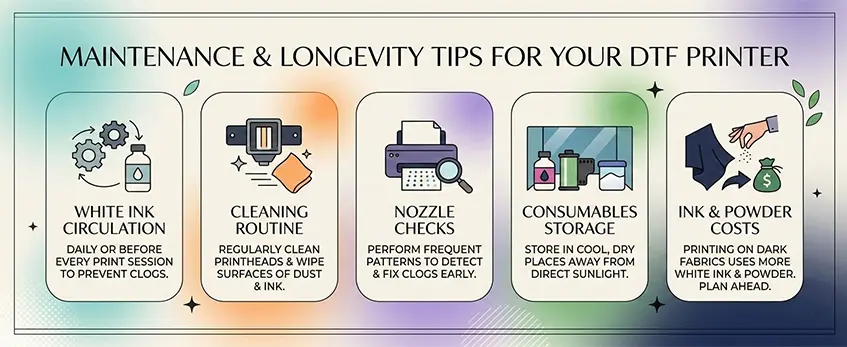
Keeping your DTF printer in top shape means regular care and attention. Here are some essential maintenance tips to extend the life of your printer and maintain vibrant, durable prints:
- White Ink Circulation: White ink tends to settle and clog nozzles if left stagnant. Make sure to run a circulation cycle daily or at least before every print session to keep the white ink flowing smoothly.
- Cleaning Routine: Clean the printheads regularly to prevent ink buildup. Wipe down the printer surfaces to avoid dust accumulation, especially on critical parts like the ink system and rollers.
- Nozzle Checks: Perform nozzle check patterns frequently. Detecting and fixing clogged nozzles early saves costly repairs and print quality issues.
- Consumables Storage: Store DTF inks, PET film, and hot-melt powders in cool, dry places away from direct sunlight. Proper storage prevents premature drying or powder clumping.
- Ink and Powder Costs: Printing on dark fabrics requires more white ink and powder, which can increase your consumable expenses compared to light fabric printing. Plan your supply orders accordingly for cost efficiency.
Following these simple steps not only protects your investment but also ensures consistently vibrant prints, whether you\’re working with light or dark garments. For quality inks to keep your printer running smooth, check out reliable options like the DTF ink white 100ml pro series.
Choosing the Right DTF Printer in 2026
When picking a DTF printer for clothes in 2026, consider several key factors to find the best fit for your needs.
Key Evaluation Factors
- Print Width: Match the printer’s maximum print size with your typical design and garment dimensions.
- Speed: Look for machines that balance fast printing with high-quality output, especially important for higher-volume orders.
- Reliability: Choose brands with a proven track record of consistent performance to avoid frequent downtime.
- Warranty and Support: Strong customer service and solid warranty coverage help protect your investment and keep production running smoothly.
Match Your Printer to Your User Type
- Beginners: Entry-level DTF printers with easy setups and user-friendly interfaces are ideal to get started without steep learning curves.
- Small Businesses: Look for versatile printers featuring good print speed and quality without breaking the bank. Cost-effective ink and powder usage also matter here.
- High-Volume Shops: Professional-grade printers with white ink circulation systems and robust build quality meet the demands of continuous, large-scale production.
Why jinlong DTF Printers Stand Out
Jinlong DTF printers shine due to their:
- Durability: Built to withstand busy shop environments, these printers deliver long-lasting operation with minimal fuss.
- Vibrant Color Output: Their advanced white ink system ensures bright, vivid prints on dark fabrics, avoiding dull or washed-out designs.
- Cost-Effective Operation: Efficient ink usage and reliable components reduce your running costs, making them a smart choice for budget-conscious businesses.
For more insight into how white ink circulation affects print longevity, check out jinlong’s detailed explanation on white ink circulation systems in 2026 DTF printers. This knowledge can guide you to the right DTF printer setup for your unique apparel printing needs.


 English
  Español
  Deutsch
  Français