


DTF Kit Checklist Essential Features to Check Before Buying 2026
Understanding DTF Printing Basics
Direct to Film (DTF) printing is a versatile method that transfers designs onto fabrics using a printed film, hot-melt adhesive powder, and heat pressing. Compared to other popular techniques like DTG (Direct to Garment), vinyl cutting, or traditional screen printing, DTF offers several unique benefits.
Benefits Over DTG, Vinyl, and Screen Printing
| Printing Method | Advantages of DTF | Notes |
|---|---|---|
| DTG | Works on a wider range of fabrics | DTG struggles with dark fabrics |
| Vinyl | More flexible prints with soft hand feel | Vinyl can be stiff and less breathable |
| Screen Printing | Faster setup for short runs and vibrant colors | DTF is better for detailed designs and small runs |
Why Choose DTF?
- Fabric Compatibility: Prints well on cotton, polyester, blends, and more.
- Durability: Transfers resist cracking and fading after multiple washes.
- Detail & Color: Handles complex designs with smooth gradients.
- Cost-Effective: Lower startup costs than screen printing with less waste.
For anyone starting with a direct to film starter kit, understanding these basics helps you choose the right system and supplies. DTF printing combines the best traits of digital precision and traditional heat transfer durability. This makes it a smart option for custom apparel printing kits designed to grow with your business.
Core Components of a Quality DTF Kit
A solid DTF printer kit essentials setup revolves around a few key components that determine your print quality and efficiency.
DTF Printer: Look for printers with high resolution and stable printing speeds. Consistent white ink circulation is a must to avoid clogging and maintain sharp prints. Check for features that simplify setup and minimize downtime.
Inks: Pigment-based inks are the standard here. They deliver vibrant colors and long-lasting prints. Avoid cheap inks, as they compromise transfer quality and durability.
Transfer Films: Quality PET sheets are critical. These films should have smooth, uniform surfaces for precise ink adhesion. Make sure the film thickness and finish fit your production needs.
Hot-Melt Adhesive Powder: The powder’s granule size affects how well it melts and bonds during heat pressing. Fine, evenly sized particles ensure strong adhesion and avoid issues like powder clumping or uneven transfers.
Additional Essentials: Don’t overlook accessories like calibration tools and maintenance kits. User-friendly software to control print settings is also essential for getting consistent results fast.
Understanding these core parts will give you a clear view of what to expect and what to ask about when evaluating any direct to film starter kit. For detailed insights on DTF printing features to consider, the DTF transfer printer buying guide is a helpful resource.
Key Features to Evaluate Before Purchase
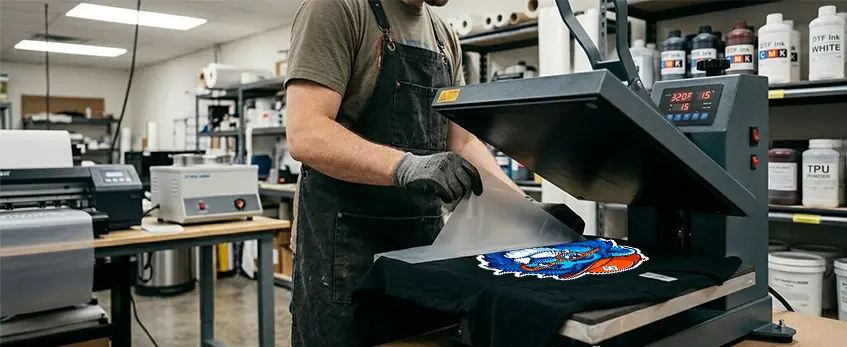
When choosing a DTF kit, focus on these crucial features to get the best value and performance:
| Feature | What to Look For | Why It Matters |
|---|---|---|
| Print Quality & Consistency | Sharp, vibrant prints; smooth white ink application | Ensures professional-looking, repeatable results |
| Reliability & Durability | Solid build; minimal maintenance needed | Keeps downtime low, so you meet deadlines |
| Ease of Setup & Use | Plug-and-play design; clear instructions | Reduces learning curve, helps beginners start fast |
| Compatibility & Versatility | Supports various film types and ink brands | Flexible for different projects and supplies |
| Cost Breakdown | Price of printer, inks, films, powders, accessories | Prevents surprises in total cost of ownership |
| Production Speed & Volume | Fast print heads; suitable for batch printing | Vital for scaling your business efficiently |
A kit with consistent print quality and a reliable white ink circulation system will save you time and money managing color vibrancy and opacity. Don’t overlook the importance of easy setup and software that’s beginner-friendly — it makes all the difference when starting out.
Make sure your DTF printer kit essentials match the volume you plan to produce. If you need heavy output, mid-range or pro kits often provide better speed and durability. For a solid overview of ongoing supply costs, check the detailed DTF rolls cost breakdown.
Balancing quality and budget upfront prevents costly mistakes down the road—choose a kit designed to handle your print workload without compromise.
Common Mistakes to Avoid When Buying a DTF Kit
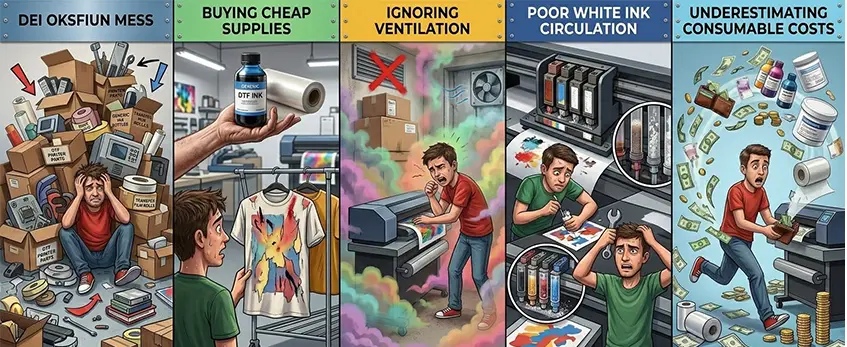
Buying a DTF kit can be overwhelming, and avoiding common pitfalls will save you time and money. Here’s what to watch out for:
- Overbuying Accessories: Don’t get tempted to buy every gadget or extra part on day one. Focus on essentials, and add more as you grow.
- Choosing Cheap Inks or Films: Low-quality DTF ink and powder or transfer films might cost less upfront but often lead to poor print quality and adhesion issues. Invest in trusted brands to ensure consistent results.
- Ignoring Ventilation Needs: DTF printing produces fumes—proper ventilation is a must for a safe workspace. Don’t skip this just to save space or cost.
- Skipping White Ink Circulation: White ink can settle and clog nozzles if not circulated properly. Make sure your kit has a reliable white ink circulation system to avoid downtime.
- Underestimating Supply Costs: Inks, powders, and films are ongoing expenses. Plan your budget beyond just the printer to avoid surprises.
Picking the right consumables and understanding your workspace needs are key. If you want guidance on getting reliable DTF consumables, check out this detailed advice on how to choose a reputable supplier to keep your prints looking sharp and colors bright.
Budget Considerations and Value Comparison
When shopping for a DTF kit, your budget plays a huge role in what you should expect in terms of quality
Why Choose jinlong DTF Kits
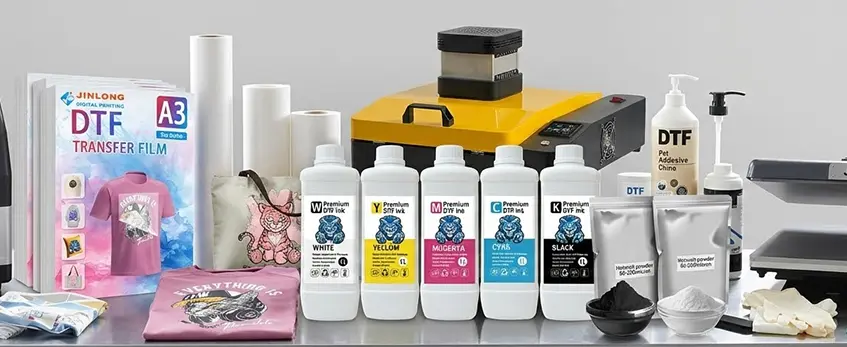
When picking a DTF kit, jinlong DTF stands out for several reasons, making it a top choice for beginners and pros alike:
| Feature | What You Get with jinlong DTF Kits |
|---|---|
| High-Quality Components | Durable printers, pigment-based inks, and premium films ensure sharp, vibrant prints every time. |
| Reliable White Ink System | Consistent white ink circulation prevents clogging, improving print reliability and reducing downtime. |
| Adhesion & Wash Tests | Prints pass strict adhesion and wash durability tests, so your designs last wash after wash. |
| Responsive Support | Prompt, knowledgeable customer support helps solve issues quickly and keeps your operation running smoothly. |
| Starter Bundles | Kits come with everything you need—printer, inks, powder, films, and software—to start right away. |
Choosing a jinlong DTF kit means investing in proven reliability and quality supplies essential for great results and less hassle. Their white ink system and tested powders like TPU hot melt adhesive powder ensure your transfers stick well and survive repeated washes. Plus, their ready-to-go starter bundles simplify the buying process and set you up for success from day one.
Step-by-Step DTF Kit Buying Checklist
Before you buy a DTF kit, follow this simple checklist to make sure you get the most value and performance:
- Verify printer specs: Look for resolution, print speed, and white ink circulation system to ensure consistent, high-quality prints.
- Check ink certification and volume: Choose pigment-based DTF ink with enough quantity for your projects; certified inks promise better color and durability. Consider options like jinlong DTF ink CMYK 100ml Pro Series for trusted quality.
- Confirm transfer film quality and quantity: Use PET sheets designed for easy release and strong adhesion.
- Assess powder fineness and melt temperature: Hot melt adhesive powder should have fine granules and melt at a proper temperature for smooth transfers.
- Ensure user-friendly software: The software must be easy to set up and compatible with your computer to streamline production.
- Review warranty and support: Reliable customer support and warranty coverage safeguard your investment.
- Compare kit contents: Check for all essential accessories like cleaning tools, spare parts, and heat press recommendations.
- Read user reviews: Real feedback from other buyers helps identify common issues and advantages.
This straightforward checklist covers all core DTF printer kit essentials you need to avoid mistakes and choose the right starter setup for your custom apparel printing needs. For a detailed cost breakdown and feature guide, explore the article on cheap DTF printer cost breakdown and real costs beyond the machine.
Final Tips for Getting Started Successfully
Starting with your DTF kit can feel overwhelming, but a smooth setup and a few smart tips go a long way. Here’s what you need to know:
- Setup advice: Unbox your DTF printer kit essentials carefully, follow the manufacturer’s instructions step-by-step, and use the recommended DTF transfer films like those from jinlong DTF to avoid compatibility issues.
- First print tips: Start with test prints on scrap fabric to dial in print quality and powder adhesion. Make sure your printer’s white ink circulation system is running smoothly—this is crucial for bright whites and consistent prints.
- Maintenance basics: Clean print heads regularly, check ink levels often, and store your hot melt adhesive powder properly to keep it from clumping. This will extend the lifespan of your printer and help avoid common mistakes like clogging or poor adhesion.
- Reach out for support: If you hit any snags, don’t hesitate to contact jinlong DTF for expert guidance. Their responsive support and helpful resources make getting the best out of your kit easier.
Following these straightforward steps will help you master your new DTF printer kit and start producing high-quality, durable transfers right away.


 English
  Español
  Deutsch
  Français