

Es befinden sich keine Produkte im Warenkorb.


Jinlong
Hot Melt Glue Powder Storage and Handling Tips for Peak Performance
If you’ve ever dealt with clumped or underperforming hot melt glue powder during your DTF projects, you know how frustrating weak transfers and wasted materials can be. The truth is, proper hot melt glue powder storage and handling isn’t just a nice-to-have—it’s essential to keep your adhesive’s strength, flexibility, and durability intact. Whether you’re running a small apparel shop or managing an industrial line, these quick, expert tips will help you maintain peak performance, extend your powder’s shelf life, and avoid costly reprints. Ready to get flawless, wash-resistant transfers every time? Let’s dive into the best practices that make all the difference—starting with premium jinlong DTF hot melt glue powder and how to care for it right.
Understanding Hot Melt Glue Powder and Its Sensitivity
Hot melt glue powder, especially in DTF applications, is a versatile thermoplastic adhesive that demands careful care. Its performance depends heavily on how well you manage key vulnerabilities like moisture, temperature, contaminants, and air exposure. Even slight contact with humidity can cause clumping or degrade the powder, leading to weaker bonds and reduced elasticity. Overheating or fluctuating temperatures likewise affect its consistency and shorten shelf life, impacting the durability of your transfers.
Contaminants such as dust or residues from dirty tools can compromise glue adhesion, resulting in failed prints or inconsistent bonding. Air exposure may accelerate these problems, making proper sealing a must.
Jinlong DTF hot melt powder addresses many of these challenges with a specialized formulation designed for stability and wash-resistant performance. Its unique composition tolerates typical environmental stresses better than standard powders, helping maintain strong, elastic bonds over time. Understanding these sensitivities is the first step to ensuring your adhesive powder delivers reliable, high-quality results every time.
Optimal Storage Conditions for Long-Term Performance
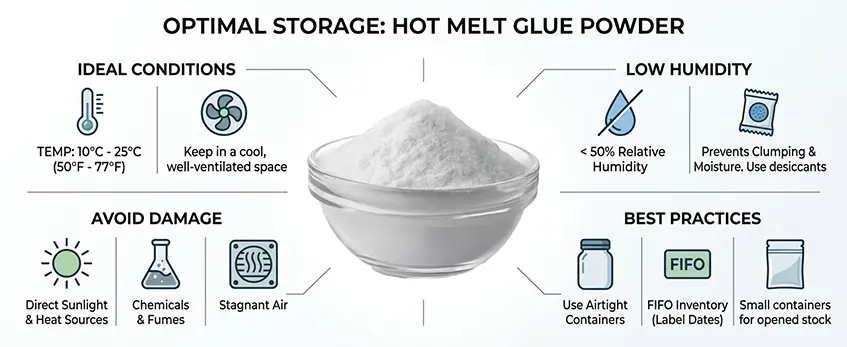
Storing hot melt glue powder under the right conditions is key to maintaining its performance and extending its shelf life. Ideally, keep the powder in a cool, dry, and well-ventilated space. The temperature should stay consistently between 50°F and 77°F (10°C to 25°C), while humidity levels must be kept low, ideally under 50% relative humidity, to prevent moisture absorption.
Storage Location Tips:
- Avoid direct sunlight, as UV rays and heat can degrade the powder’s adhesive properties.
- Keep the storage area away from chemicals and fumes that could contaminate the powder.
- Ensure good air circulation to avoid stagnant, humid air pockets that promote clumping.
Preventing Moisture and Heat Damage:
Moisture is the biggest enemy of hot melt glue powder—it causes clumping, reduces bond quality, and weakens elasticity. Using airtight containers combined with desiccants (like silica gel packs) can effectively protect against humidity. Also, avoid storing near heat sources such as heaters or ovens, which may lead to premature thermal degradation.
Practical Setup for Small Workshops:
- Use dedicated shelving or sealed cabinets for DTF hot melt powder storage.
- Label containers with opening dates and shift to FIFO inventory rotation to keep stock fresh.
- If space is limited, small airtight, resealable containers work best to protect opened powder from air exposure.
Following these storage tips will help you keep your hot melt glue powder consistent, durable, and ready for quality prints every time. For more on how to make your DTF prints last, check out Jinlong’s guides on printing DTF transfers on black shirts using hot peel or cold peel films.
Best Practices for Packaging and Container Selection
Proper packaging and container choice are key to preserving your hot melt glue powder’s performance. Stick to these best practices to avoid moisture, contamination, and spoilage:
Maintain Packaging Integrity: Always keep the original packaging sealed tightly until use. Once opened, the powder is vulnerable to air and moisture, which can cause clumping and weaken bond strength.
Switch to Airtight, Resealable Containers: After opening, transfer unused hot melt glue powder into airtight, resealable containers. This prevents exposure to humidity and contaminants. Using containers designed specifically for adhesive powders, like those recommended for Jinlong DTF products, maintains quality longer.
Use Silica Gel/Desiccants: Placing silica gel packs or other desiccants inside your storage containers helps trap moisture and keeps the powder dry. Regularly replace these packs to ensure effectiveness.
Label Properly: Mark each container with the opening date and batch information. This makes inventory management easier and prevents confusion about powder freshness.
First-In, First-Out (FIFO) Rotation: Rotate your stock to use older powder first. This reduces waste and ensures you’re always working with material at peak performance.
Bulk vs Small-Batch Handling: If you have large quantities, consider dividing bulk powder into smaller lots for daily use. This limits exposure to air and moisture for the remaining stock. Jinlong packaging often supports easy portioning, helping workshops handle both bulk and small-batch demands efficiently.
Applying these tips will help extend your DTF hot melt powder shelf life and keep adhesive quality consistent. For more about packaging and handling, see Jinlong’s specialized TPU adhesive powder handling tips.
Step-by-Step Handling Guidelines to Preserve Quality
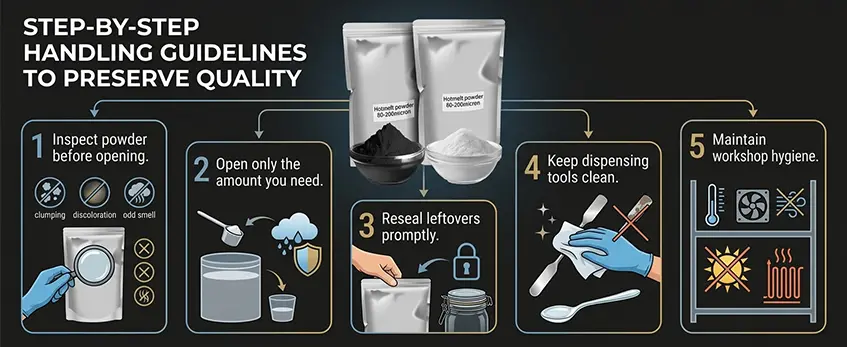
To keep your hot melt glue powder performing at its best, follow these simple handling steps:
- Inspect powder before opening. Check for any clumping, discoloration, or odd smells that could mean storage issues. Catching problems early helps avoid bad bonds later.
- Open only the amount you need. Minimize the powder’s exposure to air and moisture by taking out small batches, especially when humidity is high. This helps prevent moisture absorption and contamination.
- Reseal leftovers promptly. Use airtight, resealable containers or jars after each use to lock out moisture and air, preserving the powder’s shelf life and bond strength.
- Keep dispensing tools clean. Contaminants can degrade the adhesive powder quickly. Wipe or wash tools thoroughly before each use to maintain purity.
- Maintain workshop hygiene. Store glue powder away from heat, humidity, and direct sunlight—ideal spots are cool, dry, and well-ventilated. Avoid placing containers near heaters or windows to reduce thermal degradation risks.
Sticking to these handling tips ensures your DTF hot melt powder stays active longer, delivering consistent, wash-resistant prints every time. For more on optimizing your adhesive powder workflow, check out our detailed guide on Jinlong DTF powder best practices.
Recognizing and Troubleshooting Common Storage-Related Issues
Hot melt glue powder can show clear signs when storage goes wrong. Watch for Klumpenbildung, discoloration, or an unusual odor—these often mean moisture got in or the powder was exposed to heat. You might also notice weak bonds or inconsistent adhesion during use, which usually ties back to how the powder was stored.
Common causes include exposure to high humidity, temperature swings, or air contamination. Fix minor clumping by gently breaking lumps apart before use. However, if discoloration, bad smells, or poor bonding persist, it’s best to discard the powder to avoid compromising your prints.
To prevent these problems, control your workshop’s humidity, keep powder containers tightly sealed, and use FIFO inventory rotation to ensure you use the oldest stock first. Tailoring your storage based on your local climate and powder usage will help extend the DTF powder shelf life extension and maintain consistent performance. For more insights on avoiding powder clumping and contamination, check out Jinlong’s DTF printer maintenance tips.
Maintenance and Monitoring Routines for Consistent Results
Keeping your hot melt glue powder in top shape means staying on top of regular maintenance and monitoring. Start with visual inspections—check the powder for any clumping, discoloration, or unusual odors before each use. These signs can hint at moisture problems or contamination affecting your DTF powder shelf life extension.
Logging Temperatur und Feuchtigkeit in your storage area is another must. Aim to keep conditions stable and within the ideal range, since fluctuations can degrade performance over time. Using simple digital hygrometers and thermometers will help you catch issues before they impact your adhesive powder quality.
Vergessen Sie nicht clean your storage containers regularly. Residue buildup or dust can contaminate fresh powder and reduce bond strength. Make it a habit to wipe containers and tools down between batches to maintain cleanliness.
Incorporate these storage care steps into your daily DTF workflow. For the best results, integrate powder handling and inspection routines alongside your print preparation. This approach maximizes Jinlong DTF powder performance and reliability on every job.
If you\’re interested in improving workflow efficiency and understanding more about the benefits of DTF compared to other methods, check out this guide on why more print shops are switching to DTF in 2026.
By maintaining these habits consistently, you’ll extend the life of your hot melt glue powder and reduce waste, helping your shop stay productive and on budget.
Safety Considerations During Storage and Handling
When working with hot melt glue powder, safety is crucial to protect yourself and others in your workshop. Here are key safety tips to keep in mind for secure DTF hot melt powder storage and handling:
Wear Personal Protective Equipment (PPE): Use gloves and a dust mask to avoid skin contact and inhaling fine adhesive powders. Eye protection is also recommended to prevent irritation.
Fire and Spill Safety: Keep hot melt glue powder away from open flames, sparks, and high heat sources, as it is combustible. Store it in well-ventilated areas away from flammable chemicals. In case of spills, clean up immediately using a vacuum or damp cloth to avoid powder spreading and slipping hazards.
Proper Disposal: Dispose of unused or contaminated adhesive powder according to local regulations. Avoid dumping powder down drains or mixing with regular trash to prevent environmental harm.
Child and Pet Safety: Store hot melt glue powder in locked or high cabinets, out of reach of children and pets. Ensure good workshop ventilation to reduce airborne powder exposure and maintain air quality.
Following these safety practices not only protects health but also maintains the integrity of your TPU adhesive powder handling process. For maintaining powder quality further, check out our tips on how to store DTF printer ink properly to prevent settling and clogs.
Extending Shelf Life and Maximizing Value with Jinlong DTF
Proper storage and handling can significantly extend the shelf life of Jinlong DTF hot melt glue powder, keeping it reliable and effective for longer. When stored under ideal conditions—cool, dry, and airtight—you can expect your adhesive powder to maintain peak performance well beyond typical timelines, reducing waste and cutting down on failed prints.
Jinlong DTF powder’s advanced formulation offers excellent moisture resistance and heat stability, which helps preserve bond strength and elasticity over time. This means you get consistent, wash-resistant transfers without worrying about clumping or degradation caused by environmental factors.
By following best practices in DTF hot melt powder storage, you save money by minimizing product loss and avoiding costly reprints. The cost-effectiveness is clear: better powder care leads to fewer production interruptions and higher-quality transfers that stand up to washing and wear.
For more insights on choosing quality powders that last, check out our tips on how to choose high-quality DTF powder for printing. Maximizing your Jinlong DTF powder’s shelf life not only preserves its value but also keeps your small business running smoothly with consistent, professional results.



 English
  Español
  Deutsch
  Français