

Es befinden sich keine Produkte im Warenkorb.


Jinlong
DTF Printer Head White Ink Problems Causes and Effective Solutions
Wenn Sie eine DTF-Drucker, you know that weiße Tinte is a game-changer for vibrant prints on dark fabrics—but it also comes with a unique set of headaches. From stubborn Druckkopf verstopft and streaky layers to full-on nozzle blockages, white ink’s heavy pigments and tricky flow can halt your production fast. In this post, we’ll cut through the noise and show you exactly why DTF white ink causes printhead problems and, more importantly, how to fix them—fast. Ready to stop wasting time and ink? Let’s get into the proven solutions every jinlong DTF user needs to keep white ink flowing smoothly and prints looking flawless.
Why White Ink Causes More Printhead Problems Than CMYK
White ink in DTF printers often leads to more printhead problems compared to CMYK inks due to several unique factors tied to its composition and handling:
Heavier Titanium Dioxide Sedimentation
White ink contains titanium dioxide pigment, which is much heavier than the pigments in CMYK inks. This causes faster and more severe sedimentation, leading to clogging issues and uneven nozzle performance. The sediment tends to settle in printhead nozzles and ink lines, creating blockages that are tougher to clear.
Thickness and Viscosity Differences
Compared to CMYK inks, DTF white ink is thicker and has a higher viscosity. This makes it more prone to clogging and slow flow through the printhead. The increased thickness challenges the printhead’s ability to maintain consistent spraying, leading to uneven print quality and frequent interruptions.
Ink Circulation Challenges
DTF white ink requires robust circulation systems to keep the pigments evenly suspended. Poor or insufficient circulation allows sediment to build up quickly. Many printers struggle to maintain proper white ink circulation, which results in nozzle blockage and reduced printer reliability.
Impact of Inactivity and Storage
When a printer sits idle, white ink sedimentation accelerates and clogs nozzles faster than CMYK inks. Improper storage or extended downtime without active circulation can cause white ink to dry inside the nozzles, increasing maintenance needs and the risk of printhead failure.
Understanding these factors is key to preventing DTF white ink clogging and maintaining printhead health. Proper ink handling and circulation are crucial steps to minimize downtime and costly repairs.
Key Printhead Issues Triggered by White Ink
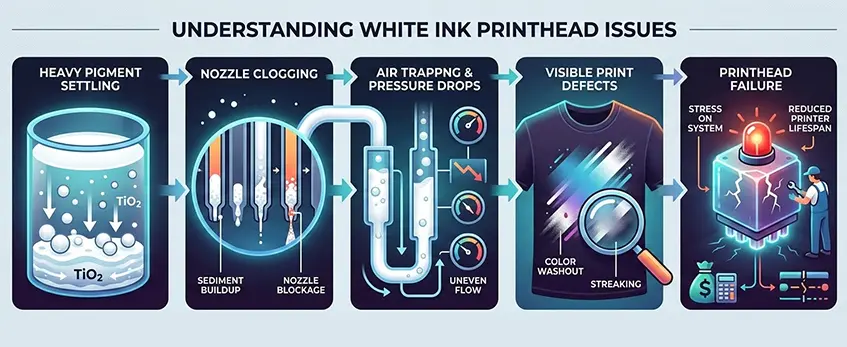
White ink in DTF printers often leads to nozzle clogging and sediment buildup because of its heavier pigments, especially titanium dioxide. These particles settle quickly, causing blockages that stop ink from flowing smoothly. When sediment forms, it clogs the tiny nozzles, leading to inconsistent printing or complete loss of white ink output.
Another common problem is air bubbles and pressure drops in the ink delivery system. White ink’s thicker consistency makes it prone to trapping air, which disrupts the steady flow inside the tubes and printhead. This results in uneven printing and frequent pressure fluctuations that stress the printer components.
Because of these issues, you might notice uneven flow and color washout during printing. White ink streaks or fades can make your designs look patchy or faded, especially when printing underbases or highlights. This often happens when clogged nozzles restrict ink flow or cause irregular spurts.
In severe cases, these issues can escalate to full printhead failure, requiring costly repairs or replacement. Blockages affect system pressure and can put extra strain on other colors too, leading to secondary effects like frequent maintenance needs and reduced printer lifespan.
To avoid these problems, it’s crucial to understand how white ink behaves differently from CMYK and implement proper maintenance and ink handling practices. For more detailed prevention tips, check out our guide on choosing the best DTF white ink and supplies.
Step-by-Step Diagnosis for White Ink Printhead Issues
Diagnosing DTF printer head problems caused by white ink starts with a careful nozzle check. White ink tends to clog nozzles differently than CMYK, so watch for unique patterns like missing dots or streaks that signal sediment buildup or air bubbles specific to white ink. Next, inspect the white ink bottles and tubes for sedimentation—heavier titanium dioxide particles often settle at the bottom, causing flow issues.
Check your RIP software settings to ensure the white ink is being laid down correctly; sometimes improper color layering or incorrect ink density settings worsen clogging problems. Don’t forget to test the ink circulation system closely. White ink needs active circulation to prevent sediment and clogs, so verify pumps, dampers, and tubing for blockages or reduced flow.
Finally, rule out non-ink causes like environmental factors, faulty printhead components, or incorrect storage. This step helps narrow down whether it’s truly a white ink sedimentation issue or a mechanical failure. Following these steps can save you time and avoid further damage to your DTF printer head.
For detailed maintenance tips to avoid common white ink problems, you might also want to explore how to choose the best equipment, such as reliable heat press machines designed for DTF workflows.
Immediate Fixes for Clogged or Problematic White Ink Printheads

Dealing with DTF white ink clogging can be frustrating, but acting fast helps prevent long-term damage. Here’s what you can do right away:
Daily agitation and ink circulation: White ink, especially pigmented with titanium dioxide, settles quickly. Make it a habit to shake your ink bottles before use and run circulation cycles daily to keep the white ink flowing smoothly inside the printer.
Standard cleaning: power cleaning and mild flushes: Use your printer’s built-in power cleaning functions regularly. Mild flushes with compatible cleaning solutions help dissolve early sediment buildup in nozzles without harsh wear.
Advanced unclogging methods: For stubborn blockages, try soaking the printhead in approved cleaning fluid. Reverse flushing (pushing cleaning liquid backward through ink channels) can dislodge hardened sediment. Wet capping—covering the printhead with a damp cloth or cap—prevents drying during longer idle times, reducing clogs.
Clearing tubes and dampers: Sediment often accumulates in tubes and dampers feeding white ink. Disconnect and carefully flush these parts using recommended solutions to clear flow blockages.
When to seek professional help: If regular cleaning and circulation don’t restore print quality or the printhead shows persistent nozzle blockage and pressure drops, it’s time to consult experts. Continuing to force ink can cause full printhead failure, leading to costly replacements.
For more detailed troubleshooting on distinguishing printhead clogs from low ink issues, check out our guide on how to tell if your DTF printer is out of ink or clogged. Addressing white ink sedimentation early keeps your Jinlong DTF printer performing reliably.
Long-Term Prevention Strategies for jinlong DTF Users
Keeping your jinlong DTF printer’s white ink printhead in top shape means planning ahead. Here are proven strategies to prevent common DTF printhead clogging and white ink problems:
Use premium anti-sedimentation white ink
Choose high-quality white ink designed to minimize titanium dioxide sedimentation. Premium jinlong DTF white ink formulas reduce the risk of pigment settling, keeping your ink flowing smoothly and preventing printhead failure.
Perform daily or weekly print tests and ink circulation
Running small white ink prints regularly keeps the ink moving through the nozzles, reducing sediment buildup and nozzle blockage. Even short circulation cycles help avoid air bubbles and pressure drops that hurt print quality.
Store ink and printer in controlled environments
Keep your white ink and printer away from extreme temperatures or humidity spikes. Proper storage conditions slow sedimentation and prevent ink thickening, which are common causes of white ink clogging in DTF printers.
Consider printer upgrades for better white ink circulation
Some jinlong DTF models allow enhancements to ink circulation systems. Upgrades like stronger agitators or improved tubing reduce the chance of white ink settling and help maintain consistent flow for underbase printing.
Follow maintenance schedules and care during idle times
Stick to routine cleaning and flushing plans designed for white ink printheads. When your printer is not in use, apply wet capping or other preservation methods to keep the printhead moist and prevent dry clogs.
These steps are essential to extend printhead life and avoid downtime. For more on keeping your jinlong DTF running smoothly, check out wie Sie feststellen können, ob Ihr DTF-Drucker keine Tinte mehr hat for signs that might also relate to white ink circulation issues.
Choosing the Right White Ink and Supplies for Reliability
When it comes to reliable DTF printing, especially with white ink, picking the right supplies matters a lot. White ink\’s unique pigment properties demand better dispersion and suspension to reduce sediment buildup and clogging.
What to Look for in White Ink
| Merkmal | Warum es wichtig ist |
|---|---|
| Good dispersion | Keeps pigment evenly spread, reducing sedimentation and nozzle blockages. |
| Strong suspension | Prevents heavier titanium dioxide from settling quickly in bottles and tubes. |
| Consistent viscosity | Ensures smooth flow without pressure drops or uneven spread during printing. |
Using inferior white ink leads to common issues like DTF white ink clogging and uneven flow. That’s why jinlong DTF white ink is designed specifically to minimize these problems with optimized pigment suspension and circulation stability.
Why Choose jinlong DTF White Ink?
- Formulated for low sedimentation and better circulation
- Reduces risk of DTF printhead failure caused by white ink buildup
- Compatible with jinlong’s cleaning solutions that safely unclog and maintain your printheads
Compatible Cleaning Solutions and Films
To keep your white ink running smoothly:
- Use authorized DTF printhead cleaning solutions tailored for white ink to avoid damage during unclogging
- Opt for films and powders recommended by jinlong for consistent adhesion without blocking nozzles
If you want a full rundown on how jinlong white ink works and why it’s a top choice for preventing printhead problems, check out the detailed guide on weiße Inkjet-Tinte und ihre Funktionsweise.
Choosing the right white ink and supplies upfront sets you up for fewer printhead issues, less downtime, and better-quality DTF prints every time.



 English
  Español
  Deutsch
  Français