
Es befinden sich keine Produkte im Warenkorb.

Jinlong
DTF-Drucker für Hemden vs. DTG Welcher Druck ist besser im Jahr 2026
Understanding the Basics: How DTG and DTF Work
If you’re diving into custom shirt printing, you’ve probably heard about DTF vs DTG printing and wondered what sets them apart. Let’s break down the basics so you can make sense of these popular methods.
DTG (Direct to Garment) works by using a specialized inkjet printer that sprays water-based inks directly onto pretreated fabric—usually 100% cotton shirts. This pretreatment is essential because it helps the ink bond well with the fibers, resulting in vibrant, detailed designs that feel soft to the touch. DTG is well-known for handling fine details and smooth color gradients, making it perfect for intricate artwork on light or white cotton garments.
Andererseits, DTF (Direct to Film) takes a different route. Instead of printing directly on the shirt, it prints the design onto a special PET film. Then, an adhesive powder is applied over the print, which is melted during a heat press transfer onto the shirt. This process offers impressive versatility—you can print on cotton, polyester, blends, nylon, and more, including dark-colored shirts. DTF is gaining attention for its vibrant colors and durability across various fabric types.
Here’s a quick visual/process comparison table to clarify:
| Merkmal | DTG Printer for Shirts | DTF Printer for Shirts |
|---|---|---|
| Druckverfahren | Direct inkjet on pretreated fabric | Print on film + adhesive powder + heat press |
| Kompatibilität von Stoffen | Am besten auf 100% Baumwolle | Works on cotton, polyester, blends, nylon, etc. |
| Pretreatment Needed | Ja | Nein |
| Farbschwingung | Great on light-colored shirts | Bright and opaque on dark and colored shirts |
| Gefühl auf Stoff | Soft, breathable | Slightly thicker but flexible |
| Application Speed | Slower, especially for bulk runs | Faster transfers, scalable production |
Understanding these fundamentals is key when choosing the best printer for custom t-shirts that fits your fabric types, design needs, and production scale. Next, we’ll dive deeper into the head-to-head details.
Key Comparison Factors: Head-to-Head Breakdown
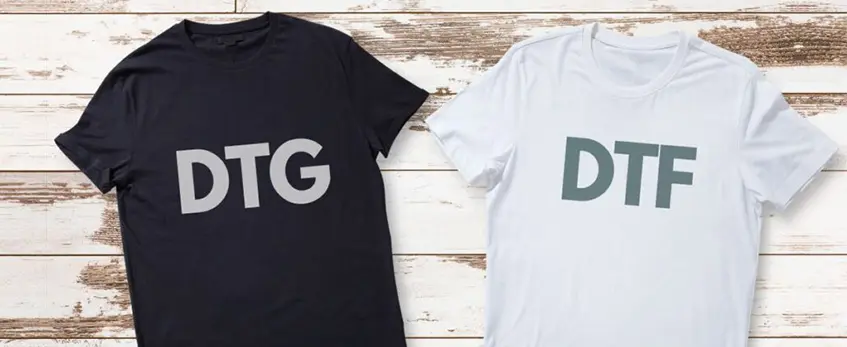
Bei der Entscheidung zwischen einer DTF-Drucker für Hemden and DTG, it helps to look at the main factors side by side. Here\’s a quick overview of how they stack up:
| Aspekt | DTG (Direct to Garment) | DTF (Direct to Film) |
|---|---|---|
| Druckqualität | Superior fine details and smooth gradients; colors blend softly into fabric | Brilliant vibrant colors and strong opacity, especially on dark or colored shirts |
| Kompatibilität von Stoffen | Best on 100% cotton; limited on polyester and blends | Works on cotton, polyester, nylon, blends – great for varied shirt materials |
| Durability & Washability | Good; fades after 25–50+ washes with care | Very durable; often lasts 100+ washes thanks to heat-bonded adhesion |
| Hand Feel & Comfort | Soft, breathable print with a feel similar to screen printing | Slightly thicker layer, but high-quality films reduce heaviness |
| Geschwindigkeit und Einfachheit der Produktion | Fast for individual prints but needs pretreatment and regular maintenance | Quick transfers; no pretreatment needed; ideal for batch printing |
| Kosten | Higher initial setup; better for high volumes | Generally more affordable startup; cheaper per shirt in small to medium runs |
| Environmental Impact & Maintenance | Uses water-based inks but requires more chemical pretreatment | Also water-based inks; less chemical use and easier maintenance |
DTF is gaining popularity for its versatility on fabric types and strong durability, while DTG shines when you need high-detail, soft prints on mostly cotton shirts. To dive deeper into the cost and performance aspects of DTF printers, check out this detailed cost-to-performance breakdown of 4-head DTF printers.
Choosing the right method depends heavily on your specific needs—whether that’s fabric types, durability, or production scale. Both printing styles use eco-friendlier water-based inks, but DTG’s need for more pretreatment chemicals can impact maintenance and sustainability considerations.
Pros and Cons Table
| Merkmal | DTG Printer for Shirts | DTF Printer for Shirts |
|---|---|---|
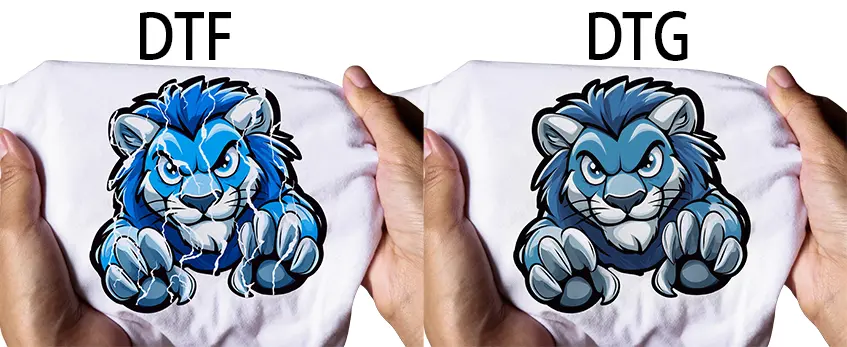
| Druckqualität | Superior fine details, smooth gradients, soft feel on cotton shirts | Vibrant colors, strong opacity, great on dark or colored shirts |
| Kompatibilität von Stoffen | Best on 100% cotton only | Works well on cotton, polyester, blends, nylon, and more |
| Dauerhaftigkeit | Good washability (around 25–50+ washes with care) | Often lasts longer (100+ washes) due to heat-bonded adhesion |
| Handgefühl | Soft, breathable, “screen-print-like” comfort | Slightly thicker print layer, but high-quality films reduce stiffness |
| Produktionsgeschwindigkeit | Fast for single prints, requires pretreatment and regular maintenance | No pretreatment, quick heat press transfers, scalable for batch runs |
| Kosten | Higher initial equipment cost, better for high volume | More affordable setup, better cost per shirt for small-to-medium runs |
| Wartung | Requires more upkeep (pretreatment, head cleaning) | Lower maintenance, fewer consumables besides film and powder |
| Auswirkungen auf die Umwelt | Uses water-based inks but needs pretreatment chemicals | Water-based inks, no pretreatment—consider ecofriendly powder options like this |
| Beste Anwendungsfälle | Detailed prints on 100% cotton shirts, soft hand feel | Versatile fabrics, dark shirts, bulk orders, and small businesses |
This clear head-to-head makes it easier to decide which printer fits your specific needs, balancing print quality, fabric versatility, cost, and production goals. For more detailed tips on handling DTF transfers without film warping, check out how to cure DTF powder with heat press.
Which Is Better for Your Specific Needs?
Choosing between a DTF-Drucker für Hemden and DTG depends mostly on your fabric type, design complexity, and production goals.
Best for 100% cotton shirts with intricate designs: DTG shines here. It offers superior fine detail and smooth gradients directly on cotton, perfect for artists focused on soft, detailed prints.
Best for versatile fabrics, dark shirts, or bulk/custom runs: DTF is the way to go. It works well on cotton, polyester, blends, even nylon. Plus, its vibrant film transfers hold up great on darker colors and large batches.
Beginners and small businesses: DTF printing usually has a lower barrier to entry with less maintenance and no pretreatment, making it easier and more affordable for startups.
High-volume print-on-demand (POD): The choice depends on your fabric focus. Still, DTF is gaining serious traction in 2026 thanks to growing demand for durable, vivid prints across various materials.
A big plus here is jinlong DTF, known for its reliable, vibrant, and durable prints. Their printers and quality consumables, like superior DTF-Übertragungsfolie, help businesses deliver consistent results—making it a smart choice whether you’re starting out or scaling up.
For those wanting to simplify their setup further, jinlong also offers options like the right DTF powder shakers tailored to streamline powder application, boosting print durability without extra hassle.
Bottom line: If your main goal is soft, detailed prints on 100% cotton, DTG is excellent. But for versatility, cost-efficiency, and easy maintenance—especially on mixed fabrics and darker garments—DTF, particularly with jinlong’s reliable gear, is increasingly the better bet.
Real-World Use Cases and Examples
When choosing between a DTF printer for shirts and DTG, understanding where each shines in real-world use can help you make the right call.
Small Etsy Shops: Many small business owners prefer DTF for its versatility and lower startup costs. It’s great for mixing cotton, polyester, and blends without pretreatment hassles, making it perfect for custom orders with varied fabrics. To get the best results, invest in quality adhesive powders and heat press settings—they make a huge difference in print durability.
Team Uniforms and Promotional Shirts: DTF printing excels here thanks to its vibrant colors and strong washability, especially on dark or synthetic fabrics. Bulk orders benefit from DTF’s fast transfer process and consistent quality, which keeps production moving smoothly. For high-detail logos, pairing DTF with a reputable film and powder system is key—learn more about how TPU powder DTF is revolutionizing printing to boost durability.
Streetwear Brands: Both DTG and DTF printers have a place in streetwear, depending on the fabric and design complexity. DTG is favored for intricate, soft-feeling designs on 100% cotton tees. Meanwhile, DTF is ideal for bold, vibrant graphics that pop on a variety of materials. Balancing fabric choice and print style will ensure your streetwear stands out and holds up with wear and wash.
Tips for Best Results With Each Method:
- Für DTG printing on shirts, always pretreat cotton fabrics properly and maintain your printer regularly to avoid clogs and color dullness.
- Mit DTF-Druck, focus on getting the right heat press temperature and timing to maximize adhesion and print longevity, plus use quality DTF inks and films—for instance, trusted DTF ink products designed for vivid colors and sharp details.
- Always test on sample garments before large runs, regardless of the printing method.
By matching your printing method to your product goals and fabric choices, you\’ll improve product quality and customer satisfaction, whether you’re running a small business or scaling up production.


 English
  Español
  Deutsch
  Français