
Es befinden sich keine Produkte im Warenkorb.

Jinlong
Sind überholte DTF-Drucker es wert? Vor- und Nachteile für 2026
Was genau ist ein überholter DTF-Drucker?
A überholter DTF-Drucker ist eine Direct-to-Film-Druckmaschine, die von erfahrenen Technikern professionell in einen neuwertigen Zustand gebracht wurde. Dies unterscheidet sich von einer einfachen gebrauchter DTF-Drucker, die so verkauft werden, wie sie sind, oft ohne gründliche Tests oder Reparaturen. Die Aufarbeitung umfasst in der Regel eine gründliche Reinigung, den Austausch verschlissener Teile - insbesondere kritischer Komponenten wie Druckköpfe - und eine vollständige Funktionsprüfung, um einen zuverlässigen Druck sicherzustellen, insbesondere bei anspruchsvollen Systemen mit weißer Tinte.
Die meisten DTF-Drucker basieren auf beliebten Modellen, die ursprünglich für den Tintenstrahl- oder Textildruck entwickelt wurden, wie z. B. Epson-Varianten, die für den DTF-Einsatz modifiziert wurden. Diese Geräte erfordern eine präzise Kalibrierung, da weiße Tinte im Gerät leicht verstopft und eintrocknet. Eine ordnungsgemäße Überholung verbessert den Tintenfluss und die Druckqualität, indem sie diese Probleme behebt, so dass ein überholter DTF-Drucker sicherer ist als der Kauf eines gebrauchten Geräts ohne Überholung. Dieser Prozess ist unerlässlich, da Systeme mit weißer Tinte der schwierigste Teil des DTF-Drucks sind und andernfalls zu Wartungsproblemen und Ausfallzeiten führen können.
Wenn Sie sich für einen generalüberholten DTF-Drucker entscheiden, erhalten Sie ein Gerät, dem ein zweites Leben geschenkt wurde, wobei den wichtigsten Teilen besondere Aufmerksamkeit gewidmet wurde, um Kosteneinsparungen und Betriebszuverlässigkeit in Einklang zu bringen.
Vorteile der Wahl eines überholten DTF-Druckers

Einer der größten Vorteile der Entscheidung für einen generalüberholten DTF-Drucker ist der erhebliche Kosteneinsparungen, Die Kosten liegen in der Regel zwischen 40-60% im Vergleich zum Kauf neuer Modelle. Dies kann einen großen Unterschied ausmachen, insbesondere für diejenigen, die gerade erst ein DTF-Druckgeschäft oder einen Nebenerwerb beginnen, da es die Einstiegshürde senkt und eine schnellere Markteinführung ermöglicht, ohne zu warten oder das Budget zu strapazieren.
Ein weiterer Vorteil ist der Zugang zu hochwertigere, erstklassige Maschinen die bei einem Neukauf unerschwinglich wären. Aufgearbeitete Modelle stammen oft von Top-Marken und sind vollständig getestet und repariert. Das bedeutet, dass Sie von der Qualität und Leistung profitieren können, die normalerweise teureren Geräten vorbehalten ist.
Seriöse Refurbisher bieten gerne Garantien und gründliche Tests an, bevor der Drucker bei Ihnen eintrifft, damit Sie sicher sein können, dass das Gerät nicht gleich am ersten Tag kaputt geht. Diese Inspektionen umfassen in der Regel wichtige Teile wie den Druckkopf und das System für weiße Tinte, um die Zuverlässigkeit zu gewährleisten.
Die Verwendung eines generalüberholten DTF-Druckers ist auch mit einem Umweltnutzen - Durch die Verlängerung der Lebensdauer vorhandener Geräte reduzieren Sie den Elektroschrott und verringern die Auswirkungen auf den Produktionsbedarf. Dieser Nachhaltigkeitsaspekt kommt vielen Geschäftsinhabern entgegen, die umweltfreundlichere Entscheidungen treffen wollen.
Wenn Sie mehr über den kompletten Aufbau und die zusätzlichen Werkzeuge erfahren möchten, die Sie von einer hochwertigen überholten Maschine erwarten können, sehen Sie sich den DTF-Artikel von Jinlong an. Vollständiger Leitfaden für Einrichtung und Kauf, die wesentliche Bestandteile für optimale Druckergebnisse aufspaltet.
Nachteile und potenzielle Risiken von überholten DTF-Druckern
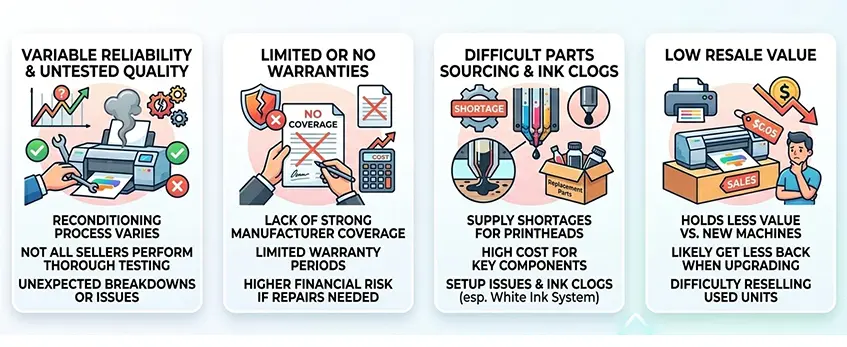
Aufgearbeitete DTF-Drucker bieten zwar unbestreitbare Vorteile, aber es gibt auch einige Nachteile, die Sie beachten sollten. Erstens kann die Zuverlässigkeit stark variieren, je nachdem, wie gut der Aufbereiter den Aufbereitungsprozess durchführt. Nicht alle Verkäufer von gebrauchten DTF-Druckern führen gründliche Tests durch, sodass es zu unerwarteten Ausfällen oder Leistungsproblemen kommen kann.
Ein weiterer wichtiger Faktor ist die Garantie - oder oft auch das Fehlen einer solchen. Im Gegensatz zu neuen Modellen, die über eine solide Herstellergarantie verfügen, haben generalüberholte Geräte möglicherweise nur eine eingeschränkte oder gar keine Garantie, so dass Sie ein höheres Risiko eingehen, wenn etwas schiefgeht. Dies erhöht die Gesamtbetriebskosten, insbesondere wenn Sie Ersatzteile oder Reparaturen benötigen.
Apropos Teile: Die Beschaffung von Ersatzteilen, insbesondere von Druckköpfen, ist derzeit aufgrund der anhaltenden Lieferengpässe schwierig. Die Kosten für den Austausch von Druckköpfen sind bereits hoch, und die Beschaffung von Originalteilen kann die Durchlaufzeit verlängern. Eine unsachgemäße Aufarbeitung kann auch zu Einrichtungsproblemen wie Tintenverstopfungen führen, insbesondere im System für weiße Tinte, das für die DTF-Druckqualität entscheidend ist. Lesen Sie die Tipps zur Erkennung von Druckkopfproblemen im Gegensatz zu Problemen mit dem Tintensystem, um häufige Kopfschmerzen zu vermeiden.
Schließlich haben generalüberholte DTF-Drucker im Allgemeinen einen geringeren Wiederverkaufswert als neue Geräte. Das bedeutet, dass Sie für einen gebrauchten oder generalüberholten Drucker wahrscheinlich weniger zurückbekommen, wenn Sie später ein Upgrade planen. Diese potenziellen Risiken bedeuten nicht, dass generalüberholte Drucker nicht in Betracht gezogen werden sollten - es ist nur Vorsicht geboten und die Wahl eines seriösen Anbieters, um Probleme zu vermeiden.
Überholter vs. neuer DTF-Drucker: Kopf-an-Kopf-Vergleich
Bei der Entscheidung zwischen einem generalüberholten DTF-Drucker und einem neuen Gerät ist es wichtig, das gesamte Kosten- und Leistungsspektrum zu kennen. Hier finden Sie eine klare Aufschlüsselung, die Ihnen hilft, Ihre Optionen abzuwägen:
| Faktor | Überholter DTF-Drucker | Neuer DTF-Drucker |
|---|---|---|
| Anschaffungspreis | 40-60% weniger als neue Modelle | Vollständiger Verkaufspreis |
| Verbrauchsmaterial und Wartung | Ähnliche Kosten, aber schnellerer Verschleiß der Teile | Die Standardgarantie deckt zunächst Teile ab |
| Zuverlässigkeit und Betriebszeit | Variabel; abhängig von der Qualität des Aufbereiters | Höhere Zuverlässigkeit bei minimalen Ausfallzeiten |
| Garantie & Support | Begrenzte oder verkäuferbasierte Garantie; weniger Herstellersupport | Volle Herstellergarantie und Support |
| Software-Zugang | Kann veraltete oder eingeschränkte RIP-Software enthalten | Zugang zu den neuesten Softwareversionen und Updates |
| Ideale Anwendungsfälle | Am besten geeignet für Start-ups, Nebenerwerbstätigkeiten oder Jobs mit geringem bis mittlerem Volumen | Geeignet für hochvolumige, anspruchsvolle Produktion |
Wiederaufbereitete Modelle bieten erhebliche Kosteneinsparungen und eine schnellere Inbetriebnahme, können aber bei der Langlebigkeit der Teile und beim Support Abstriche machen. Neue Drucker bieten mehr Sicherheit durch bessere Garantien, Software und Betriebszeiten und eignen sich für Unternehmen, die eine konstante Leistung benötigen.
Weitere Informationen darüber, wie RIP-Software die Druckqualität und Tintenausgabe steuert, finden Sie in diesem ausführlichen Leitfaden auf DTF RIP-Software erklärt. Und wenn Sie nach Möglichkeiten suchen, Ihr eigenes Druckunternehmen zu gründen, ist die DTF-Transferdrucker-Kaufberatung deckt die wichtigsten Merkmale ab, die wirklich einen Unterschied machen.
Wichtige Faktoren, die vor dem Kauf eines überholten DTF-Druckers zu beachten sind
Wenn Sie sich für einen generalüberholten DTF-Drucker entscheiden, sollten Sie zunächst den Ruf des Verkäufers prüfen. Suchen Sie nach Refurbishern, die detaillierte Testprotokolle, eindeutige Fotos und eine vollständige Nutzungsgeschichte vorlegen, um sicherzustellen, dass das Gerät ordnungsgemäß überholt wurde. So vermeiden Sie das Risiko, gebrauchte DTF-Geräte zu kaufen, die nicht gründlich geprüft wurden.
Informieren Sie sich auch über die Garantie- und Rückgaberichtlinien. Im Gegensatz zu neuen DTF-Druckern haben generalüberholte Geräte oft nur eine begrenzte Garantie, also informieren Sie sich, was abgedeckt ist und wie lange. Dieser Schutz ist besonders wichtig angesichts der hohen Ersatzteilkosten für kritische Teile wie DTF-Druckköpfe, die sich direkt auf die Haltbarkeit der weißen Tinte und die Druckqualität auswirken.
Vergessen Sie nicht, sich zu vergewissern, welche Extras bei Ihrem Kauf enthalten sind. Unverzichtbare Zusatzgeräte wie RIP-Software, kompatible Tinten und ein Pulverstreuer können Ihnen Zeit und Geld sparen, wenn Sie Ihren Drucker in Betrieb nehmen. Bei einigen Anbietern sind diese Tools im Lieferumfang enthalten, bei anderen nicht.
Schließlich sollten Sie den Drucker auf Ihr zu erwartendes Druckvolumen und Ihre Fähigkeit, es zu warten, abstimmen. Wiederaufbereitete DTF-Drucker eignen sich am besten für niedrige bis mittlere Druckvolumen oder für Start-ups mit knappen Budgets. Seien Sie realistisch, was die Wartung Ihres Geräts angeht, um kostspielige Ausfallzeiten zu vermeiden.
Durch eine sorgfältige Auswahl können Sie Ihre Ersparnisse maximieren und erhalten eine zuverlässige Einrichtung, die sofort einsatzbereit ist. Wenn Sie Hilfe bei der Auswahl kompatibler Verbrauchsmaterialien benötigen, können Sie sich an Ressourcen wie die Leitfaden zur Kompatibilität von TPU-Pulver um sicherzustellen, dass Ihre Tinten und Puder perfekt auf Ihren Drucker abgestimmt sind.
Tipps zur Vermeidung von Fallstricken und Betrügereien
Achten Sie beim Kauf eines generalüberholten DTF-Druckers auf rote Fahnen wie Preise, die zu günstig erscheinen, um wahr zu sein, Verkäufer, die keine Testnachweise vorlegen, oder Anbieter mit Sitz im Ausland, die schwer zu erreichen sind. Diese Anzeichen deuten oft auf versteckte Risiken oder eine schlechte Qualität der Geräte hin. Stellen Sie immer wichtige Fragen wie:
- Wie wurde der Drucker aufbereitet und getestet?
- Welche Garantie oder Rückgaberegelung wird angeboten?
- Ist der Druckkopf in gutem Zustand, insbesondere bei Systemen mit weißer Tinte?
- Sind kompatible Tinten, Pulverstreuer oder RIP-Software enthalten?
Halten Sie sich an sichere Kaufplattformen mit geprüften Verkäufern, um Risiken zu minimieren. Wenn Sie sich für etablierte Refurbisher wie jinlong DTF entscheiden, können Sie sich sicher sein, dass Ihr Kauf dank des gründlichen Prüfverfahrens und der zuverlässigen Garantieoptionen sicherer und zuverlässiger ist.
Weitere Einblicke in die Geräte- und Softwareseite des DTF-Drucks finden Sie in diesem Leitfaden auf kostenlose und kostenpflichtige DTF-RIP-Softwareoptionen.
Reale Benutzererfahrungen und Fallstudien

Viele Nutzer teilen ihre Erfahrungen mit gebrauchten DTF-Druckern in Foren, sozialen Medien und YouTube-Beiträgen. Diese Berichte heben sowohl die Vorteile als auch die Herausforderungen beim Kauf gebrauchter DTF-Geräte hervor und bieten praktische Einblicke jenseits von technischen Daten und Verkaufsargumenten.
Erfolgreiche Käufer berichten oft von einer hohen Rendite mit generalüberholten Druckern, insbesondere wenn sie von seriösen Generalüberholern stammen. Sie sparen erheblich bei den Anschaffungskosten und erhalten dennoch eine beeindruckende Druckqualität, insbesondere bei kleineren bis mittleren Auflagen. Diese Nutzer betonen, wie wichtig gründliche Tests und eine ordnungsgemäße Wartung sind, damit die Systeme mit weißer Tinte reibungslos funktionieren, und treffen damit eine kluge Entscheidung, die auf ihren geschäftlichen Anforderungen basiert.
Auf der anderen Seite berichten einige von Problemen wie dem unerwarteten Verstopfen von Druckköpfen oder Schwierigkeiten bei der Beschaffung von Ersatzteilen. Diese Probleme sind oft auf den Kauf bei weniger zuverlässigen Anbietern oder das Überspringen wichtiger Aufarbeitungsphasen zurückzuführen.
Wenn Sie einen generalüberholten DTF-Drucker in Betracht ziehen, können Sie sich anhand dieser Nutzererfahrungen ein realistisches Bild von der potenziellen Zuverlässigkeit und den langfristigen Kosten machen. Für ein besseres Verständnis der Tinteneigenschaften, die sich auf die Druckhaltbarkeit auswirken, können Sie Details erforschen wie TPU-Pulverhaftung, Elastizität und Haltbarkeit um zu sehen, wie gut die überholten Maschinen die Materialien bei echten Aufträgen verarbeiten.
Lohnt sich ein überholter DTF-Drucker für Sie?
Die Entscheidung, ob ein generalüberholter DTF-Drucker das Richtige für Sie ist, hängt in erster Linie von Ihrer Geschäftsphase, Ihren Zielen und Ihrem Budget ab. Wenn Sie gerade erst anfangen oder ein Nebengewerbe betreiben, kann ein generalüberholtes Modell erhebliche Vorteile bieten Kosteneinsparungen beim DTF-Drucker-oft 40-60% günstiger als Neugeräte-, so dass Sie schneller auf den Markt kommen, ohne viel Geld ausgeben zu müssen. Dies ist besonders hilfreich, wenn Sie Wert auf Qualität legen und häufige Fallstricke vermeiden möchten, indem Sie sich für vertrauenswürdige Refurbisher entscheiden, die ihre Geräte gründlich testen und garantieren.
Für diejenigen, die ein knappes Budget, aber einen Bedarf an zuverlässigen, leistungsstarken Geräten haben, sind generalüberholte Drucker eine gute Alternative. Wenn Sie jedoch eine hohe Produktionsmenge anstreben oder die neuesten Funktionen mit vollem Herstellersupport wünschen, ist die Investition in einen neuen DTF-Drucker im Hinblick auf langfristige Zuverlässigkeit und Betriebszeit möglicherweise besser.
Zusammengefasst:
- Start-ups und preisbewusste Käufer: Wiederaufbereitete DTF-Drucker aus seriösen Quellen sind eine Überlegung wert
- Mittlerer bis hoher Bedarf: Neue DTF-Drucker bieten möglicherweise mehr Sicherheit und Unterstützung
- Prüfen Sie vor dem Kauf immer die Garantieoptionen, den Zustand des Druckkopfs und den Ruf des Verkäufers.
Wenn Sie mehr darüber erfahren möchten, wie Sie häufige Probleme vermeiden und einen reibungslosen Druck sicherstellen können, lesen Sie Häufige DTF-Filmprobleme und deren Behebung für praktische Ratschläge, wie Sie Ihren generalüberholten Drucker am Laufen halten können.


 English
 Español
 Deutsch
 Français