

Es befinden sich keine Produkte im Warenkorb.

Jinlong
Automatische Heißpressen ROI-Break Even Time für individuellen Druck
Warum Auto-Heizpressen im individuellen Druck immer beliebter werden
Automatische Heißpressen werden in der Druckindustrie immer beliebter, und es ist leicht zu erkennen, warum. Im Vergleich zu manuellen Pressen bieten sie gleichmäßiger Druck und präzises Timing, Das bedeutet, dass jedes Kleidungsstück das gleiche hochwertige Finish erhält - kein Rätselraten oder ungleichmäßige Transfers. Diese Konsistenz ist besonders wichtig, wenn Sie mit empfindlichen oder komplexen Drucken wie DTF-Transfers, Vinyl und Sublimation arbeiten.
Ein weiterer großer Vorteil ist geringere Ermüdung des Bedieners. Da die Maschine das Öffnen und Schließen automatisch durchführt, ist es weniger anstrengend, die Produktion den ganzen Tag über laufen zu lassen. Dies schlägt sich direkt in einer höheren Tagesproduktion nieder. Automatische Heißpressen können zum Beispiel problemlos Folgendes pressen 100+ Kleidungsstücke pro Stunde, im Vergleich zu etwa 30-50 bei manuellen Druckmaschinen. Das ist eine enorme Effizienz für Unternehmen, die skalieren wollen.
Diese Maschinen sind ideal für großvolumige kundenspezifische Aufträge und Kleinserienproduktion gleichermaßen. Angesichts der steigenden Nachfrage nach personalisierter Kleidung, von lokalen Marken bis hin zu Online-Shops, erfüllen Auto-Heizpressen die Anforderungen eines vielfältigen Marktes. Ob Sie mit Großaufträgen oder Einzelaufträgen arbeiten, sie bieten die Geschwindigkeit und Zuverlässigkeit, die moderne Dekorateure brauchen.
Automatische Heißpressen vereinen Präzision, Effizienz und Benutzerfreundlichkeit und sind damit eine kluge Investition in den wachsenden Markt für individuelle Drucksachen. Ihre Vorteile helfen Unternehmen, wettbewerbsfähig zu bleiben und gleichzeitig die von Kunden erwarteten konsistenten Ergebnisse zu liefern.
Die wahren Kosten der Investition in eine Auto-Heizpresse verstehen
Wenn Sie eine automatische Heißluftpresse in Erwägung ziehen, ist es wichtig, die Gesamtkosten im Voraus zu kennen, um die Rentabilität Ihrer Heißluftpresse genau zu berechnen. Einsteigermodelle für automatische Heizpressen liegen in der Regel zwischen $300 und $800 und sind ideal für Anfänger oder kleine Nebenerwerbsbetriebe. Für einen beständigeren kommerziellen Einsatz kosten Mittelklassemodelle zwischen $1.000 und $2.500 und bieten eine bessere Haltbarkeit und Ausstattung. Premium-Heizpressen mit automatischer Öffnung, die die Sicherheit und Effizienz verbessern, beginnen oft bei $2.500 und mehr.
Aber der anfängliche Maschinenpreis ist nicht die ganze Geschichte. Sie benötigen auch eine kompatible DTF-Einrichtung - einschließlich Drucker, Rüttler, Pulver und Folien -, um Ihre Investition optimal nutzen zu können. Außerdem müssen Sie die Kosten für Rohlinge (T-Shirts, Kapuzenpullis usw.), Strom und Arbeitsraum berücksichtigen. Diese Kosten summieren sich und wirken sich auf die Berechnung des Break-Even-Punkts für individuelle T-Shirts aus.
Vergessen Sie auch nicht versteckte Faktoren wie die Herstellergarantie, den Energieverbrauch, die allgemeine Haltbarkeit und den Wiederverkaufswert. Wenn Sie sich für vertrauenswürdige Marken wie Jinlong entscheiden, können Sie sich eine längere Lebensdauer der Maschine und eine reibungslosere Amortisationszeit sichern. Eine ausführliche Anleitung zur Auswahl der richtigen Heißpresseneinrichtung finden Sie in diesem Artikel über die Auswahl der richtigen automatischen Heißpressen für Ihr Unternehmen.
Die wichtigsten Faktoren, die Ihren Break-Even-Zeitplan bestimmen
Wenn es darum geht, die Amortisationsdauer Ihrer automatischen Heißpressmaschine zu berechnen, spielen mehrere Faktoren eine große Rolle.
Gewinn pro Kleidungsstück ist der Schlüssel. Je nach Vertriebskanal und Materialien liegen die Gewinnspannen normalerweise zwischen $5 und $18. Faktoren wie Großhandels- und Einzelhandelspreise, Qualität der Zuschnitte und die Art der Übertragung wirken sich auf Ihren Nettogewinn pro Hemd aus.
Produktionsvolumen ist das Nächste. Automatische Pressen produzieren aufgrund des gleichmäßigen Drucks und der kürzeren Zykluszeiten schneller. Sie erreichen oft mehr als 100 Hemden pro Stunde gegenüber 30-50 bei manuellen Maschinen. Dieser höhere Ausstoß in Kombination mit weniger Nacharbeit führt zu einer schnelleren Rentabilitätssteigerung.
Ihr Vertriebswege beeinflussen, wie schnell Sie Ihr Inventar zu Geld machen. Egal, ob Sie auf Etsy, bei lokalen Veranstaltungen, im Großhandel, in E-Commerce-Läden oder bei Großbestellungen verkaufen, jedes dieser Angebote hat ein anderes Mengenpotenzial und eine andere Preisflexibilität, die sich auf Ihren ROI-Zeitplan auswirken.
Schließlich ist zu berücksichtigen Betriebskosten wie Strom, routinemäßige Wartung, Verbrauchsmaterialien wie DTF-Pulver und Folien sowie Arbeitseinsparungen durch Automatisierung. Diese Kosten schmälern den Gewinn, sind aber bei einer automatischen Heißpresse in der Regel pro Hemd niedriger, was die Gesamtrendite der Investition verbessert.
Alle diese Faktoren zusammen bestimmen, wie schnell Sie die Amortisationszeit für Ihre individuelle Bekleidungsausrüstung erreichen - das Abwägen von Gewinnspannen, Volumen, Umsatz und Kosten bestimmt Ihre tatsächliche ROI-Kalkulation für die Heizpresse.
Schritt-für-Schritt ROI- und Break-Even-Berechnung

Mit dieser Formel können Sie die Amortisationszeit für Ihre Auto-Heißpressmaschine ganz einfach berechnen:
Amortisationszeit = Anfangsinvestition ÷ (Nettogewinn pro Kleidungsstück × monatliches Volumen)
Lassen Sie uns einige realistische Szenarien auf der Grundlage typischer Gewinnspannen und Produktionsmengen durchspielen.
Beispiel-Szenarien
- Nebenberufliche Tätigkeit: 50-100 Hemden pro Monat
- Kleine Unternehmen: 200-500 Hemden pro Monat
- Hochvolumiger Betrieb: 1.000+ Hemden pro Monat
Geht man von einer Anfangsinvestition von etwa $1.500 für eine zuverlässige automatische Heißpresse und eine DTF-kompatible Einrichtung aus und einem Nettogewinn von $8-$12 pro Hemd, könnte es folgendermaßen aussehen:
| Szenario | Monatliche Hemden | Gewinn/ Hemd | Monatlicher Gewinn | Amortisationszeit (Monate) |
|---|---|---|---|---|
| Nebenerwerb | 75 | $10 | $750 | $1.500 ÷ $750 = 2 Monate |
| Kleines Unternehmen | 350 | $10 | $3,500 | $1,500 ÷ $3,500 = 0,43 Monat (etwa 2 Wochen) |
| Großes Volumen | 1,000 | $10 | $10,000 | $1.500 ÷ $10.000 = 0,15 Monat (einige Tage) |
Tipps zur Beschleunigung des ROI Ihrer Heißpresse
- Rohlinge in großen Mengen kaufen: Geringere Kosten durch den Kauf von Hemden und Materialien in größeren Mengen.
- Optimieren Sie die Laufzettel: Drucken und pressen Sie mehrere Motive auf einem Bogen, um Zeit und Material zu sparen.
- Intelligente Preisgestaltung: Berücksichtigen Sie Ihre Kosten und die Marktnachfrage, um die Gewinnspanne zu maximieren, ohne Umsatzeinbußen hinnehmen zu müssen.
Diese effiziente ROI-Berechnungsmethode hilft Ihnen bei der effektiven Planung, ganz gleich, ob Sie einen lockeren Nebenerwerb betreiben oder ein wachsendes Geschäft mit maßgeschneiderter Kleidung führen. Für eine reibungslosere Einrichtung mit DTF-Transfers und kompatiblem Zubehör finden Sie Ressourcen auf DTF-Transferfilmkosten und ROI für kleine Geschäfte zur Feinabstimmung Ihrer Anlagedaten.
Beispiele aus der Praxis und Fallstudien
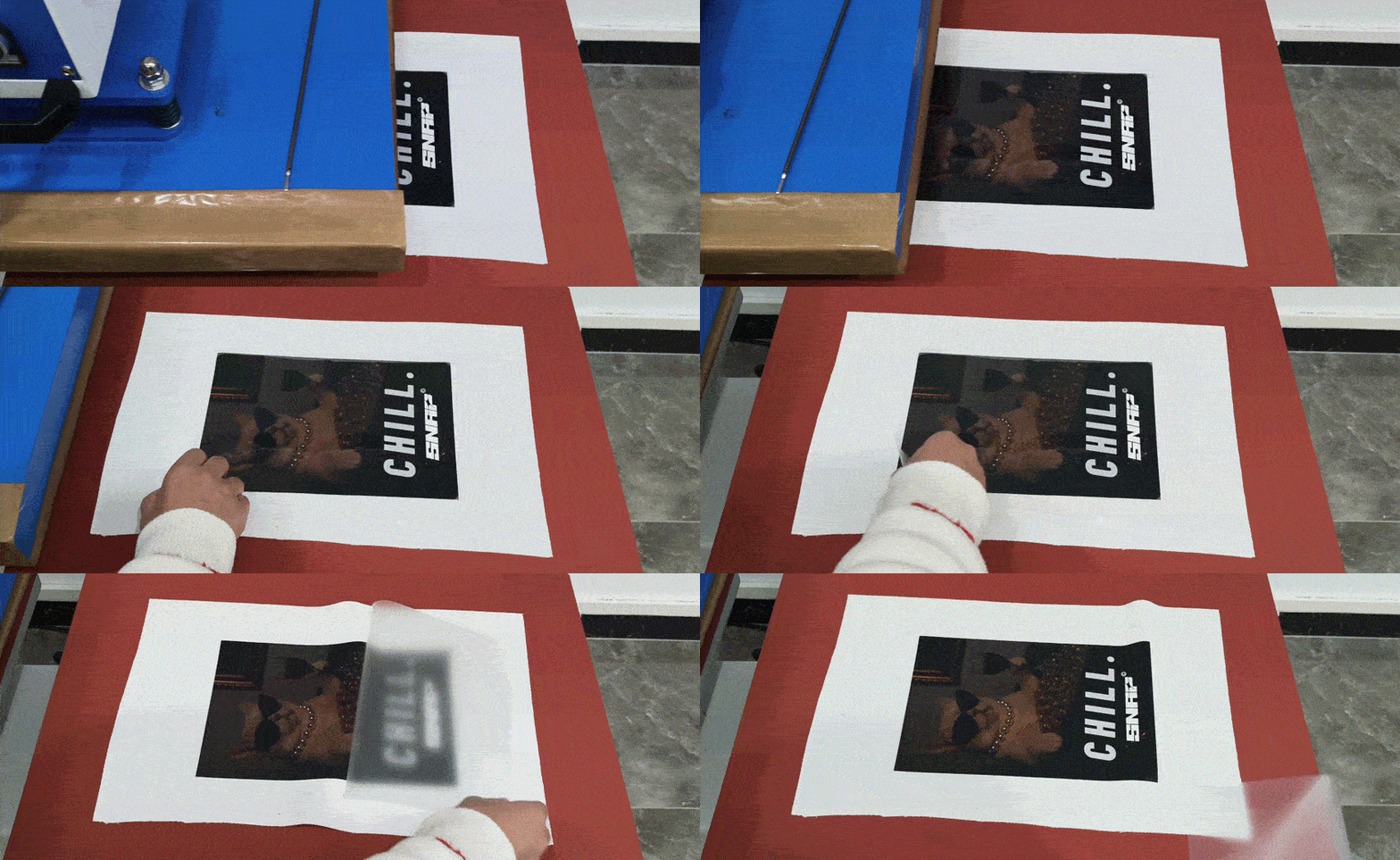
Hier ein kurzer Überblick über die Rentabilitäts- und Rentabilitätsschwellenwerte verschiedener automatischer Heizpressen:
| Maschinentyp | Break-Even-Shirts | Geschätzter Zeitrahmen | Anmerkungen |
|---|---|---|---|
| Automatische Wärmepresse der Einstiegsklasse | 100-300 Hemden | 1-4 Monate | Erschwinglich, gut für nebenberufliche Tätigkeiten oder kleine Auflagen |
| Jinlong DTF-Autopresse im mittleren Preissegment | 80-200 Hemden | 1-3 Monate | Schnellere Amortisation dank zuverlässiger Leistung und weniger Abfall; ideal für die DTF-Heißpressen-Investitionsrendite (Jinlong DTF-Übertragungsfolie) Aufstellungen |
| Manuelle Wärmepresse (zum Vergleich) | 150-350 Hemden | 3-6 Monate | Arbeitsintensive, langsamere Produktion führt zu längeren ROI-Zeiten |
Die wichtigsten Erkenntnisse der Dekorateure:
- Die Automatisierung reduziert den Arbeitsaufwand und steigert den ROI im Vergleich zu manuellen Druckmaschinen um 20-50%.
- Konsequente Marketing- und Verkaufsanstrengungen führen oft zu einer vollständigen Amortisation innerhalb von 2 bis 6 Monaten.
- Zuverlässige Maschinen wie die Jinlong DTF-Heißpressen reduzieren Ausfallzeiten und Defekte, wodurch die Rentabilitätsschwelle schneller erreicht wird.
Diese Ergebnisse aus der Praxis zeigen, dass sich die Investition in eine hochwertige automatische Heißluftpresse schnell auszahlt, vor allem, wenn sie mit guten Vertriebskanälen und einer konstanten Produktion verbunden ist.
Potenzielle Risiken und deren Abschwächung

Eines der größten Risiken bei der Investition in eine automatische Heißpressmaschine besteht darin, dass Sie Ihren Umsatz überschätzen oder die Konkurrenz unterschätzen. Es ist leicht, sich zu freuen und anzunehmen, dass die Aufträge in die Höhe schießen werden, aber die Realität ist anfangs oft langsamer. Wenn Sie zu groß anfangen, ohne den Markt zu testen, kann dies zu Lagerbeständen und Cashflow-Problemen führen.
Ein weiterer häufiger Fallstrick ist die Wahl minderwertiger Maschinen, die frühzeitig ausfallen und so Ausfallzeiten und unerwartete Reparaturkosten verursachen. Diese Rückschläge können Ihre ROI-Kalkulation für die Heißpresse verzögern und Ihrem Ruf schaden.
Um diese Risiken zu vermeiden:
- Klein anfangen: Beginnen Sie mit kleinen Auflagen, um die Nachfrage abzuschätzen, bevor Sie das Angebot erweitern.
- Testen Sie Ihre Märkte: Nutzen Sie lokale Veranstaltungen, Etsy oder kleine Online-Shops, um Verkäufe zu validieren.
- Wählen Sie langlebige Marken: Bevorzugen Sie zuverlässige Modelle wie die Jinlong DTF Auto Heat Press, die für ihre konstante Leistung und ihren langfristigen Wert bekannt sind.
- Garantie und Support für die Forschung: Vergewissern Sie sich, dass Ihre Investition einen soliden Kundendienst umfasst.
Für Unternehmen, die sich auf DTG oder DTF konzentrieren, gewährleistet die Kombination einer automatischen Heißprägepresse mit einer hochwertigen DTF-Einrichtung weniger Fehler und einen reibungsloseren Betrieb, was auch zum Schutz Ihrer Gewinnspannen beiträgt. Mehr über die Vorteile der Automatisierung und die Haltbarkeit im Zusammenhang mit dem DTF-Druck erfahren Sie unter Jinlongs Erklärung des DTF-Druckers mit automatischer Pulverstreuung.
Wenn Sie diese Risiken sorgfältig handhaben, schützen Sie Ihre Investition und beschleunigen den Weg zu einem positiven Break-even-Punkt in Ihrem Bekleidungsgeschäft.
Maximierung des ROI nach dem Break-Even
Sobald Sie den Break-even-Punkt mit Ihrer automatischen Heißpressmaschine erreicht haben, liegt der Schwerpunkt auf der Skalierung Ihres Unternehmens und der Steigerung Ihrer Gesamtkapitalrendite (ROI). Hier erfahren Sie, wie Sie Ihre Heißluftpresse noch mehr für sich arbeiten lassen können:
Skalierung Ihrer Dienste
- Neue Produkte hinzufügen: Erweitern Sie Ihr Angebot über T-Shirts hinaus auf Kapuzenpullis, Tragetaschen und andere individuelle Kleidungsstücke. Dies erweitert Ihren Markt und erhöht Ihre durchschnittliche Bestellmenge.
- Upselling von Premium-Rohlingen: Bieten Sie höherwertige oder spezielle Rohlinge an, die bessere Preise erzielen und die Gewinnspanne erhöhen.
- Automatisieren Sie den Arbeitsablauf: Mehr Automatisierung in der Druckvorstufe und der Weiterverarbeitung, um die Arbeitskosten zu senken und die Tagesleistung zu erhöhen.
Langfristige Finanzgewinne
- Höhere Gewinnspannen: Mit etablierten Prozessen und Großeinkäufen sinken Ihre Kosten pro Kleidungsstück, während die Preise profitabel bleiben.
- Kundenbindung: Gleichbleibende Qualität und kürzere Durchlaufzeiten schaffen treue Kunden, die sich für Folgeaufträge entscheiden.
- Unternehmensbewertung: Ein skalierbarer Betrieb mit automatisierten Anlagen und vielfältigen Angeboten steigert den Wert Ihres Unternehmens, wenn Sie sich zum Verkauf oder zur Expansion entschließen.
Wann Sie Ihre Heißpresse aufrüsten sollten
Achten Sie auf Anzeichen dafür, dass Ihre derzeitige Maschine das Wachstum hemmt:
- Zykluszeiten, die große Auftragsvolumina verlangsamen.
- Häufige Ausfallzeiten oder Wartungsprobleme.
- Begrenzte Funktionen wie automatische Öffnung oder einstellbarer Druck beeinträchtigen die Produktivität.
Die Aufrüstung auf fortschrittliche Modelle, wie z. B. eine Jinlong DTF Auto-Heat-Presse, kann die Produktionszeit weiter verkürzen und die Qualität verbessern, so dass sich die Investition in Ihre Heat Press noch schneller bezahlt macht.
Durch die Erweiterung Ihres Angebots, die Optimierung von Prozessen und die Investition in langlebige, leistungsstarke Ausrüstungen können Sie Ihre Investition in eine Heißluftpresse in ein wachsendes, rentables Geschäft verwandeln. Ressourcen zur Optimierung Ihrer DTF-Druckeinrichtung finden Sie in den folgenden Leitfäden DTF-Druckertinte Grundlagen und A3 DTF-Transferfilmtypen.



 English
 Español
 Deutsch
 Français