

Es befinden sich keine Produkte im Warenkorb.

Jinlong
Ist ein DTF-Kit rentabel Echte ROI-Analyse für neue Druckereien
Dekonstruieren Sie die Investition: Was gehört zu einem professionellen DTF-Kit?
Die Gründung einer Direct-to-Film-Druckerei (DTF) beginnt mit dem Verständnis der wesentlichen Hardware, die sowohl die Qualität als auch die Rentabilität bestimmt. Ein professionelles DTF-Kit besteht aus drei entscheidenden Komponenten, von denen jede die Gesamtinvestition und die Kapitalrendite (ROI) beeinflusst:
DTF-Drucker: Einsteiger vs. kommerzielle Einrichtungen
- Einstiegsdrucker: Geeignet für Start-ups oder kleine Betriebe mit geringem Produktionsbedarf. Sie haben geringere Anschaffungskosten, können aber unter langsameren Geschwindigkeiten, einer weniger konstanten Druckqualität und einem höheren Wartungsaufwand leiden, was die Zuverlässigkeit beeinträchtigen und die Gewinnspanne verringern kann.
- Akzidenzdruckereien: Diese Geräte, die oft von 24-Zoll-Rollendruckern bis zu größeren Modellen reichen, bieten einen schnelleren Durchsatz, eine bessere Druckgenauigkeit und eine längere Lebensdauer. Sie erfordern zwar eine höhere Anfangsinvestition, sind aber aufgrund ihrer Fähigkeit, große Mengen zu verarbeiten, langfristig rentabler, da sie die Kosten pro Druck und die Ausfallzeiten reduzieren.
Aushärtungsofen/Schüttler: Automatisierung der Puderapplikation
- Der Aushärteofen in Kombination mit einem Pulverrüttler ist für das effiziente Auftragen und Aushärten des Klebepulvers auf die gedruckten Motive unerlässlich.
- Die automatische Bestäubung sorgt für eine gleichmäßige Bedeckung, verhindert Klumpenbildung und erhöht die Produktion, ohne den Arbeitsaufwand zu erhöhen, den Ausschuss zu verringern und die Druckkonsistenz zu verbessern - wichtige Faktoren für vorhersehbare Gewinnspannen.
Wärmepresse: Der letzte Schritt der Übertragung
- Die Wärmepresse versiegelt das Pulver, die Tinte und den Film auf den Textilien und bestimmt die Haltbarkeit und das Aussehen des Endprodukts.
- Eine zuverlässige, gleichmäßige Temperatur- und Druckregelung ist entscheidend. Die Investition in eine Qualitäts-Heizpresse verringert die Zahl der fehlgeschlagenen Übertragungen, spart Verbrauchsmaterial und verkürzt die Produktionszyklen.
Zusammen bilden diese Hardwarekomponenten das Rückgrat jeder DTF-Druckerei. Die Auswahl des richtigen DTF-Druckers und der dazugehörigen Ausrüstung hat einen wesentlichen Einfluss auf die betriebliche Effizienz, die Produktqualität und letztlich die Rentabilität auf dem wettbewerbsintensiven Markt für individuelle Bekleidung. Marken wie Jinlong DTF bieten Kits an, die ein ausgewogenes Verhältnis zwischen Kosten und Leistung bieten und es neuen Druckereien ermöglichen, schnell zu skalieren und gleichzeitig einen konstanten ROI zu erzielen.
Die Verbrauchsgüter (variable Kosten)
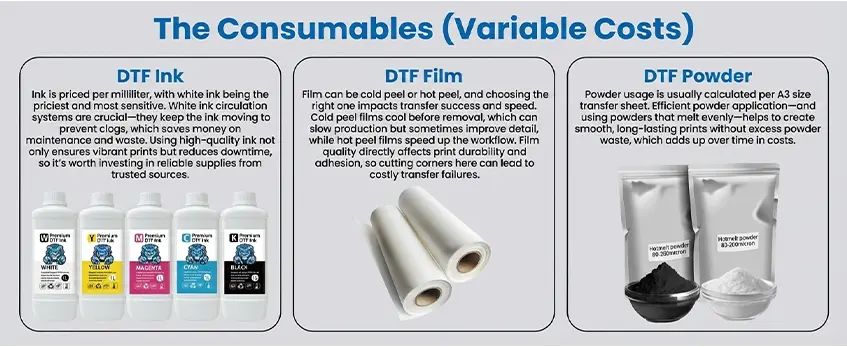
Bei einem DTF-Kit sind es Verbrauchsmaterialien wie Tinte, Film und Pulver, die Ihre laufenden Kosten bestimmen - und die für Ihre Rentabilität von großer Bedeutung sind.
DTF-Tinte: Der Preis für Tinte wird pro Milliliter berechnet, wobei weiße Tinte am teuersten und empfindlichsten ist. Zirkulationssysteme für weiße Tinte sind von entscheidender Bedeutung - sie halten die Tinte in Bewegung, um Verstopfungen zu vermeiden, was wiederum Geld für Wartung und Abfall spart. Die Verwendung hochwertiger Tinte sorgt nicht nur für lebendige Ausdrucke, sondern auch für weniger Ausfallzeiten. Es lohnt sich also, in zuverlässiges Material aus vertrauenswürdigen Quellen zu investieren.
DTF-Film: Es gibt Cold-Peel- und Hot-Peel-Filme, und die Wahl des richtigen Films beeinflusst den Erfolg und die Geschwindigkeit der Übertragung. Cold-Peel-Folien kühlen vor dem Entfernen ab, was die Produktion verlangsamen, aber manchmal die Details verbessern kann, während Hot-Peel-Folien den Arbeitsablauf beschleunigen. Die Qualität der Folie wirkt sich direkt auf die Haltbarkeit des Drucks und die Haftung aus, so dass Sparmaßnahmen hier zu kostspieligen Übertragungsfehlern führen können.
DTF-Pulver: Der Puderverbrauch wird in der Regel pro Transferbogen im Format A3 berechnet. Ein effizienter Puderauftrag - und die Verwendung von Puder, der gleichmäßig schmilzt - trägt dazu bei, glatte, langlebige Drucke ohne überschüssigen Puderabfall zu erstellen, der sich im Laufe der Zeit in Kosten niederschlägt.
Wenn Sie tiefer in die Materie eintauchen möchten, um die besten Ergebnisse mit Ihrer Tinte zu erzielen, einschließlich der richtigen Handhabung weißer Tinte, finden Sie ausführliche Tipps unter Bewährte Praktiken für den Umlauf weißer Tinte. Die Kombination dieser Verbrauchsmaterialien diktiert Ihre Materialkosten, so dass sich das Gleichgewicht zwischen Qualität und Preis hier direkt auf Ihre Gesamtgewinnspanne beim DTF-Druck auswirkt.
Die Mathematik: Berechnung der Kosten pro Druck (CPP)
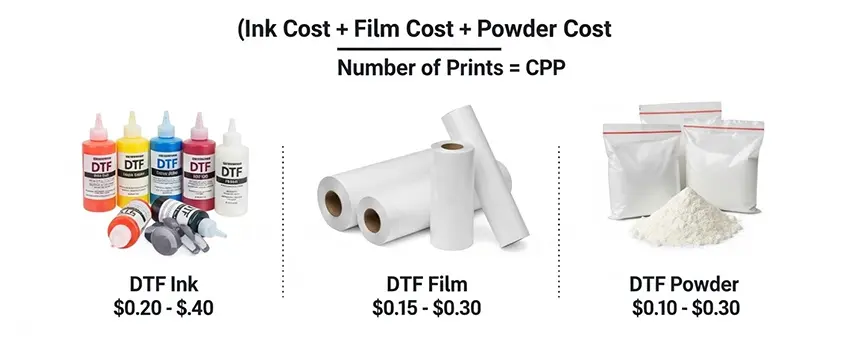
Um herauszufinden, ob ein DTF-Kit rentabel ist, müssen Sie Ihre Kosten pro Druck (CPP) kennen. Die grundlegende Formel zur Berechnung der CPP lautet:
(Farbkosten + Filmkosten + Puderkosten) ÷ Anzahl der Drucke = CPP
Lassen Sie uns das anhand eines Beispiels für eine Übertragung im Format A3 erläutern:
- DTF-Tinte: Ein typischer Preis für Tinte, insbesondere für hochwertige DTF-Tinte wie sie in professionellen Einrichtungen verwendet werden, kosten je nach Deckung etwa $0,20 bis $0,40 pro Druck.
- DTF-Film: Verwendung zuverlässiger DTF-Übertragungsfolie kann etwa $0,15 bis $0,30 pro Druck hinzufügen.
- DTF-Pulver: Der Einsatz von Puder kostet in der Regel $0,10 bis $0,30 pro Druck, je nach Anwendung und Bogengröße.
Zusammengenommen liegen die Materialkosten pro Druck im Allgemeinen zwischen $0.50 und $1.00.
Zusätzlich zu den Materialkosten müssen Sie auch Arbeits- und Gemeinkosten einkalkulieren:
- Elektrizität: Der Betrieb eines Druckers, eines Aushärtungsofens und einer Wärmepresse verursacht nur geringe zusätzliche Kosten pro Druck.
- Operator Zeit: Die Handhabung der Drucke, das Laden der Transfers und der Betrieb der Druckmaschine können die Gesamtkosten beeinflussen. Im Vergleich zum Siebdruck erfordert DTF oft weniger manuelle Vorbereitungen und geringere Arbeitszeiten.
Wenn man Material, Strom und Arbeit zusammenrechnet, bleibt der DTF-Druck wettbewerbsfähig, insbesondere bei kleinen bis mittleren Auflagen. Diese Kalkulation gibt neuen Druckereien eine klare Vorstellung davon, wie sie die Preise für Transfers festlegen und gleichzeitig hohe Gewinnspannen beibehalten können.
Umsatzpotenzial und Gewinnspannen
Die Preise für mit DTF bedruckte Shirts liegen in der Regel bei $20 bis $30 jeweils, während Mehrfachbögen, bei denen mehrere kleinere Motive auf eine Übertragung gedruckt werden, einen Preis von etwa $10 bis $15 jeder. Diese Preise spiegeln wider, was die Kunden auf dem US-Markt für qualitativ hochwertige, maßgeschneiderte Kleidung zu zahlen bereit sind.
Der eigentliche Gewinn ergibt sich aus den niedrigen Produktionskosten. Bei Material- und Gemeinkosten von rund $4 pro Hemd plus Transfer, ist eine solide Spanne zwischen Ihren Kosten und dem Verkaufspreis vorhanden. Diese Lücke bedeutet, dass Sie einen gesunden Gewinn erwarten können Gewinnspanne beim DTF-Druck wenn man einen effizienten Arbeitsablauf und das Volumen berücksichtigt.
Ein großer Vorteil zur Steigerung der Rentabilität ist die Maximierung der DTF-Foliennutzung durch den Druck von Mehrfachbögen. Indem Sie mehrere Motive auf einen Bogen drucken, verteilen Sie Ihre Materialkosten auf mehrere Drucke, wodurch sich die Drucke pro Stunde erhöhen und Ihr Umsatz steigt, ohne dass sich die Arbeits- oder Verbrauchsmaterialkosten wesentlich erhöhen.
Diese Konfiguration ist ideal für neue Druckereien, die sich vergrößern wollen, und für etablierte Unternehmen, die ihre Druckkosten bei kleineren Aufträgen senken wollen. Geschäftsmodell Wärmeübertragung sehr wettbewerbsfähig.
ROI-Zeitleiste: Wann erreichen Sie die Gewinnschwelle?
Für jede neue Druckerei, die in ein DTF-Kit investiert, ist es wichtig, den Break-even-Punkt zu kennen.
Szenario für ein kleines Geschäft:
Wenn Sie ein Desktop-DTF-Setup verwenden, wie das JL DTF301B A3-Drucker Für kleine Unternehmen müssen Sie in der Regel zwischen 50 und 100 individuell bedruckte T-Shirts verkaufen, um Ihre Anfangsinvestition zu decken. Darin enthalten sind der Drucker, die Heizpresse, die Aushärtungsgeräte und Verbrauchsmaterialien wie DTF-Tinte, Pulver und Folie. Die niedrigeren Anfangskosten machen dieses Verfahren zu einer guten Wahl für Start-ups, die mit kleinen Stückzahlen experimentieren.
Szenario eines kommerziellen Geschäfts:
Für größere Geschäfte, die in einen 24-Zoll-Rollendrucker investieren, sind die Investitionskosten höher, so dass Sie ein größeres Umsatzvolumen benötigen, um die Gewinnschwelle zu erreichen. Das bedeutet, dass Sie wöchentliche Aufträge oder den Druck von Einzelblättern einplanen müssen, um Ihre Fixkosten zu verteilen und die Rentabilität schneller zu erreichen. Die Produktion hoher Stückzahlen erfordert außerdem zuverlässige Geräte und hochwertige Verbrauchsmaterialien, um Ausfallzeiten zu vermeiden.
Der ’Hidden’ ROI-Killer:
Eine der größten Rentabilitätsbremsen? Verschwendung durch billiges DTF-Zubehör. Qualitativ minderwertige Tinten oder Pulver können zu verstopften Druckköpfen, ungleichmäßigen Ausdrucken und fehlgeschlagenen Übertragungen führen, was sich auf Ihre Gewinnspanne auswirkt. Das treibt nicht nur die Kosten pro Druck in die Höhe, sondern verzögert auch den Break-even-Zeitplan.
Die Jinlong DTF-Lösung:
Durch die Wahl von Premium-Komponenten wie der hochwertigen DTF-Tinte und -Folie von Jinlong werden Abfall und Wartungsbedarf minimiert. Die zuverlässigen Verbrauchsmaterialien reduzieren die Zahl der fehlerhaften Drucke und sorgen für einen reibungslosen Produktionsablauf, wodurch sich Ihr ROI-Zeitplan deutlich verkürzt. Tipps zur Vermeidung häufiger Druckerprobleme, die sich auf den ROI auswirken, finden Sie in unserem Leitfaden über DTF-Druckkopfprobleme und deren Behebung.
Wenn Sie diese Faktoren berücksichtigen, wird Ihre Druckerei schneller die Gewinnschwelle erreichen und Ihr DTF-Geschäft in einem wettbewerbsintensiven Markt florieren.
DTF vs. Die Alternativen (Finanzielle Vorausschau)
Wenn man die Kosteneffizienz eines DTF-Kits mit anderen Druckverfahren vergleicht, sticht das Direct-to-Film-Verfahren hervor, insbesondere im Hinblick auf die Anlauf- und laufenden Kosten. Im Vergleich zum traditionellen Siebdruck hat DTF bei kleinen Auflagen einen klaren Vorteil - es fallen keine Sieb- oder Separationsgebühren an, die normalerweise Zeit und Kosten verursachen. Dadurch ist der DTF-Druck bei Aufträgen unter 50 Stück besonders kosteneffizient und ermöglicht es neuen Druckereien, die Anlaufkosten für individuelle Bekleidung zu bewältigen, ohne die Bank zu sprengen.
Betrachtet man DTF im Vergleich zu Direct-to-Garment (DTG), gehen die Einsparungen weiter. Bei DTF entfällt die Notwendigkeit von Vorbehandlungsflüssigkeiten, was sowohl die Materialkosten als auch die Vorbereitungszeit reduziert. Außerdem bietet DTF schnellere Produktionsgeschwindigkeiten und weniger Wartungsaufwand, was zu geringeren Gemeinkosten und weniger Unterbrechungen führt. Diese Kosteneffizienz trägt zu besseren Gewinnspannen beim DTF-Druck bei, was vor allem für Start-ups oder Betriebe, die sich auf niedrige Produktionskosten konzentrieren, hilfreich ist.
Wenn Sie sich eingehender mit den Kostenunterschieden und Vorteilen befassen möchten, können Sie den Vergleich auf DTF vs. Vinyl Kosten, Qualität und Arbeitsablauf bietet eine klare finanzielle Perspektive. Es ist eine hilfreiche Ressource für Druckereibesitzer, die prüfen wollen, welches Geschäftsmodell für die Wärmeübertragung am besten zu ihren Zielen und ihrem Budget passt.
Maximierung der Rentabilität mit Jinlong DTF
Wenn es darum geht, eine profitable DTF-Druckerei zu betreiben, macht ein zuverlässiger Lieferant wie Jinlong den entscheidenden Unterschied. Hier erfahren Sie, wie Jinlong Ihnen hilft, das Beste aus Ihrer Investition herauszuholen:
Stabilität der Lieferkette
Gleichbleibende Qualität ist wichtig. Jinlong bietet verlässliche DTF-Kit-Komponenten.Tinte, Pulver, Film und Drucker-So vermeiden Sie kostspielige Ausfallzeiten, die durch defekte Verbrauchsmaterialien verursacht werden. Diese Beständigkeit ist für einen reibungslosen Arbeitsablauf und eine zuverlässige Produktion unerlässlich.
Fachkundige technische Unterstützung
Ausfallzeiten schmälern den Gewinn. Das fachkundige Support-Team von Jinlong hilft bei der schnellen Behebung von Problemen, minimiert Verzögerungen und reduziert die Wartungskosten. Ihre Beratung ist besonders wertvoll für neue Druckereien, die schnelle, effektive Lösungen benötigen, um ihre Aufträge zu erfüllen.
Bündel Einsparungen
Kauf eines kompletten Jinlong DTF-Bausatz spart Geld im Vergleich zum Einzelkauf. Die gebündelten Kits enthalten alles, vom DTF-Drucker bis hin zu hochwertigen Tinten und Folien, was die Kompatibilität sicherstellt und gleichzeitig die Anfangskosten senkt.
| Nutzen Sie | Auswirkungen auf die Rentabilität |
|---|---|
| Stabile Lieferkette | Weniger fehlerhafte Drucke, weniger Abfall |
| Technische Unterstützung | Geringere Ausfallzeiten, schnellerer Output |
| Komplette Kit-Bündel | Geringere Anfangsinvestitionen, bessere Gewinnspannen |
Auf dem hart umkämpften US-amerikanischen Markt für Maßbekleidung tragen diese Faktoren zur Maximierung Ihrer Gewinnspanne beim DTF-Druck und beschleunigen Ihren ROI - das macht Jinlong-Kits zu einer guten Wahl für neue und wachsende Druckereien.



 English
 Español
 Deutsch
 Français