

Es befinden sich keine Produkte im Warenkorb.

Jinlong
Verwendung von Hot Peel DTF-Transfers für T-Shirts Schritt für Schritt
Wenn Sie Ihre Druckproduktion ohne Qualitätseinbußen beschleunigen wollen, ist Mastering Hot Peel DTF-Transfers für T-Shirts ist unerlässlich. Diese Methode bietet eine sofortige Freigabe, leuchtende Farben und ein weiches Gefühl in der Hand - perfekt für vielbeschäftigte Druckereien und professionelle Bekleidungshersteller. Mit den richtigen Werkzeugen und Einstellungen, insbesondere bei hochwertigen Materialien wie Jinlong DTF-Film, garantiert jedes Mal eine einwandfreie Anwendung. In diesem Leitfaden lernen Sie Schritt für Schritt die genaue Vorgehensweise, um Aufbringen von Hot-Peel-DTF-Transfers selbstbewusst und effizient und vermeiden Sie häufige Fehler, die Sie ausbremsen. Lassen Sie uns direkt zur Sache kommen und das volle Potenzial Ihrer Drucke ausschöpfen!
Wesentliche Ausrüstung und Materialien
Um mit der Verwendung von DTF-Hotpeel-Transfers für T-Shirts, benötigen Sie ein paar Werkzeuge und Materialien, die Sie unbedingt haben müssen. Erstens, eine kommerzielle Heißpressenmaschine ist für eine gleichmäßige Temperatur- und Druckkontrolle unerlässlich - das Rückgrat einer starken Übertragung. Wählen Sie geeignete Gewebe wie Baumwolle oder Polyestermischungen, da diese am besten mit DTF-Folie funktionieren und eine hervorragende Farbbrillanz und Haltbarkeit gewährleisten.
Nächster Punkt: Qualität der Quellen Jinlong Hot Peel DTF-Transfers für die sofortige Abziehübertragung ohne Wartezeit beim Abkühlen. Diese werden auf speziell beschichteten DTF-Filmrollen die sich bei der richtigen Einstellung der Heizpresse problemlos lösen. Und schließlich sollten Sie immer Schutzfolien wie z. B. eine Teflonfolie, um jegliches Verkleben oder Anbrennen während des Wärmeübertragungsprozesses zu verhindern. Zusammen bilden diese Materialien die Grundlage für eine makellose DTF-Transferanwendung in professioneller Qualität.
Kritische Einstellungen: Die ”goldene Regel” des Heißschälens - Temperatur, Zeit, Druck
Bei der Verwendung von Hot-Peel-DTF-Transfers für T-Shirts ist es wichtig, die richtigen Nägel Temperatureinstellungen für die Wärmepresse, Zeit und Druck sind entscheidend. Diese drei Faktoren sind die ”goldene Regel” für einen reibungslosen, lebendigen Transferauftrag.
- Temperatur: Stellen Sie Ihre kommerzielle Wärmepresse auf etwa 160°C (320°F) ein. Dadurch wird sichergestellt, dass die Jinlong Hot Peel DTF-Übertragung und die DTF-Pulverhärtung perfekt aktiviert werden, ohne den Stoff zu beschädigen.
- Zeit: Halten Sie die Presszeit zwischen 12 und 15 Sekunden. Eine zu kurze Zeit kann zu schlechter Haftung führen, während eine zu lange Zeit das Risiko birgt, dass das Kleidungsstück verbrennt oder die Farben verblassen.
- Druck: Üben Sie mittleren bis festen Druck aus. Ein zu geringer Druck kann dazu führen, dass sich das Motiv abhebt, während ein zu starker Druck den Stoff zusammendrücken und den Druck verzerren kann.
Je nach Stoffart kann es erforderlich sein, diese Einstellungen geringfügig anzupassen - DTF-Transfers aus Polyester und Baumwolle reagieren etwas unterschiedlich. Um gleichbleibende Ergebnisse zu erzielen, sollten Sie immer einen Testdruck durchführen, bevor Sie mit der Produktion beginnen.
Die Beherrschung dieser kritischen Faktoren beim Heißpressen garantiert eine lebendige, dauerhafte DTF-Transferanwendung und minimiert häufige Probleme wie Abblättern oder stumpfe Farben. Ausführlichere Informationen zur Auswahl der richtigen Materialien und Geräte finden Sie in unserem Leitfaden über DTF-Transferfilm-Grundlagen.
Schritt-für-Schritt-Anwendungsprozess für Hot Peel DTF-Transfers
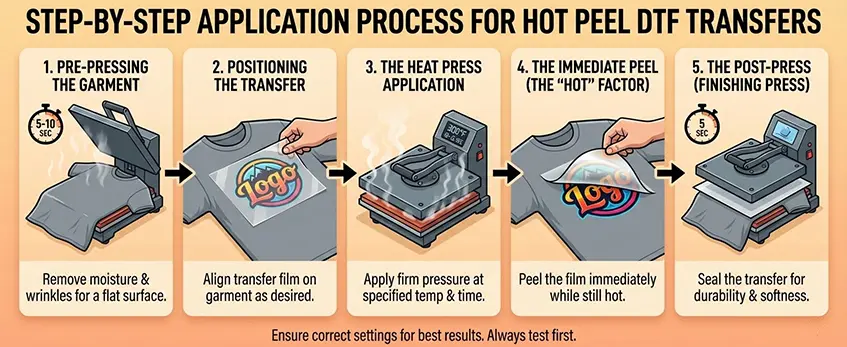
Um einen perfekten Druck mit DTF-Hot-Peel-Transfers für T-Shirts zu erhalten, müssen Sie die richtigen Schritte sorgfältig befolgen. Hier ist der Prozess aufgeschlüsselt:
Vorpressen des Kleidungsstücks
Vor dem Aufbringen des Transfers sollten Sie das T-Shirt 3-5 Sekunden lang bei der empfohlenen Bügeltemperatur vorbügeln. Dadurch werden Feuchtigkeit und Falten entfernt und Sie erhalten eine glatte Oberfläche für das DTF-Transfer. Das Vorpressen ist der Schlüssel zu einer besseren Haftung und einem schärferen Druck.
Positionierung der Übertragung
Platzieren Sie das Jinlong Hot Peel DTF-Transfer auf dem Kleidungsstück genau an der Stelle, an der Sie das Design haben möchten. Verwenden Sie bei Bedarf hitzebeständiges Klebeband, um es während des Bügelns zu fixieren. Die genaue Positionierung macht den Unterschied aus, vor allem bei der individuellen Dekoration von Kleidungsstücken.
Die Anwendung der Wärmepresse
Stellen Sie Ihre Heißluftpresse auf die ”goldene Regel” ein, d. h. 15-20 Sekunden lang bei mittlerem Druck auf ca. 320°F. Legen Sie eine Teflonfolie oder eine Schutzfolie über die Übertragung, um ein Anhaften zu verhindern und die Platte der Presse zu schützen. Drücken Sie fest und gleichmäßig.
Das sofortige Peeling (der ”Hot”-Faktor)
Der charakteristische Schritt von Hot Peel DTF ist das sofortige Abziehen der noch heißen Folie. Diese sofortige Ablösemethode gewährleistet, dass die Trennbeschichtung der Jinlong DTF-Folie perfekt funktioniert und das Motiv auf dem Stoff bleibt, ohne sich abzuheben.
Die Post-Press (Weiterverarbeitungspresse)
Zum Schluss drücken Sie 5-8 Sekunden lang kurz auf die Oberfläche, um die Farbe und das Pulver vollständig zu fixieren. Dieser Schritt erhöht die Haltbarkeit Ihrer DTF-Wäsche, insbesondere auf Polyester- oder Baumwollstoffen. Wenn Sie diesen Schritt auslassen, kann es zu Problemen mit Verblassen und Rissen kommen.
Wenn Sie diese Schritte sorgfältig befolgen, erhalten Sie mit Jinlong DTF-Folienrollen und Hot-Peel-Transfers jedes Mal lebendige, haltbare Drucke. Weitere Einzelheiten zu den verwendeten Materialien finden Sie in unserem Leitfaden zu Was ist DTF-Shirtdruck und ist es das Richtige für Ihre Marke?.
Heißes Peeling vs. Kaltes Peeling: Warum es darauf ankommt
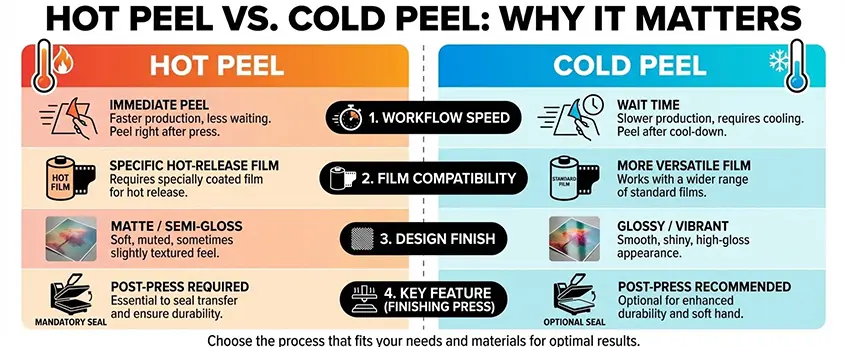
Die Wahl zwischen heißes Peeling und Kaltpeeling beeinflusst Ihren Arbeitsablauf, die Filmkompatibilität und letztendlich die Qualität Ihrer individuellen Hemdendekoration. Hier ist eine kurze Aufschlüsselung:
| Aspekt | Heißes Peeling | Kaltes Peeling |
|---|---|---|
| Workflow-Geschwindigkeit | Sofortiges Schälen direkt nach dem Pressen - schnellere Produktion | Erfordert Wartezeit für die Abkühlung der Übertragung, was den Arbeitsablauf verlangsamt |
| Film-Kompatibilität | Am besten geeignet für Jinlong DTF-Folienrollen, die für Hot-Peel-Verfahren ausgelegt sind | Funktioniert mit den meisten normalen DTF-Filmen, verlangsamt aber die Produktion |
| Design Ausführung | Glatte, lebendige Oberfläche durch sofortiges Abziehen und Nachpressen | Manchmal klebrigere oder stumpfere Farben, wenn sie zu früh geschält werden |
| Hauptmerkmal | Hitze aktiviert die DTF-Filmtrennbeschichtung für schnelles Abziehen | Die Folie bleibt bis zur vollständigen Abkühlung zum sicheren Abziehen haften. |
Die Hot-Peel-DTF-Transfers von Jinlong enthalten eine fortschrittliche DTF-Filmtrennbeschichtung, die für eine sofortige Abziehübertragung optimiert ist. Das bedeutet weniger Stillstandzeiten beim Abkühlen der Motive und gleichmäßigere, lebendige Farben. Die Entscheidung für Hot-Peel spart Zeit und hält Ihre Produktionslinie in Gang, vor allem, wenn Sie eine kommerzielle Heißpressmaschine mit den richtigen Temperatureinstellungen für die Heißpresse verwenden. Einen genaueren Einblick in die besten Praktiken erhalten Sie in der bestes DTF-Pulver für Waschbeständigkeit und Dehnbarkeit - Die Aushärtung des Pulvers ist ein wichtiger Faktor für das gute Funktionieren von Hot-Peel-Transfers.
In : Wenn Schnelligkeit und scharfe Ergebnisse Ihre obersten Prioritäten sind, ist Heißabziehen mit Jinlong DTF-Folie Ihre erste Wahl. Kaltes Abziehen ist immer noch zuverlässig, aber besser geeignet für andere Folientypen oder empfindlichere Stoffe.
Fehlerbehebung bei häufigen Hot-Peel-Problemen
Bei der Arbeit mit Hot-Peel-DTF-Transfers für T-Shirts kann es zu einigen Problemen kommen. Hier erfahren Sie, wie Sie die häufigsten beheben können:
Folienverklebung oder Designabhebung
Das bedeutet in der Regel, dass die Temperatur der Heizpresse nicht hoch genug oder der Druck zu gering war. Überprüfen Sie die Temperatureinstellungen und den Druck Ihrer Transferpresse, um sicherzustellen, dass Sie die ”goldene Regel” des heißen Abziehens erreichen. Stellen Sie außerdem sicher, dass Sie sofort abziehen, solange die Übertragung noch heiß ist. Die Verwendung von Jinlong Hot Peel DTF-Transfers mit ihrer präzisen DTF-Filmtrennbeschichtung hilft, diese Probleme zu vermeiden.
Raue Textur (Orangenschaleneffekt)
Diese Textur tritt häufig auf, wenn das DTF-Pulver nicht gleichmäßig ausgehärtet ist oder die Zeit für das Heißpressen nicht richtig gewählt wurde. Stellen Sie sicher, dass das Pulver während des Drucks richtig geschmolzen ist, und verwenden Sie einen gleichmäßigen, stabilen Zyklus der Wärmepresse. Pressen Sie das Kleidungsstück vor, um Feuchtigkeit und Falten zu entfernen - auch sie können diese Unebenheiten verursachen.
Stumpfe Farben
Trübe Farben kommen in der Regel von zu wenig Hitze oder Zeit beim Bügeln. Passen Sie die Einstellungen so an, dass sie der empfohlenen Temperatur und Pressdauer für den gewählten Stoff entsprechen, egal ob es sich um Polyester oder Baumwolle handelt. Die Verwendung einer handelsüblichen Bügelmaschine sorgt für gleichmäßige Hitze und gleichmäßigen Druck und damit für lebendige und haltbare Drucke.
Wenn Sie sich eingehender mit den optimalen Hot-Peel-Bedingungen und anderen Besonderheiten befassen möchten, lesen Sie unseren ausführlichen Hot Peel DTF-Filmrolle Einkaufsführer für Expertentipps zu Film- und Temperatureinstellungen.
Pflege- und Waschanleitung für Kunden
Die richtige Pflege ist der Schlüssel dazu, dass Ihre DTF-Hot-Peel-Transfers für T-Shirts lange scharf und lebendig aussehen. Hier erfahren Sie, was Sie Ihren Kunden sagen sollten, um die beste DTF-Waschbeständigkeit zu gewährleisten:
Vor dem Waschen warten: Es wird empfohlen, nach dem Auftragen des Transfers mindestens 24 Stunden vor der ersten Wäsche zu warten. So hat die DTF-Filmtrennbeschichtung Zeit, vollständig auszuhärten und sich mit dem Stoff zu verbinden.
Von innen nach außen waschen: Waschen Sie Hemden immer von innen nach außen. Dies schützt das Design vor Reibung und direkter Einwirkung von Waschmitteln und verlängert die Lebensdauer des Drucks.
Vermeiden Sie Bleichmittel und Weichspüler: Scharfe Chemikalien wie Bleichmittel und Weichspüler können die Aushärtung des DTF-Pulvers zerstören und dazu führen, dass die Farben verblassen oder abblättern. Verwenden Sie nur milde Waschmittel.
Trocknungstechniken: Wir empfehlen Lufttrocknung oder Trocknen im Wäschetrockner bei geringer Hitze. Hohe Hitze kann die Verbindung zwischen der Übertragung und dem Stoff schwächen. Vermeiden Sie es, direkt auf den Druck zu bügeln; verwenden Sie ggf. eine Schutzfolie.
Wenn Sie diese einfachen Tipps befolgen, bleibt Ihre individuelle Kleidungsdekoration knackig, farbenfroh und langlebig. Weitere Einzelheiten zu den besten Praktiken finden Sie auf den folgenden Seiten bestes DTF-Pulver für hochwertige und dauerhafte Transfers um Ihre Pflegeroutine zu ergänzen.



 English
 Español
 Deutsch
 Français