



Cold Peel vs Hot Peel DTF Film Comparing Speed Durability and Quality
Understanding DTF Film Basics
If you’re running a printing business, understanding DTF film is key to getting consistent, high-quality results. DTF, or Direct-to-Film transfer, uses specialized films made up of several layers: the base film, a layer of adhesive powder, and an ink layer printed via a DTF printer. After printing, the film is heat-pressed onto fabric, making the peel type—hot or cold—crucial in the final transfer quality.
Here’s a quick overview of the DTF printing process and where peel types come into play:
- Printing: The design is printed on a clear film using water-based inks.
- Powdering: A hot-melt adhesive powder is applied to the wet ink.
- Curing: The film passes through a curing oven to melt the powder.
- Pressing: The film is heat-pressed onto the fabric.
- Peeling: The film is removed—either right away (hot peel) or after cooling down (cold peel).
Each peel method affects how the adhesive bonds, the finish, and the durability of the print.
Now, let’s clear up some common myths. Some think hot peel means faster printing but sacrifices quality, while cold peel is “better” but slower and pricier. In reality, both peel types excel in different scenarios; understanding their strengths helps you choose wisely for your business needs.
Before diving deeper, here’s a quick specs comparison of DTF films often used in the market:
| Feature | Hot Peel Film | Cold Peel Film |
|---|---|---|
| Film Thickness | Typically 80-90 microns | Typically 90-100 microns |
| Printer Compatibility | Compatible with most DTF printers | Best with printers supporting anti-static coatings |
| Release Coating | Wax-based | Silicone-based |
Knowing these basics will help you match the right peel type to your production volume, fabric choice, and print quality expectations. In the next sections, we’ll explore hot peel and cold peel DTF films individually, so you can decide which fits best with your printing business.
Hot Peel DTF Film
Hot peel DTF film works by peeling the transfer immediately after pressing, while it’s still hot. This is possible thanks to a wax-based release layer that lets you separate the film from the print right away. The process speeds up production, making hot peel a favorite for quick turnaround jobs.
Key advantages:
- Fast peeling speeds that boost workflow efficiency
- Glossy finish ideal for vibrant, eye-catching designs
- Cost-effective choice for high-volume printing
Drawbacks to consider:
- Can cause edge lifting, especially on fabrics with looser weaves
- Not the best for all fabric types—cotton and polyester blends work better than some delicate fabrics
- Offers moderate wash durability compared to cold peel options
Best business uses:
Hot peel film is your go-to for bulk orders, event T-shirts, and dropshipping setups where speed matters more than ultra-fine detail or premium durability.
Pro tip: When using jinlong DTF hot peel rolls, maintain consistent heat and pressure settings on your heat press to avoid edge lifts and ensure clean peels every time. This helps keep your workflow smooth and your prints sharp.
Cold Peel DTF Film
Cold peel DTF film requires you to wait until the transfer cools down before peeling off the film. This is possible because it uses a silicone-based release agent that sticks firmly until fully set. The wait might add a few extra minutes per print, but the payoff is impressive detail retention and stronger adhesion to a variety of fabrics—including cotton, polyester, and blends.
Key Advantages:
- Fine detail retention: Keeps designs sharp with crisp lines, great for complex artwork.
- Better adhesion: Bonds deeply into fibers for improved wash resistance.
- Versatile fabric compatibility: Works well on both light and dark garments, including tricky materials like nylon and spandex.
Drawbacks:
- Slower workflow: Cooling time means fewer prints per hour compared to hot peel.
- Requires cooling station: You’ll need extra space and setup for efficient cooling.
- Higher cost: Silicone-based films usually carry a premium price, impacting supply costs.
Best Business Uses:
Cold peel DTF is perfect for premium custom uniforms, sophisticated streetwear brands, and high-end apparel where quality and durability justify the investment. If your clients demand vibrant, lasting prints and fine detail, cold peel is a great choice.
Pro Tip:
For best results, use jinlong DTF cold peel films with anti-static coating. This coating minimizes dust attraction during printing, helping maintain clean transfers and reducing waste. Pairing these films with proper equipment can take your premium prints to the next level.
If you’re exploring printer options that work well with cold peel films, check out the JL DTF Digital Printer Pro Series optimized for superior print quality and stable operation.
Head-to-Head Comparison: Cold Peel vs. Hot Peel DTF Film
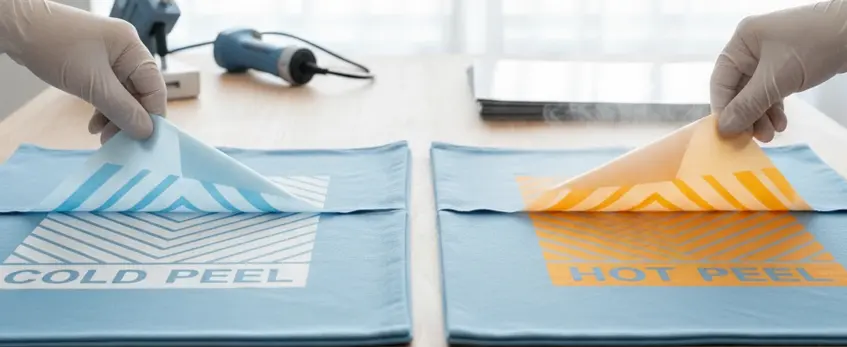
When picking between cold peel and hot peel DTF film, here’s a quick look at how they stack up side-by-side:
| Feature | Hot Peel DTF Film | Cold Peel DTF Film |
|---|---|---|
| Peeling Time | Immediate peel right after pressing | Peel after cooling (slower process) |
| Finish | Glossy, shiny look | Matte to semi-matte, smooth finish |
| Durability | Moderate wash resistance | Superior wash resistance |
| Fabric Suitability | Best on cotton and polyester | Works well on delicate & mixed fabrics |
| Speed | Faster workflow, good for bulk jobs | Slower due to cooling time |
| Cost | More cost-effective | Higher cost, but better quality |
| Detail Sharpness | Good detail but slight edge lifting | Excellent detail and fine line retention |
Business ROI Insights
- Hot Peel saves time and labor, ideal for high-volume runs like event tees and dropshipping.
- Cold Peel reduces returns and complaints thanks to stronger adhesion and better durability on premium fabrics.
Visual Tips
For your printing business website or catalog, show side-by-side images of hot peel glossy vs. cold peel matte finishes, plus close-ups of detailed prints on different fabrics. This helps customers quickly grasp the main differences.
Choosing the right DTF film affects your workflow, product quality, and customer satisfaction—so this quick comparison is a handy guide to boost your production and profits.
For a deeper dive into compatibility and workflow tips, you might check out how the XP600 DTF printer is the best choice for custom apparel printing to maximize film and printer performance.
Factors to Consider When Choosing Cold Peel vs. Hot Peel DTF Film
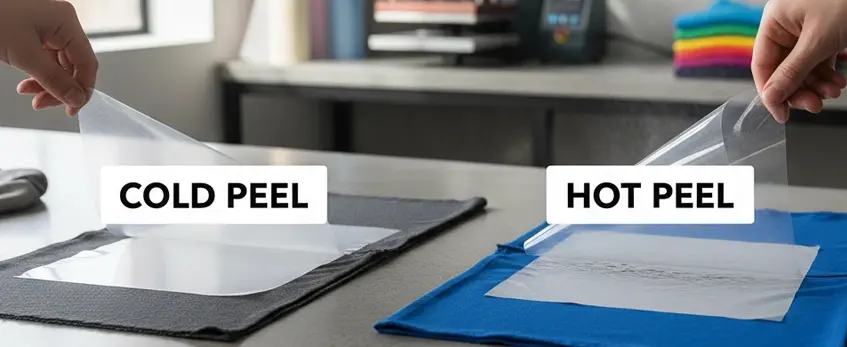
Picking the right peel type starts with understanding your production volume and workflow. If you’re handling large orders or quick turnarounds, hot peel’s faster peeling suits high-volume DTF production. But for lower volume runs focusing on detailed or premium designs, cold peel offers better adhesion and durability, especially on tricky fabrics like cotton or blends.
Next up, match your fabric and design needs. Cold peel handles delicate fabrics and fine details better, while hot peel works well on standard materials and bold graphics. Don’t forget to check your press settings and equipment compatibility—some printers handle thick films better, and your heat press temperature and timing will vary between peel types.
Budget plays a big role too. Hot peel films usually cost less and waste less time, but cold peel’s higher price can pay off by cutting down returns from peeling issues or fading. Plus, cold peel films tend to be more sustainable thanks to their silicone-based coatings, making them a promising choice if eco-friendliness is on your radar.
Not sure which to choose? Try this quick self-assessment quiz to find the best peel type for your business:
- Are you producing in high volume?
- Is fabric versatility important?
- Do you prioritize speed or detail quality?
- What’s your budget on DTF supplies?
- Any sustainability goals tied to your brand?
Answering these helps narrow down your ideal DTF film.
For more on optimizing your workflow and ink choices to get the best print durability and vibrancy, check out this guide on choosing the right DTF ink for optimal print durability.
Expert Tips for Success with Cold and Hot Peel DTF Film
Getting the most out of your DTF film—whether hot or cold peel—comes down to following a few proven best practices and troubleshooting smartly.
Best Practices:
Always pre-press garments to remove moisture and wrinkles; this helps the transfer stick better and look cleaner.
Use Teflon sheets during pressing to protect both the film and your heat press from residue buildup.
Do a few test peels with each new batch of film or fabric to dial in the perfect press time and temperature.
Troubleshooting Common Issues:
If you see residue or film cracking, check your press temperature and avoid over- or under-heating.
Edge lifting can be common with hot peel films—try adjusting the pressing time or pressure to improve adhesion.
For cold peel, make sure you allow the transfers to fully cool before peeling to avoid tearing.
Scaling Your Business:
Consider a hybrid inventory approach: keep both hot peel and cold peel films on hand to flex between bulk orders and premium custom jobs.
Automate as much of your workflow as possible, especially for high-volume runs, to save labor costs and increase consistency.
Maintenance Hacks:
Regularly clean your heat press plates and store films in a cool, dry place to preserve shelf life.
Keep anti-static treatments handy, especially when using cold peel films with silicone-based releases.
Success Story Teaser:
Brands switching to cold peel DTF film have noticed fewer returns and repeat orders climbing, thanks to better durability and rich detail—making the investment worthwhile for premium streetwear and custom uniforms.
For those ready to sharpen your DTF printing business, combining these tips with quality Jinlong DTF films ensures steady growth and consistent prints. If you\’re new to DTF or aiming to improve efficiency, check out this detailed guide on why a DTF ink printer is the best investment for print-on-demand businesses.




 English
  Español
  Deutsch
  Français