


A3 DTF Printer vs A4 and A2 Which Size Fits Your Business Best
If you’re diving into the world of DTF printing in 2025, you’ve likely run into a big question: A3 DTF printer vs. A4 and A2 – which size truly fits your business? Whether you’re a small print shop, a side hustle growing fast, or a seasoned pro looking to upgrade, print size is the single biggest factor that impacts your daily output, costs, and ultimately your profits. In this guide, we cut through the noise and give you a crystal-clear breakdown of real-world print dimensions, speed, costs, and what each size can—and can’t—handle. By the end, you’ll know exactly which format matches your workflow and wallet, plus why the A3 size often hits the sweet spot for 90% of custom apparel businesses—especially with jinlong DTF leading the pack. Let’s get straight to the point and find your perfect DTF printer size.
Understanding Actual Print Sizes (Real-World Dimensions)
When choosing between A4, A3, and A2 DTF printers, size matters—literally. Let’s break down what these print sizes mean in real terms:
A4: 21 × 29 cm (8.3″ × 11.7″)
Best for small, single prints like left chest logos or badges on tees. If your main goal is subtle branding or limited space prints, A4 fits perfectly.
A3: 29 × 42 cm (11.7″ × 16.5″)
The most popular format for a reason. A3 handles standard adult left-chest prints and medium-sized back prints easily. This size covers the sweet spot for 90% of custom tee designs—big enough for impact but still efficient.
A2: 42 × 60 cm (16.5″ × 23.7″)
Oversized-print territory. Ideal for all-over prints, hoodies, jackets, and large-format pieces. If you want to produce eye-catching, full-coverage designs or cater to outerwear, A2 opens those doors.
Visual Comparison + Gang Sheet Examples
Here’s a quick glance to help visualize how designs fit on each size:
| Print Size | Dimensions (in) | Typical Use Cases | Gang Sheet Example |
|---|---|---|---|
| A4 | 8.3 × 11.7 | Small chest prints, badges | 4–6 small logos per sheet |
| A3 | 11.7 × 16.5 | Left chest + medium back prints | 2–3 standard adult prints per sheet |
| A2 | 16.5 × 23.7 | Oversized, hoodies, all-over prints | 1 large design or multiple small gang prints |
Gang sheets (multiple images printed together on one film) also scale with print size, influencing your efficiency and cost per print. For example, A3 lets you gang two to three full adult prints, while A4 forces you to print individually or gang smaller logos.
Choosing the right size upfront ensures you maximize print area without wasting film or time on resizing designs later. For most shops, A3 strikes the perfect balance—big enough for versatile designs but small enough for fast, cost-effective output.
Side-by-Side Specs Comparison (2026 Models)
Here\’s a quick look at how A4, A3, and A2 DTF printers stack up in 2026. This comparison covers max print size, daily realistic output, ink and film use, price range, machine size, and top brands—with a spotlight on the popular jinlong DTF A3 models.
| Feature | A4 DTF Printer | A3 DTF Printer (jinlong Highlight) | A2 DTF Printer |
|---|---|---|---|
| Max Print Size | 8.3″ × 11.7″ (21 × 29 cm) | 11.7″ × 16.5″ (29 × 42 cm) | 16.5″ × 23.7″ (42 × 60 cm) |
| Daily Output (8 hrs) | ~50 small prints | ~80–100 medium prints | ~40 oversize prints |
| Powder / Film / Ink Use | Low per print, less waste | Balanced efficiency with good yield | Higher consumption |
| Average Price Range | $1,000 – $1,800 | $3,000 – $5,000 (jinlong A3 models $3,200-$4,000) | $6,000 – $10,000 |
| Machine Footprint | Compact, fits small desks | Moderate space, ~3.5 ft² | Large, requires dedicated space |
| Weight | 30–45 lbs | 50–70 lbs | 90+ lbs |
| Recommended Brands | Entry-level DTF brands | jinlong DTF (dual XP600/i3200 heads, auto-cleaning) | Industrial-grade brands |
The jinlong DTF A3 printers offer a strong balance of speed, quality, and running cost. Their dual head system and auto-clean function reduce downtime and maintenance, perfect for small to mid-size shops aiming to scale efficiently.
For detailed info on ink quality and usage, jinlong also provides excellent resources on how to maximize print vibrancy and durability with their DTF inks and powders, which helps keep your cost per print down while delivering consistent results.
In short:
- A4 is best for hobbyists or very small runs.
- A3 hits the sweet spot for most US small businesses focused on custom tees and light jacket printing.
- A2 fits larger print shops needing oversized and all-over prints, but at a higher cost and space demand.
Choosing the right size will depend heavily on your print volume, product mix, and budget—but 2026 clearly sees the A3 category, especially jinlong models, leading the charge for most shops.
Production Speed & Daily Output Reality Check
When it comes to production speed, the A3 DTF printer hits a sweet spot for most small to medium shops. On average, using jinlong DTF A3 printers, you can expect to print around 15–18 adult t-shirts per hour with front-only designs. Adding a back print usually lowers that to about 8–10 shirts per hour, depending on the printer model and operator skill.
In real-world settings, shops running jinlong’s dual-head A3 models consistently report smooth workflows with minimal downtime. Compared to A4 printers, which max out at around 6–8 front-only shirts per hour due to smaller print size and frequent sheet changes, the A3 offers nearly double the output without a big jump in operational complexity. On the other hand, A2 printers can push higher volumes but require more space and higher upfront costs, which might not be efficient unless you’re doing mostly oversized prints like hoodies or jackets.
A simple break-even example: if your shop’s goal is 100 to 150 prints a day, an A3 printer running at 15 shirts an hour (front only) covers an 8-hour shift nicely, balancing speed and quality. A4 models would struggle to hit those numbers without extra shifts or multiple machines, while A2 units are best for specific high-volume or oversize needs.
Overall, the production speed of jinlong’s A3 DTF printers offers businesses an efficient daily output without overwhelming overhead—ideal for most custom t-shirt printing operations.
For detailed cost and production insights, you might find the DTF printing cost in bulk vs on-demand guide helpful to understand how speed translates to profitability.
What You Can (and Cannot) Print – Design Limitations
Knowing what fits where with each DTF printer size helps avoid costly mistakes. Here’s the scoop on design limits for A4, A3, and A2 DTF printers.
Left Chest, Sleeves, and Pockets
A4 printers are perfect for small prints—think left chest logos, sleeve designs, or pocket patches. Their 8.3\” × 11.7\” max print size fits these areas neatly without overkill.
Full-Front 12–14\” Designs
For standard full-front adult t-shirts (roughly 12\”–14\” wide), A3 printers shine. Their 11.7\” × 16.5\” size covers most standard adult shirt fronts and medium back prints comfortably. Trying to squeeze these onto A4 film often means sacrificing quality or gang printing smaller sections.
Oversize & All-Over Prints
When it comes to oversized prints, like large back graphics, or all-over prints on hoodies and jackets, A2 printers are the go-to. Their 16.5\” × 23.7\” print area gives the space needed for eye-catching, bigger artwork—not possible on A3 or A4.
Hoodies, Tote Bags, Flags, Jackets
A2 printers are best for heavy apparel and accessories requiring big designs—hoodies, tote bags, flags, and jackets. A3 printers handle medium-sized prints on these as well but might limit your creative freedom.
Here’s a quick visual to imagine the same design scaled across the film sizes:
| Design Area | A4 (8.3\”×11.7\”) | A3 (11.7\”×16.5\”) | A2 (16.5\”×23.7\”) |
|---|---|---|---|
| Left Chest Logo | Fits perfectly | More than enough space | Extra-large but usable |
| Full-Front T-Shirt | Too small, need gang sheets | Ideal fit, great coverage | Oversized, max detail |
| Hoodie/All-Over Print | Not feasible | Limited, medium size only | Perfect for all-over prints |
If you’re interested in a detailed look, the jinlong DTF printers offer a range of models perfectly tailored to these size needs and provide efficient handling of print film loading and maintenance.
Choosing the right size means matching your design ambitions with what each printer handles best—this avoids wasted prints and keeps your production smooth.
Cost Per Print Breakdown (2026 Ink & Film Prices)
When it comes to cost per print, the A3 DTF printer hits the sweet spot for most shops. Printing a standard adult-sized design (around 13×16″) on an A3 printer generally costs less per print compared to squeezing the same design onto an A4 printer. Why? Because trying to force larger prints onto A4 sizes means multiple passes, smaller film sheets, and more waste — which quickly drives up ink, powder, and film costs.
On the flip side, the A2 printer is your go-to if you need oversized or all-over prints, like hoodies and jackets, but those prints come with a higher cost per piece due to bigger film and ink usage.
For about 90% of small to medium shops printing mostly standard t-shirts, the A3 size clearly wins on profitability. You get a solid printing area big enough for popular front and back designs without the excess operational costs that come with A2 machines. This is why the A3 DTF printer is often the most cost-effective and versatile choice, especially for businesses aiming to scale up without breaking the bank on materials.
For tips on how to reduce your DTF printing costs further without sacrificing quality, check out this reliable guide on how to reduce your DTF printing cost.
Workspace, Electricity & Operational Considerations
When choosing between A3, A4, and A2 DTF printers, it’s important to factor in your workspace and operational needs.
Desk space:
A4 DTF printers fit comfortably on small desks or compact workstations. A3 models need a bit more room—think a sturdy table about 4 feet wide. A2 printers are the largest, requiring dedicated floor space similar to a small copier station.
Power requirements:
Most A4 and A3 printers run smoothly on standard 110V outlets common in U.S. homes and small shops. A2 printers, due to their bigger motors and heaters, often require 220V power for stable operation.
Noise and heat:
Larger printers like A2 tend to generate more heat and noise, so proper ventilation is key to keeping your workspace comfortable. A3 models, especially dual-head ones like jinlong’s, are engineered for quieter operation with efficient cooling, making them more suitable for smaller or shared spaces.
Film loading & maintenance ease:
A3 printers strike a good balance with straightforward film loading and routine maintenance. They often include features like automatic cleaning cycles and accessible film trays—highlighted in the jinlong DTF models—which can save you time and reduce downtime. A2 machines might require more hands-on care due to their size and complexity.
Overall, for most small to mid-size U.S. print shops, A3 DTF printers hit the sweet spot when it comes to workspace, power, and ease of use. To get a deeper dive into maintaining DTF printer consistency, including powder shaker importance, check out detailed guides on the complete DTF workflow.
Who Should Buy Each Size (Clear Buyer Personas)
-

JL-DTF301B A3 DTF Printer XP600 【Applicable to beginner sets】
View more View more -
JL-DTF302S DTF Digital Printer
View more View more -
JL-DTF602S DTF Digital Printer Best Product Print Quality Package
View more View more -
JL-DTF604S DTF Digital Nine Color ink cartridge 【Fluorescent colors】
View more View more -
JL-DTF604P DTF Digital Printer [Pro Series]
View more View more


![JL-DTF604P DTF Digital Printer [Pro Series]](http://jinlongprints.com/wp-content/uploads/2025/07/JL-DTF604P-300x300.webp)
Choosing the right DTF printer size really boils down to what you plan to print and how many you need.
Hobbyists & Etsy Sellers → A4
If you’re printing small runs, like custom gifts or a few single chest prints, an A4 printer is perfect. It’s affordable, takes up less space, and handles simple jobs well. Think small logos, sleeve prints, or one-off designs.
Growing Side Hustle (50–200 prints/week) → A3
For those expanding beyond hobby levels but not quite full production, the A3 size hits the sweet spot. It covers standard adult left-chest designs and medium back prints, giving you versatility without bulky equipment. Demand grows? An A3 printer keeps your output steady without overpriced running costs. This is where popular brands like the jinlong DTF A3 series shine, offering reliability and speed that match small businesses’ daily workflow.
Established Print Shops Doing Hoodies & Oversize → A2
If you regularly print hoodies, jackets, or oversized all-over designs, an A2 machine is your go-to. It handles large format prints that smaller printers can’t. Great for shops that want to diversify into premium products with higher price tags.
Commercial Factories → Multiple A3/A2 or Roll-to-Roll
For high-volume production and fastest turnarounds, commercial outfits usually invest in several A3 or A2 printers, often alongside roll-to-roll systems. This setup maximizes throughput and keeps costs down per print, ideal for factories churning out thousands weekly.
Picking the right size upfront saves headaches later, so match your printer to your print volume, product mix, and space. For a detailed explanation of materials and consumables, the comprehensive guide to DTF transfer paper and powder is a great resource to check out.
Why Most Successful Shops Choose A3 in 2026 (And Why jinlong DTF Dominates This Category)
In 2026, around 95% of custom apparel prints stay under 16″ wide, making the A3 size the ideal fit for most shops. It hits the sweet spot, offering the perfect balance of speed, versatility, and low running costs—something smaller A4 or larger A2 printers can’t match as effectively.
Here’s why the jinlong DTF A3 series stands out:
| Feature | jinlong DTF A3 Advantage |
|---|---|
| Print Width & Length | Supports up to 16.5\” × 11.7\” prints (A3 size) |
| Dual Print Heads | XP600 or i3200 heads for faster, crisp output |
| Auto Cleaning | Minimizes downtime and maintenance hassle |
| Warranty | Peace of mind with a 2-year full warranty |
| Running Costs | Optimized powder, film, and ink use per m² |
| Ideal For | Mid-size shops & side hustles (50–200 prints/week) |
Most custom t-shirt shops appreciate that jinlong’s dual head A3 printers deliver consistent daily output without the overhead or complexity of larger machines. This means quicker turnaround times and higher profits.
If you want a reliable, efficient printer that fits your shop and budget, the A3 jinlong DTF series delivers unmatched value and performance. You can also check out more about their advanced DTF printing technology and applications for insights on what makes them a favorite among U.S. printers.
Bottom line: For most U.S. custom shops, going A3 means hitting that ideal mix of print size, speed, and running cost—making it the 2026 go-to for profitable, versatile DTF printing.
Common Myths & Mistakes When Choosing DTF Printer Size
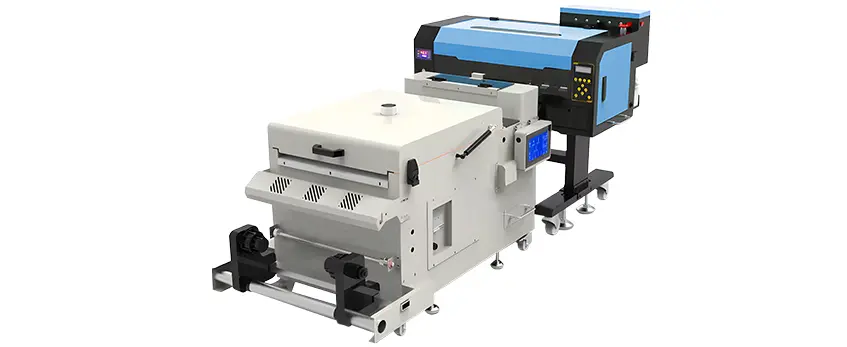
When picking a DTF printer size, a few misconceptions keep popping up—and they can lead to costly mistakes.
“Bigger is always better”
Going for an A2 printer just because it offers larger prints isn’t always smart. Bigger machines mean higher upfront costs, more space, and increased ink and film consumption. If most of your work is standard t-shirts under 16″ wide, an A3 printer is usually the smarter, more cost-effective choice.
“I’ll just gang more designs on A4”
Trying to fit multiple prints on a small A4 print area sounds efficient but often ends up as a hassle. Limited space means more setup time, higher waste from misaligned prints, and slower overall output. Plus, A4 printers generally can\’t handle popular medium or large prints well.
“A2 will future-proof me” (Reality Check)
It’s tempting to think buying the largest printer means you’re ready for anything. But oversized prints like hoodies and jackets make up less than 10% of most shops’ orders. You’ll spend more on a bigger printer that sits idle most of the time. Instead, focus on what you sell regularly—chances are, that’s where the A3 size shines as the best balance.
Avoid these common traps by choosing a printer size that matches your actual business needs—you’ll save money, reduce headaches, and keep production smooth.
For a deeper dive on sizing and printer options, checking out how DTF transfer machines work can clarify what suits your workflow best.
Final Recommendation Chart: Which DTF Printer Size Fits Your Needs?
To make choosing easier, here’s a quick decision matrix based on your order volume, product mix, and budget:
| Order Volume (Weekly Prints) | Product Mix | Budget Range | Recommended DTF Printer Size |
|---|---|---|---|
| Under 50 | Small apparel, hats, tote bags | $1,000 – $3,000 | A4 DTF Printer – Perfect for beginners and hobbyists with limited space and small runs. |
| 50 – 200 | T-shirts, left chest, medium prints | $3,000 – $7,000 | A3 DTF Printer – The sweet spot for growing side hustles and small shops balancing versatility and cost. Check out jinlong DTF A3 printers for reliable models. |
| 200+ | Hoodies, oversized, jackets, all-over prints | $7,000+ | A2 DTF Printer – Best for established shops handling oversize prints and heavier production needs. |
| Very high volume / factory scale | Mixed apparel, large batches | Custom | Multiple A3/A2 units or roll-to-roll systems to maximize throughput and reduce downtime. |
Why This Matters
- A4 printers keep startup costs low but limit your print size options, tough if you want bigger chest prints or all-over designs.
- A3 printers cover about 90% of customers’ needs—they handle standard adult prints efficiently with a reasonable footprint and ink consumption.
- A2 printers are specialized for oversize and all-over prints but come with higher costs and space requirements.
If you want to dive into why 95% of successful shops choose A3 in 2026, and how the jinlong DTF A3 models outperform competitors, explore our detailed cost analysis comparing DTF to screen printing.
Selecting the right size upfront saves headaches later and sets your shop up for sustainable growth. Pick what fits your current needs, then scale as you grow—no need to overspend chasing “future-proof” gear that’s bigger than necessary.


 English
  Español
  Deutsch
  Français