
No products in the cart.

Jinlong
Best DTF Film Guide 2025 for Smooth Durable Vibrant Prints
If you want smooth, durable, and vibrant DTF prints that don’t crack, peel, or fade after a handful of washes, listen up. The truth is, 80% of your DTF print headaches aren’t from your printer or ink—they come straight from the DTF film you pick. Choosing the wrong film means wasted time, ruined shirts, and frustrated customers. But get it right, and you unlock soft-hand, bold colors, and transfers built to last 50+ washes.
In this guide, you’ll cut through the noise and learn exactly how to choose the best DTF film in 2025. No fluff, no gimmicks—just proven specs, test methods, and real brand insights (hint: jinlong DTF keeps popping up for a reason). By the end, you’ll know the exact film type that fits your workflow, your budget, and your quality standards. Let’s get your prints performing like pros.
Core DTF Film Specifications You Must Compare
Choosing the best DTF film starts with knowing the specs that seriously impact your prints. Don’t waste time guessing—compare these key points before you buy.
Coating Technology: Single-Side vs Double-Side, Matte vs Glossy
- Single-side coated: Industry standard, print on one side only
- Double-side coated: Less common, can offer better ink adhesion but tricky with powder sticking
- Matte finish: Less glare, better for detailed prints
- Glossy finish: Higher vibrancy but can reflect under certain lights
Pick coatings based on your printer type and desired finish.
Release Type: Hot Peel, Warm Peel, Cold Peel
- Hot peel: Peel immediately after curing, speeds workflow but demands precise temp control
- Warm peel: Peel after short cooling, balances ease and timing
- Cold peel: Peel only after fully cooled, safer for ultra-fine details and smoother prints
Each has pros—jinlong DTF nails cold and hot peel types with consistent results.
Roll vs Sheet Format
- Rolls: Best for high-volume shops, continuous feed, cost-efficient per sq ft
- Sheets: Perfect for small runs, sample prints, or precision cuts
Don\’t pay for rolls if your runs are tiny—and vice versa.
Width Compatibility
Common widths to match your printer:
- 13\” (most desktop printers)
- 24\” (mid to large shop printers)
- A3 / A4 sheets (for small leads and precise cuts)
Check width specs carefully—no one likes wasted edges.
In short: Pick your DTF film thickness, coating, peel type, format, and width based on your workflow, print volume, and desired output quality. Skipping this basics check is the fastest way to print fails and higher costs.
The 5 Non-Negotiable Performance Factors for DTF Film
When choosing the best DTF film, these five performance factors are absolute must-haves to ensure smooth, durable, and vibrant prints:
1. Color Vibrancy & Opacity
The white ink underbase performance is critical. Look for film that delivers a solid, opaque white layer to make colors pop on both dark and light fabrics. Without strong opacity, your colors will appear washed out or dull.
2. Wash Fastness & Stretch
Durability matters. Choose DTF film tested with real 50–100 wash cycles to guarantee your transfers hold up after repeated laundering. Plus, the film needs enough stretch to move with the fabric without cracking or peeling.
3. Hand Feel & Elasticity
Avoid that stiff, “plastic sticker” feel. The best DTF films have a soft hand feel and good elasticity so prints feel natural on cotton, polyester, and blends.
4. Peel Consistency
Look for films with clean peel-off results every time—no sticky residue or ghost images left behind. Consistent peeling means less mess and higher quality output.
5. Anti-Static & Anti-Blocking Properties
These features keep your film smooth and untangled during production and storage. Anti-static helps prevent dust buildup, and anti-blocking stops sheets or rolls from sticking to each other.
Taking these performance factors seriously will save you time, reduce waste, and deliver prints your customers will love.
For premium options designed to nail these qualities, check out the detailed reviews on Jinlong DTF Pro Series that balance soft hand feel and strong durability perfectly.

Premium vs Budget Films – Where You Actually Save Money
When choosing DTF film, going for the cheapest option might look like a smart move—but hidden costs often add up fast. Budget films can lead to failed prints, wasted adhesive powder, and ultimately, frustrated customers returning products. These issues eat into profits far more than the upfront savings.
In 2025, DTF film prices typically range from $0.18 to $0.45 per square foot. While premium films cost more per roll, spending about 20–30% extra often lowers your total cost per print. How? Better film means fewer reruns, smoother peels, and stronger durability, reducing waste and rework. Over time, that reliability saves you both money and headaches.
For a smart buy that balances price and performance, many printers in the US have found value in advanced options like the jinlong DTF Pro Series, which offer premium features without breaking the bank.
Proven Testing Method Before You Buy 100-Roll Pallets

Buying DTF film in bulk is a big investment, so don’t risk it without testing first. A simple, exact 7-step home test can save you loads of time and money before committing to 100-roll pallets:
- Print your design using your usual settings.
- Cure the print fully according to film guidelines.
- Wash the transfer 50 times under normal conditions to check durability.
- Stretch the fabric to see if the print cracks or peels.
- Grade the results based on color vibrancy, wash fastness, and hand feel.
This method helps you evaluate key performance factors like durability, peeling consistency, and color retention. To make things easier, many suppliers offer a free printable scorecard you can use to track your results step-by-step.
Running this exact test at home ensures you only commit to DTF film that truly meets your quality standards, avoiding hidden issues found in cheaper bulk options. For detailed guidance on high-quality DTF materials and reducing print failures, check out this resource on the durability design of DTF printers and components.
Top DTF Film Brands & Products Tested in 2025
When choosing the best DTF film for vibrant colors and durability, not all brands perform equally. Our 2025 tests targeted popular options, with a clear standout: jinlong DTF film. It offers a great balance of price and performance, making it a favorite among small businesses and large print shops alike.
| Brand | Color Vibrancy | Durability | Peel Type | Price Range | Notes |
|---|---|---|---|---|---|
| Jinlong DTF | Excellent | High | Cold & Hot Peel | Mid-range | Nano-coating, true cold peel option, 75 µ hot peel variant available |
| Brand A | Good | Medium | Hot Peel | Budget | Prone to peeling issues |
| Brand B | Very Good | High | Warm Peel | Premium | Slightly higher cost |
| Brand C | Fair | Low | Cold Peel | Budget | Lower wash durability |
Why Printers Keep Switching to Jinlong DTF Pro Series
The jinlong DTF Pro Series stands out in 2025 with its innovative nano-coating technology, ensuring outstanding adhesion and vibrant, wash-durable prints. It offers both a true cold peel option for sensitive fabric applications and a 75-micron hot peel option for faster production. This flexibility suits all kinds of print demands, from soft cotton to stretchy polyester blends.
Because jinlong films reduce peeling problems and ink cracking, many users report fewer failed prints and less wasted powder, effectively lowering their overall cost per print. For detailed specs and to find the right film for your project, check out jinlong’s full lineup and product info here.
If you want the full experience, pairing jinlong’s premium film with their specially formulated adhesive powder delivers consistent, vibrant results that last beyond 50 washes. Explore their advanced powder options to upgrade your production at this link.
Common Mistakes That Ruin Even the Best DTF Film
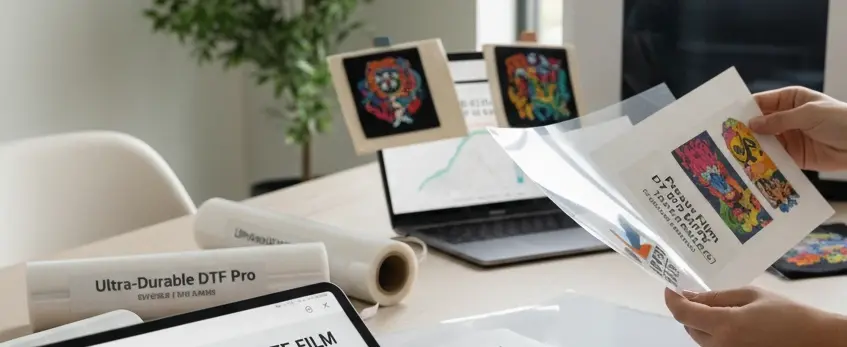
Even the best DTF film in 2025 won’t perform if you make these common mistakes:
Under-curing or over-curing the adhesive powder: Failing to properly cure your DTF powder can cause poor adhesion, while over-curing can make the print crack or peel off. Each film and powder combo needs the right timing and temperature for a smooth, durable finish. For a clear guide on curing, check out our detailed steps on how to cure DTF powder with a heat press.
Wrong temperature and time settings per film type: Not all films handle heat the same. For example, 75 micron films often require different press settings than 100 micron films. Using generic temp/time settings can cause melting, warping, or weak transfers.
Using low-quality adhesive powder with premium films: Pairing high-end films with cheap or incompatible powder leads to prints that won’t stick or wash well, wasting your film and time. Always match your premium DTF film with reliable adhesive powders designed for that film type.
Avoiding these pitfalls is crucial to get vibrant colors, smooth peels, and long-lasting prints every time.
Quick-Reference Buyer’s Checklist for DTF Film
Before you buy the best DTF film, ask your supplier these 12 yes/no questions to avoid surprises:
- Is the film thickness clearly specified (75 micron or 100 micron)?
- Does the film use single-side or double-side coating technology?
- Is the release type (hot peel, warm peel, or cold peel) confirmed for this film?
- Can you get the film in roll and sheet formats?
- Is the film width compatible with my printer model (13\”, 24\”, A3, A4, etc.)?
- Does the film support vibrant colors with a strong white ink underbase?
- Has the film passed real wash fastness tests, ideally 50–100 washes?
- Does the film maintain a soft hand feel without that plastic sticker texture?
- Is the peel consistent with no residue or ghosting issues?
- Are there anti-static and anti-blocking properties to prevent printing faults?
- Do they recommend a matching high-quality TPU adhesive powder for this film?
- Can they provide a warranty or return policy if the film fails in your application?
Keep this checklist handy to make sure you’re getting a DTF film that performs as promised. For more on choosing premium film with the right adhesive powder combo, check out our guide on TPU powder for high-quality prints.


 English
 Español
 Deutsch
 Français