
No products in the cart.

Jinlong
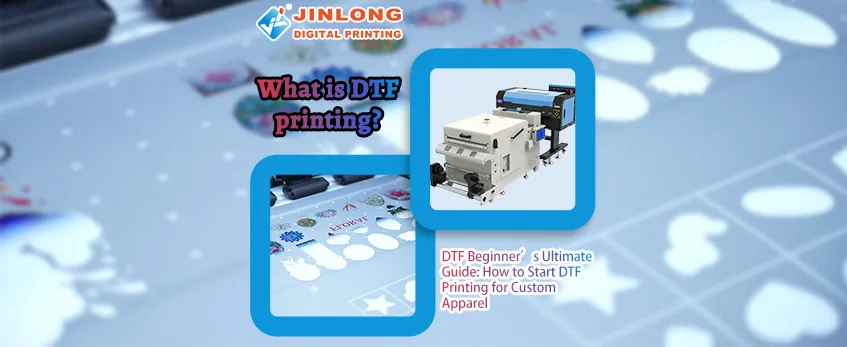
DTF Beginner’s Ultimate Guide: How to Start DTF Printing for Custom Apparel
Introduction
If you’re new to garment customization or exploring digital printing, DTF (Direct-to-Film) printing is one of the most exciting technologies to start with. Unlike traditional heat transfer or screen printing, DTF offers versatility, durability, and vibrant color results across a wide range of fabrics.
This beginner-friendly guide will walk you through the essentials: what DTF is, the equipment you need, how the process works, common beginner mistakes, and tips to get started smoothly.
What is DTF Printing?
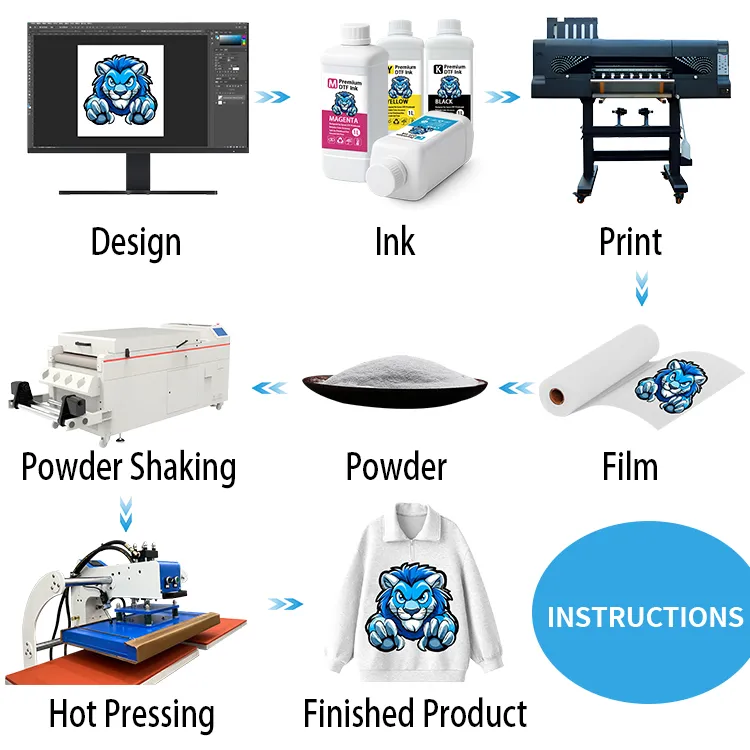
DTF (Direct-to-Film) is a printing method where designs are printed directly onto a special PET film using DTF inks, coated with hot-melt powder, cured, and then transferred to fabrics using a heat press.
- Advantages:
- Works on cotton, polyester, blends, and even performance fabrics.
- Produces long-lasting, wash-resistant prints.
- Allows intricate designs without the need for cutting or weeding.
- Difference from Other Methods:
Compared to sublimation or vinyl transfer, DTF offers more flexibility on fabric types and achieves higher durability.
Essential Equipment and Materials
To start with DTF printing, you’ll need the following setup:
- DTF Printer – A dedicated inkjet printer adapted for DTF inks.
- DTF Inks – Includes white ink for underbase and CMYK for vibrant colors.
- PET Transfer Film – Special heat-resistant film for printing and transfer.
- Hot Melt Adhesive Powder – Applied to the wet ink to create strong adhesion.
- Heat Press Machine – Transfers the design from film to garment.

Step-by-Step DTF Printing Process
Here’s a breakdown of the workflow:
- Design & Print
- Prepare artwork in RIP software, ensuring proper white ink layer.
- Print design onto PET film with vivid CMYK + white ink.
- Powder & Cure
- Apply hot melt adhesive powder onto wet ink.
- Shake off excess powder and cure with oven or heat gun.
- Heat Press Transfer
- Place the film on the garment.
- Press with correct temperature, pressure, and time.
- Peel film (hot peel or cold peel depending on film type).
Frequently Asked Questions (FAQ)
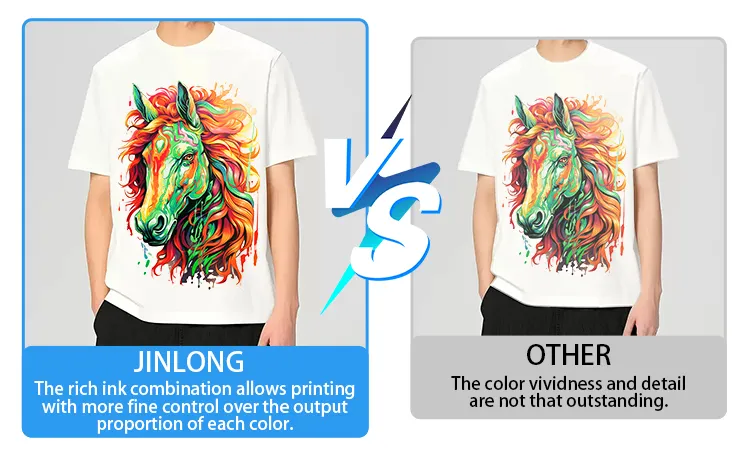
Q1: Why do my prints look dull?
- Check RIP settings, adjust ink levels.
- Ensure the white ink underbase is printed correctly.
Q2: Why does the design peel off after washing?
- Adhesive powder may not be applied evenly.
- Heat press settings (time/temperature/pressure) may be incorrect.
Q3: Why can’t I peel the film easily?
- Ensure you’re using the correct type: hot peel vs. cold peel.
- Wait for the film to cool completely if it’s cold peel.
Conclusion
DTF is an accessible yet powerful printing method for beginners, DIYers, and small businesses. With the right equipment, proper workflow, and attention to detail, you can achieve professional-quality, durable, and colorful custom prints.
Whether you’re looking to start a small garment business or simply enjoy creative DIY projects, mastering DTF can open up endless opportunities in custom apparel design.


 English
 Español
 Deutsch
 Français